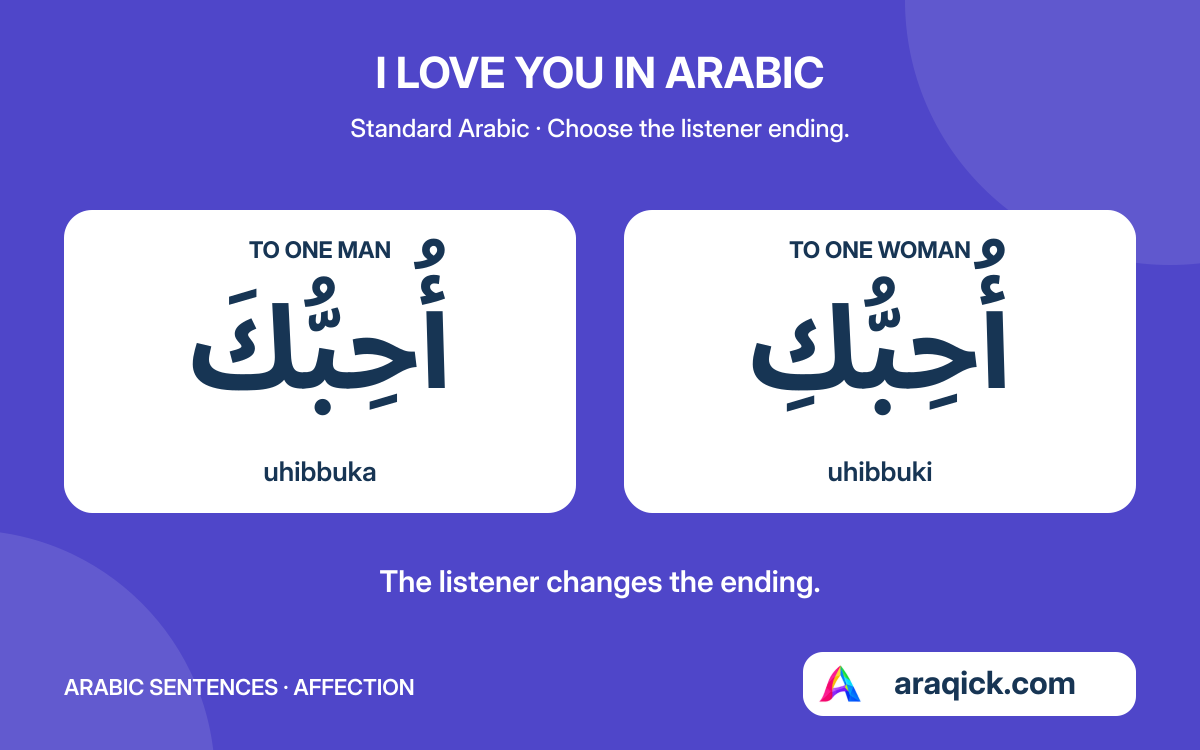
In Modern Standard Arabic, “I love you” is أُحِبُّكَ (uhibbuka) to one man and أُحِبُّكِ (uhibbuki) to one woman. The ending follows the listener, not the speaker. Spoken dialects have their own forms. The expression can describe family affection as well as romantic love.
01How do you say I love you?
uhibbuka
I love you.
uhibbuki
I love you.
Both begin with the same verb, uhibbu, “I love.” The ending supplies “you.” A woman can say uhibbuka to her father; a man can say uhibbuki to his mother. Choose by the listener.
02Why does أحبك look the same?
Without vowel marks, both singular forms are written أحبك. With marks, the last كَ has an a vowel and the last كِ has an i vowel. The doubled b belongs to the verb in both forms.
A reading aid shows the difference, but a text message without marks relies on context. For the grammar behind the endings, explore attached object pronouns.
03Do you need to add ana?
The verb already identifies “I,” so أَنَا (ana) is optional. It can make the speaker explicit or add emphasis. Adding ana does not change which “you” ending is needed.
Standard Arabic · addressing a woman
أَنَا أُحِبُّكِ
ana uhibbuki
I love you.
Practise with and without ana. Keep the same listener in mind while comparing the two versions.
04Use the expression with family
Standard Arabic
أُحِبُّكِ يَا أُمِّي
uhibbuki ya ummi
I love you, Mum.
The mother is the listener, so this sentence uses ki. To a father, أُحِبُّكَ يَا أَبِي (uhibbuka ya abi) uses ka. The word ya introduces direct address.
Use family vocabulary and calling with ya to understand both parts of these messages.
05Recognise an Egyptian form
bahebbak
I love you.
bahebbik
I love you.
These are common Egyptian readings. The unvowelled spelling is the same, while the listener ending sounds different. Other dialects and local pronunciations vary. Keep the dialect label with the example rather than treating one reading as universal spoken Arabic.
06Say I love you too
Standard Arabic · addressing a man
وَأَنَا أُحِبُّكَ أَيْضًا
wa ana uhibbuka aydan
And I love you too.
Use أُحِبُّكِ when the reply addresses a woman. The listener in a reply is the person who spoke first, so check the ending again instead of copying the first speaker’s ending automatically.
Aydan contributes “also” or “too.”
07Habibi and I love you do different jobs
Habibi means “my dear” or “my beloved.” Uhibbuka is a complete statement about loving someone. One can appear inside an affectionate message without replacing the other.
For practice, write a short message to a parent or another loved person. Choose the listener, decide whether you want MSA or a particular dialect, and keep the forms consistent. You can express affection without adding more intense or unfamiliar phrases.
What to remember
- Uhibbuka addresses one man; uhibbuki addresses one woman in MSA.
- The speaker’s gender does not choose the listener ending.
- Keep MSA and dialect examples labelled; affection can be familial or romantic.
Your reference shelf
Open a guide whenever you need it.
I love you: listener formsKeep the listener and language variety together.
| Variety / listener | Arabic | Reading |
|---|---|---|
| MSA · one man | أُحِبُّكَ | uhibbuka |
| MSA · one woman | أُحِبُّكِ | uhibbuki |
| MSA · a mixed group or a group of men | أُحِبُّكُمْ | uhibbukum |
| Egyptian · one man | بحبك | bahebbak |
| Egyptian · one woman | بحبك | bahebbik |
The group form uses kum. This reference introduces that form for recognition; the lesson’s practice focuses on one listener.
Sources & further learning
References for the language explanations and learning guidance.