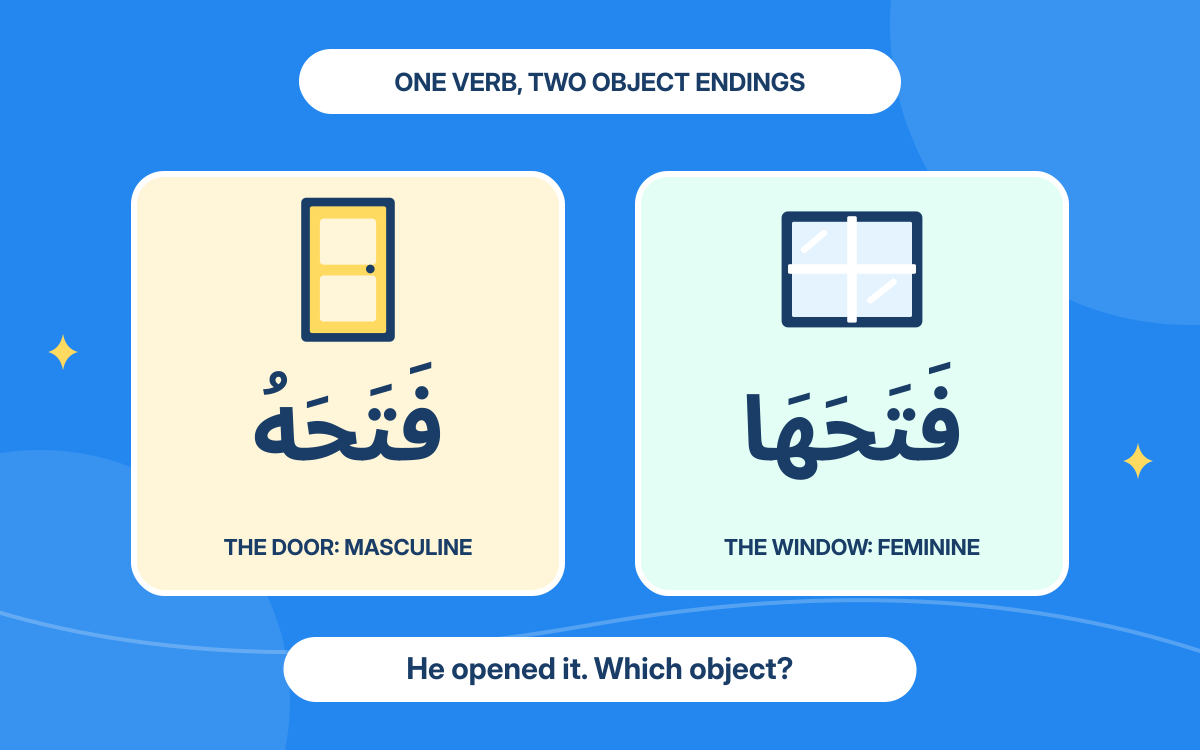
Once a door or window is already understood, you can say “He opened it” without naming it again. Arabic attaches the object pronoun to the verb. The ending points to the thing opened; the verb still tells you who did the opening.
01Replace the door with it
فَتَحَهُ
fatahahu
He opened it: the door.
بَابٌ (babun), a door, is masculine. Fataha means he opened; the attached هُ (hu) refers back to the door as the object. Write the complete form as one word. Hu identifies what he opened, not who opened it.
02Match the object’s grammatical gender
فَتَحَهَا
fatahaha
He opened it: the window.
نَافِذَةٌ (nafidhatun), a window, is feminine. Use هَا (ha) to refer to it. The final a of ha is long; our simple reading aid writes one a.
English uses it for both objects. Arabic distinguishes their grammatical gender, even though neither object is a person. The opener is still he in both fatahahu and fatahaha. Changing hu to ha changes the object being referred to, not the doer of the action.
03Keep I before adding the object
فَتَحْتُهُ
fatahtuhu
I opened it: the door.
فَتَحْتُهَا
fatahtuha
I opened it: the window.
Start from فَتَحْتُ (fatahtu), “I opened.” Keep tu, then attach hu or ha. The tu identifies the speaker as the subject; the final suffix identifies the direct object.
A male or female speaker uses these same first person forms. Choose the last suffix by the door or window, not by the speaker’s gender. One written word can therefore contain the action, its doer and its object.
04Read the word before the suffix
بَابُهُ
babuhu
His door.
فَتَحَهُ
fatahahu
He opened it.
In babuhu, hu attaches to a noun and identifies its possessor. In fatahahu, it attaches to this verb and identifies the object of opening. The shared suffix does not make the two expressions mean the same thing.
Likewise, بَابُهَا (babuha) means her door. The door remains masculine; ha identifies a female possessor there. In fatahaha, ha instead refers to the feminine object being opened. Always identify the host and the suffix’s job before translating.
05Check doer and object separately
أَنَا فَتَحْتُهَا
ana fatahtuha
I opened it: the window.
Ana makes I explicit, but fatahtuha already contains that information. You may leave ana out. The attached ha remains part of the verb word; do not write it as a separate word for it.
Ask two questions: who opened, and what was opened? Tu answers the first; ha answers the second in this example. An attached pronoun is not automatically an object: tu is the subject here. Hu and ha are the two object suffixes we are practising.
What to remember
- Hu and ha refer to masculine and feminine objects in the verb forms taught here.
- Keep the doer ending: fatahtuha contains tu for I and ha for the object.
- A suffix on a noun can show possession; identify its host before choosing the meaning.
Your reference shelf
Open a guide whenever you need it.
One action with two possible objectsCompare four opening forms and keep subject, object and possession apart
| Doer | Door: masculine object | Window: feminine object |
|---|---|---|
| He | فَتَحَهُ fatahahu | فَتَحَهَا fatahaha |
| I | فَتَحْتُهُ fatahtuhu | فَتَحْتُهَا fatahtuha |
The direct object is الْمَفْعُولُ بِهِ. An attached object pronoun occupies an accusative position, but its form does not gain an ordinary noun’s final fathah. The u in hu does not make this object nominative.
Hu can mean him or masculine it; ha can mean her or feminine it. The surrounding sentence and the known referent determine the English translation. This lesson uses objects that can naturally be opened, so it is the relevant translation.
With a noun, the same suffixes can instead mark a possessor: بَابُهُ means his door and بَابُهَا means her door. They do not identify the door’s own gender in that construction.
Other attached pronouns and pronunciation changes belong to later practice. This article deliberately keeps the same regular verb and two singular object suffixes.
Sources & further learning
References for the language explanations and learning guidance.