Arabic often puts ya before the person you address. You may hear it with a name or a title such as teacher. The idea is simple: get that person’s attention. The ending needs a little care, because different kinds of address do not all follow the same pattern.
01Speak to someone, not about them
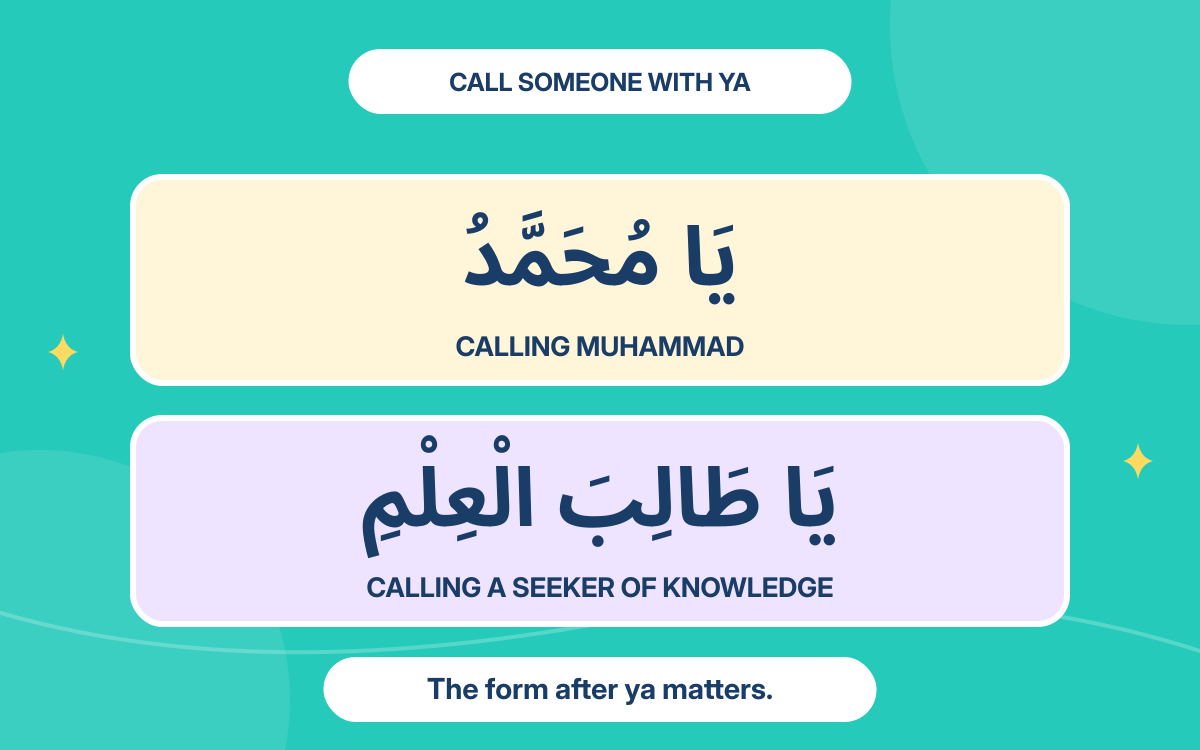
يَا مُحَمَّدُ
ya muhammadu
Muhammad!
Ya is a calling particle. Muhammad is the person being addressed, called the munada. English usually just uses the name with a comma or an exclamation mark. “O Muhammad” is possible in a formal translation, but ordinary direct address does not always need the English word “O.”
02Give a simple singular name one dammah
يَا مُحَمَّدُ، كَيْفَ حَالُكَ؟
ya muhammadu kayfa haluka
Muhammad, how are you?
For a singular proper name used on its own like Muhammad, the full formal calling form has dammah without tanween: muhammadu, not muhammadun. You are addressing him directly rather than making a statement about him.
This rule concerns a name that is not itself an idafa. A name made from a possessive construction needs that construction’s rule. Keep the single dammah in mind for the simple names practised here.
03Address a particular person by a title
يَا أُسْتَاذُ
ya ustadhu
Teacher!
Imagine speaking to one particular male teacher in front of you. Ustadhu also ends with dammah and no tanween. The title identifies the intended person through the act of addressing him, even though it has no definite article.
Grammarians describe these simple forms as built on dammah in an accusative position. Do not call Muhammad a nominative subject merely because the calling form ends in u. The visible vowel and the grammatical function are separate questions.
04Use accusative for the first noun of an idafa
يَا طَالِبَ الْعِلْمِ
ya taliba lilmi
Student of knowledge!
Talib is now mudaf, the first noun of an idafa. As the called noun, it is accusative and takes fathah: taliba. It has no tanween because it is mudaf. The following noun, alilmi, is genitive.
Compare يَا طَالِبُ, addressing one particular student, with يَا طَالِبَ الْعِلْمِ, addressing a student of knowledge. Adding the idafa changes the grammatical structure, so do not keep the same ending mechanically.
05Choose the structure before the vowel
Ask whether you are using a simple name, a specific title on its own, or an idafa. For our singular examples, the first two patterns use dammah without tanween; the idafa pattern gives the first noun an accusative ending.
A call aimed at an unspecified person has another pattern, so “put dammah after every ya” is not a safe rule. These questions focus on the three patterns already shown.
The readings include the endings used in full formal speech. When stopping on Muhammad, the final short u is normally dropped in pronunciation. That pause does not change how the fully marked calling form is written.
What to remember
- Ya introduces direct address; natural English often uses just a name or title.
- A simple singular name or intended singular title uses dammah without tanween in these patterns.
- An idafa vocative makes its first noun accusative, while its second noun stays genitive.
Your reference shelf
Open a guide whenever you need it.
Three useful calling patternsCompare the endings without confusing a dammah with subject case
| Pattern | Arabic | Ending of the addressee |
|---|---|---|
| Simple singular proper name | يَا مُحَمَّدُ | Built on dammah, no tanween |
| One particular teacher | يَا أُسْتَاذُ | Built on dammah, no tanween |
| First noun of an idafa | يَا طَالِبَ الْعِلْمِ | Accusative fathah, no tanween |
The Arabic terms are حَرْفُ النِّدَاءِ for the calling particle and الْمُنَادَى for the addressee. A specific title addressed on its own is traditionally called نَكِرَةٌ مَقْصُودَةٌ. It points to the intended person through direct address.
In the grammatical description of the vocative, a “simple” name is one that is not mudaf or similar to mudaf. This article uses singular examples; duals and plurals can have other signs.
With a noun retaining the definite article, a different construction such as يَا أَيُّهَا الْمُعَلِّمُ is available. Do not create a general rule by simply placing ya before every noun with ال. The short teacher call practised above is يَا أُسْتَاذُ.
Sources & further learning
References for the language explanations and learning guidance.