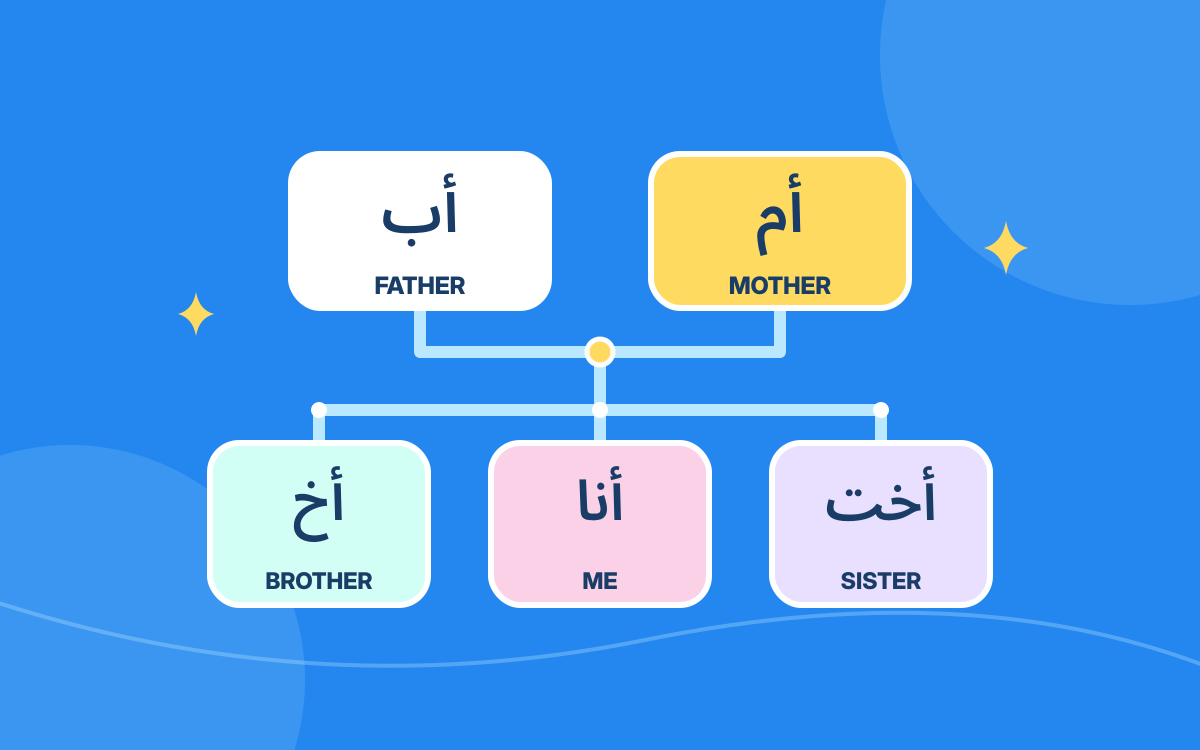
Father is ab, mother is umm, brother is akh, and sister is ukht. Arabic also distinguishes your father’s siblings from your mother’s siblings. Learn 12 relationship words, then use two short sentences to introduce someone from your family.
01Begin with four relationships
أَب
ab
father
أُمّ
umm
mother
أَخ
akh
brother
أُخْت
ukht
sister
- These words name relationships; they do not yet include “my.” Father and my father are different forms.
- Learn each pair together: father and mother, brother and sister. Then recall one word without looking at its partner.
- The reading aids use plain Latin letters. Listen to Arabic audio as well, especially for sounds that English spelling cannot show accurately.
02Which side of the family?
عَمّ
amm
father’s brother
عَمَّة
amma
father’s sister
خَال
khal
mother’s brother
خَالَة
khala
mother’s sister
English can use uncle or aunt for either side. For these Arabic words, first identify the parent, then the relationship. Your mother’s brother is khal; your father’s brother is amm.
These four labels describe the parent’s own siblings. Other family connections, including relatives by marriage, need more specific wording. To keep the four words clear, place each aunt or uncle beside the matching parent on a simple family map.
03Add grandparents and children
جَدّ
jadd
grandfather
جَدَّة
jadda
grandmother
اِبْن
ibn
son
بِنْت
bint
daughter
- Jadd and jadda can refer to grandparents on either side. These words alone do not specify your mother’s or father’s family.
- Ibn means son. Bint means daughter and can also mean girl; the surrounding sentence tells you which meaning fits.
- Describe the relationship from one person’s point of view. Someone can be a daughter to a parent and a sister to a sibling.
04Change brother to my brother
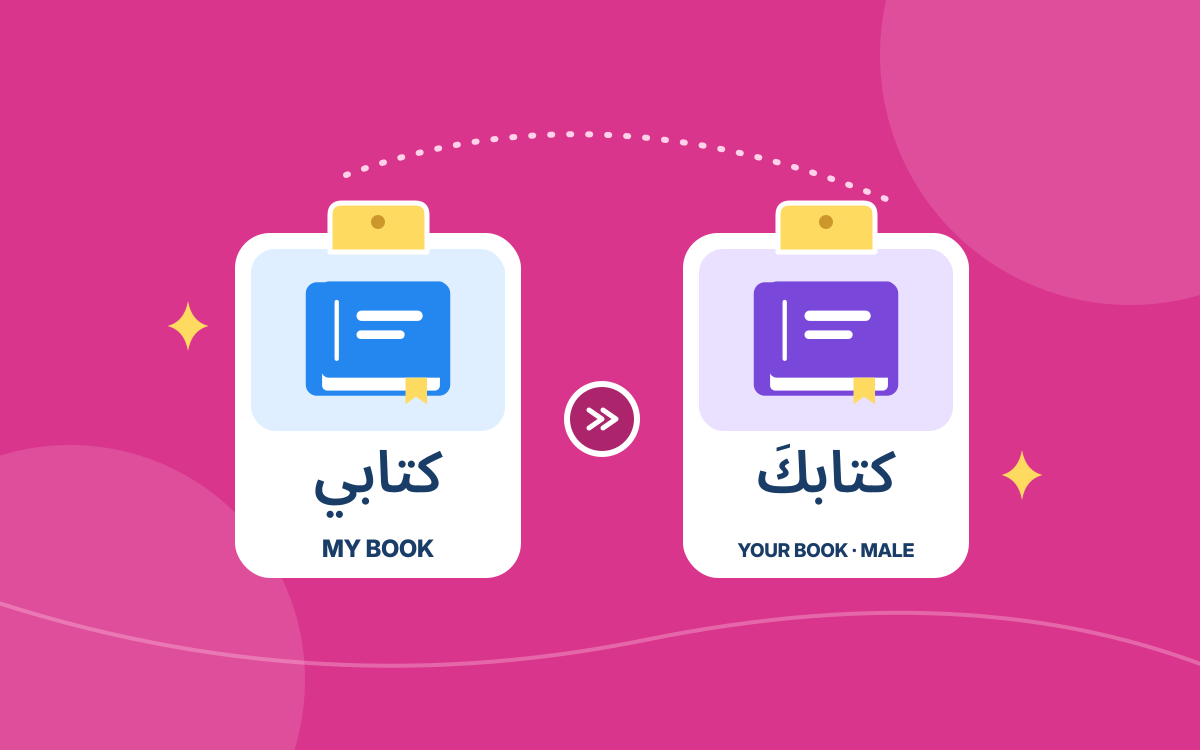
أَخِي
akhi
my brother
أُخْتِي
ukhti
my sister
أَبِي
abi
my father
أُمِّي
ummi
my mother
- The attached ending expresses “my.” It belongs to the noun rather than being a separate word before it.
- Learn these four complete forms. Father and brother have grammatical details that a simple add-a-letter rule would miss.
- The speaker can be a man or a woman: akhi still means my brother. The relationship word describes the family member.
05Make a short introduction
هَذَا أَخِي
hadha akhi
This is my brother.
هَذِهِ أُخْتِي
hadhihi ukhti
This is my sister.
Use hadha for the male relative and hadhihi for the female relative in these examples. Arabic does not need a separate present-tense word for “is” here.
Try an introduction that suits your own family, or use an imaginary family for practice. If you forget a relationship, work out whose relative you mean before checking its Arabic name.
What to remember
- Use amm and amma for your father’s siblings; use khal and khala for your mother’s siblings.
- Akhi means my brother; ukhti means my sister.
- Introduce a relative with hadha or hadhihi and the complete relationship word.
Your reference shelf
Open a guide whenever you need it.
All 12 relationship wordsOpen the family vocabulary reference
| Relationship | Arabic | Say it |
|---|---|---|
| father | أَب | ab |
| mother | أُمّ | umm |
| brother | أَخ | akh |
| sister | أُخْت | ukht |
| grandfather | جَدّ | jadd |
| grandmother | جَدَّة | jadda |
| son | اِبْن | ibn |
| daughter | بِنْت | bint |
| father’s brother | عَمّ | amm |
| father’s sister | عَمَّة | amma |
| mother’s brother | خَال | khal |
| mother’s sister | خَالَة | khala |
Sources & further learning
References for the language explanations and learning guidance.