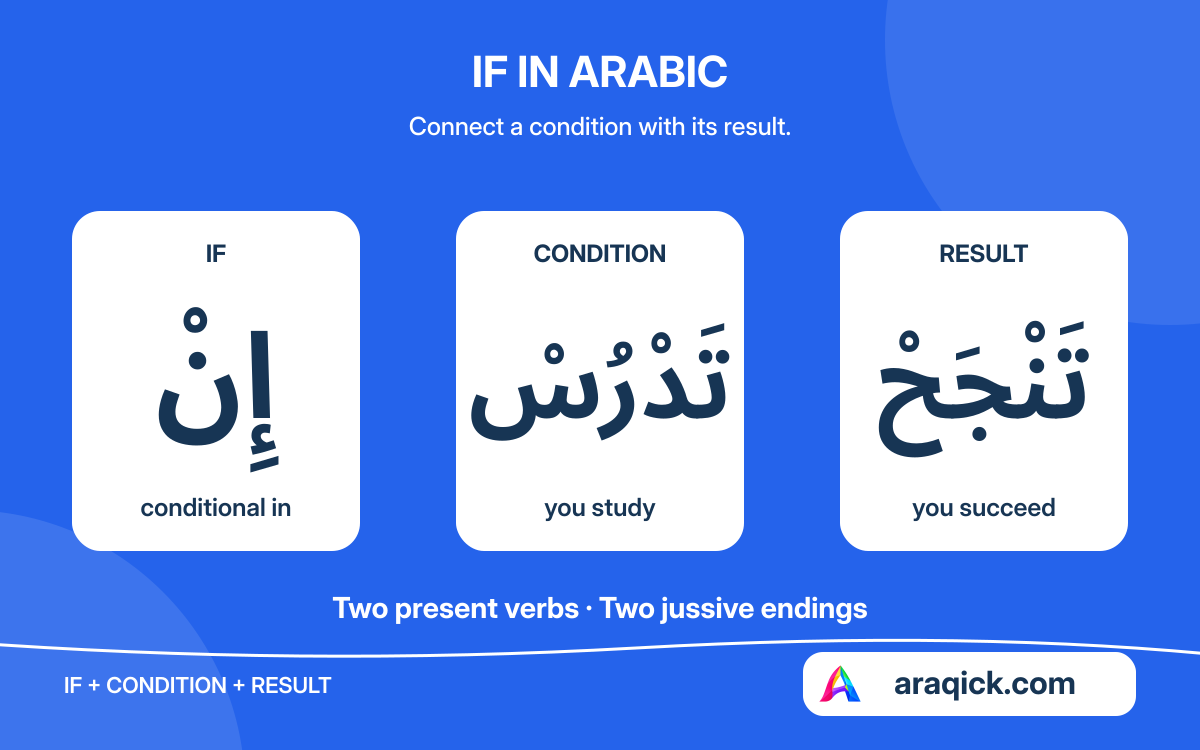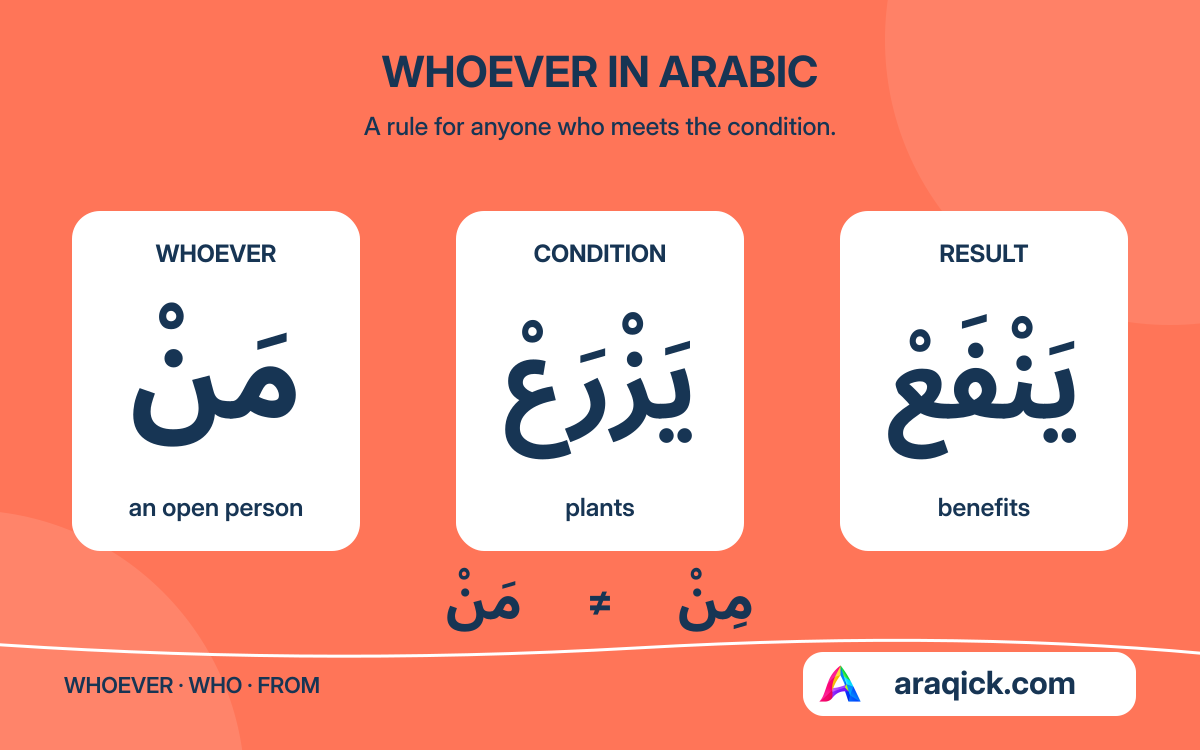
Man, مَنْ, can mean whoever when it introduces a condition about a person. Instead of asking someone’s identity, it gives a rule that applies to anyone who meets the condition. Connect that person’s action to a result, and watch the endings of the two present verbs.
01Apply a condition to any person
مَنْ يَزْرَعْ شَجَرَةً يَنْفَعْ غَيْرَهُ
man yazra shajaratan yanfa ghayrahu
Whoever plants a tree benefits others.
Man leaves the person’s identity open. Yazra gives the condition and yanfa gives its result. The object shajaratan tells you what is planted. This is a general statement about anyone who does the action, rather than a question asking who planted a particular tree.
02Check both verb endings
The ordinary forms are يَزْرَعُ and يَنْفَعُ. Conditional man makes both verbs jussive in this simple structure, so the final damma becomes sukun. Man itself remains the same word; you do not add a case ending to it.
مَنْ يَطْلُبْ نُسْخَةً يَحْصُلْ عَلَيْهَا
man yatlub nuskhatan yahsul alayha
Whoever asks for a copy will receive one.
Yatlub and yahsul show the same regular jussive ending. Keep each complete clause together when you read.
03Follow the pronouns
In the copy example, the understood subject of yahsul is the person introduced by man. The ending ha in alayha points back to the feminine noun nuskha, copy. Two pronouns in one sentence can refer to different things.
مَنْ يَعْمَلْ بِصِدْقٍ أَحْتَرِمْهُ
man yamal bisidqin ahtarimhu
Whoever works honestly, I respect him.
The result now has I as its subject. Hu marks the person respected. These examples use masculine singular agreement as the default general pattern; the statement can apply to any qualifying person.
04Distinguish whoever from who and from
مَنْ يَطْلُبُ نُسْخَةً؟
man yatlubu nuskhatan
Who is asking for a copy?
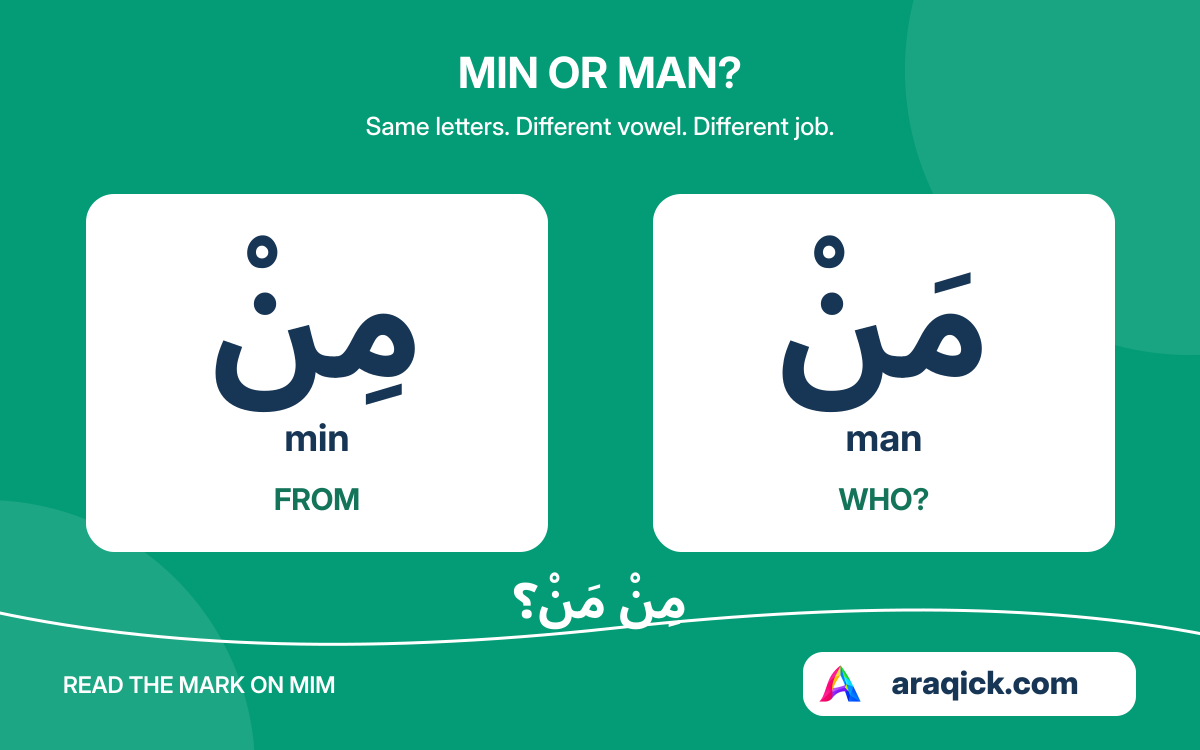
This question requests an identity and has no conditional result. Yatlubu is ordinary indicative here. Conditional man supplies a condition-result relationship. مِنْ, min, means from and is a preposition. Check the first vowel as well as the sentence’s job.
Review min versus man for the basic vocabulary contrast.
05Use fa before a nominal result
مَنْ يَحْتَرِمْ وَقْتَكَ فَهُوَ صَدِيقٌ جَيِّدٌ
man yahtarim waqtaka fahuwa sadiqun jayyidun
Whoever respects your time is a good friend.
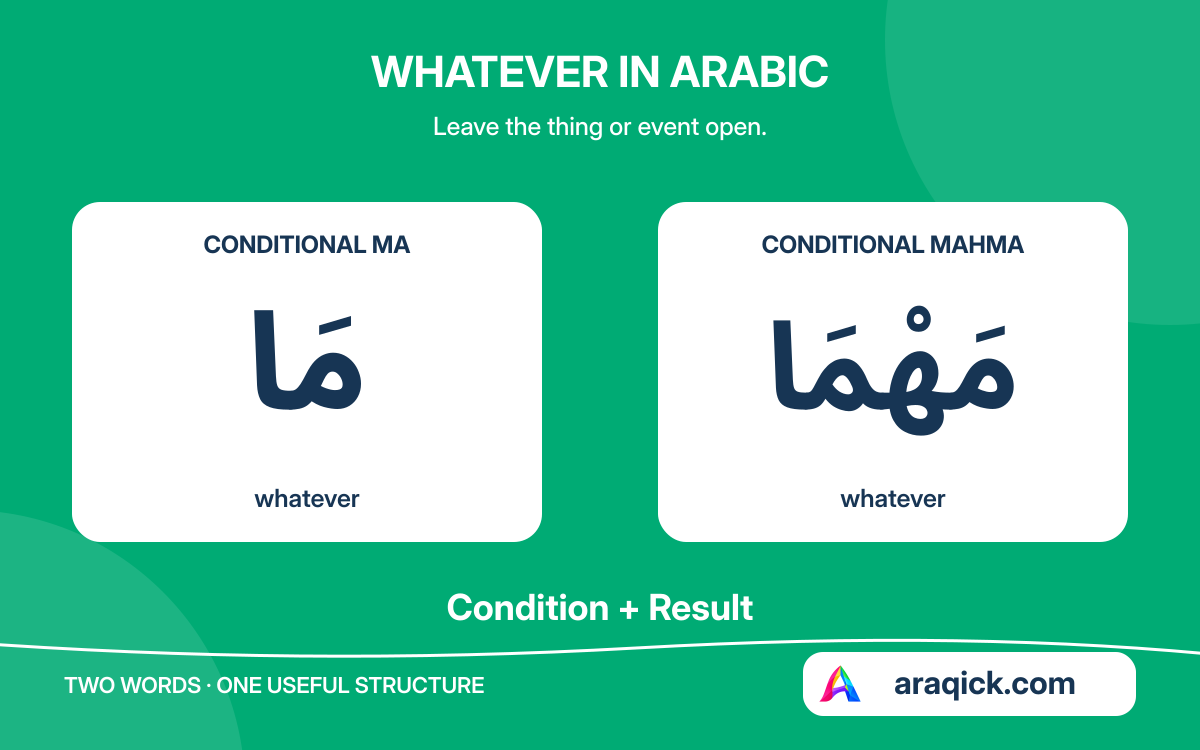
Fahuwa sadiqun jayyidun is a nominal result. It starts with fa because it is not a simple jussive verb. Sadiqun keeps the nominative ending required inside that nominal clause. Continue with linking fa or compare whatever with ma and mahma.
What to remember
- Conditional man means whoever and refers to a person.
- Its simple present condition and result are jussive.
- Follow pronoun references and use fa before a nominal result.
Your reference shelf
Open a guide whenever you need it.
Three readings to keep apartRead the spelling and the sentence together
| Reading | Example | Function |
|---|---|---|
| Whoever | مَنْ يَطْلُبْ نُسْخَةً يَحْصُلْ عَلَيْهَا | Condition plus result |
| Who? | مَنْ يَطْلُبُ نُسْخَةً؟ | Question about identity |
| From | مِنَ الْمَكْتَبِ | Prepositional phrase: from the office |
The final vowel in mina almaktabi helps connect speech before the definite article. The dictionary form of the preposition is min.
Track each referenceDo not assign every pronoun to the same noun
| Element | Refers to | Role |
|---|---|---|
| مَنْ | Any person meeting the condition | Introduces the person |
| يَحْصُلْ | That person | Understood subject of receives |
| ـهَا | The copy | Suffix after the preposition ala |
For a fuller map of suffixes and independent pronouns, see Arabic pronouns.
Sources & further learning
References for the language explanations and learning guidance.