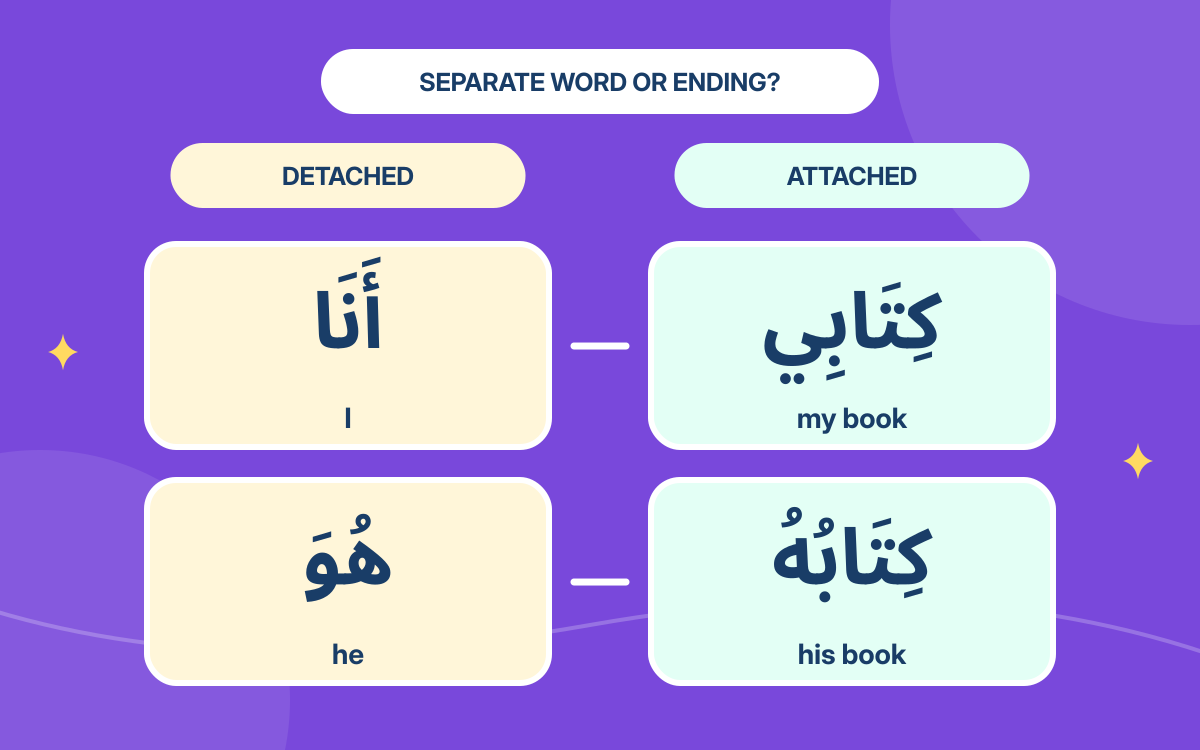
Ana means “I,” but kitabi means “my book.” One pronoun stands as its own word; the other attaches to a noun. Learning this difference helps you read short sentences and recognise possession. Start with three separate forms and three book forms, then check what happens after a preposition.
01Recognise three separate pronouns
أَنَا
ana
I
هُوَ
huwa
He
هِيَ
hiya
She
Each form is a separate word: a detached pronoun. Ana works for a male or female speaker. Huwa and hiya identify the person being discussed here. These pronouns can begin a simple nominal sentence.
02Use a pronoun as the subject
أَنَا مُدَرِّسٌ
ana mudarrisun
I am a male teacher.
هِيَ مُدَرِّسَةٌ
hiya mudarrisatun
She is a teacher.
The pronoun is the subject; the following word gives the information. No separate present-tense “am” or “is” is needed in this pattern. A female speaker could say أَنَا مُدَرِّسَةٌ (ana mudarrisatun). Ana itself stays the same.
The pronoun occupies the subject’s grammatical position without taking an ordinary noun’s u or un ending. Do not add tanween to ana, huwa or hiya.
03Attach the owner to the book
كِتَابِي
kitabi
My book
كِتَابُهُ
kitabuhu
His book
كِتَابُهَا
kitabuha
Her book
These are single written words. The ending i points to me, hu to him and ha to her. The suffix identifies the possessor, so its gender follows the owner, not the book. A masculine noun can therefore take the “her” ending.
A noun with a possessive pronoun is definite without ال and has no tanween. The book forms with hu and ha are shown in their nominative form here; their noun endings can change in other grammatical positions.
04Turn “my book” into a statement
كِتَابِي جَدِيدٌ
kitabi jadidun
My book is new.
كِتَابُهَا جَدِيدٌ
kitabuha jadidun
Her book is new.
The possessed book is the subject of each sentence, and jadidun is the predicate. “Her” identifies the owner; it does not make kitab feminine. The description remains masculine because it describes the book.
The final i in kitabi belongs to the “my” construction. It is not proof that the whole word is genitive. Here “my book” occupies a nominative subject position even though an ordinary final u is not visible.
05Check the word the pronoun attaches to
مِنْهُ
minhu
From him
Min is a preposition meaning “from.” The attached hu now means “him” within the prepositional expression; it does not mean “his” as it does after the noun kitab. The same person is referred to, but the grammatical job changes.
Attached pronouns can also appear on verbs, where they may identify an object or, with other endings, a subject. Those patterns need a separate lesson. For now, find the host first: a noun can express a possessor; a preposition expresses its relationship to that person or thing.
These examples retain full endings for study; pause readings can differ. Keep the spelling joined when a pronoun is attached, and keep detached ana, huwa and hiya as separate words.
What to remember
- Ana, huwa and hiya are separate pronouns; kitabi, kitabuhu and kitabuha contain attached possessive endings.
- A possessive suffix identifies the owner, not the grammatical gender of the thing owned.
- Read the host word: an attached pronoun is not automatically possessive.
Your reference shelf
Open a guide whenever you need it.
Separate forms and attached rolesReview the book forms without confusing pronoun shape and case
| Separate pronoun | Possessed noun | Meaning |
|---|---|---|
| أَنَا — ana | كِتَابِي — kitabi | I / my book |
| هُوَ — huwa | كِتَابُهُ — kitabuhu | He / his book |
| هِيَ — hiya | كِتَابُهَا — kitabuha | She / her book |
A possessive suffix occupies the genitive position of the second part of an idafa. The noun before it takes the case required by its own role. Compare كِتَابُهُ (kitabuhu) and فِي كِتَابِهِ (fi kitabihi), “in his book.” The hu form becomes hi after the preceding i sound here.
Attached pronouns after prepositions also occupy a genitive position. That does not require every suffix to visibly end in i: minhu is a clear example. Pronouns have fixed forms with particular pronunciation adjustments.
The detached forms taught here are subject forms. Arabic also has detached object pronouns, and attached pronouns can occupy subject, object or genitive positions. “Detached” and “attached” describe how a pronoun is written, not a universal rule assigning only one case to each group.
Huwa and hiya may also refer to things according to grammatical gender. This lesson uses people as their referents to keep the possession contrast clear.
Sources & further learning
References for the language explanations and learning guidance.