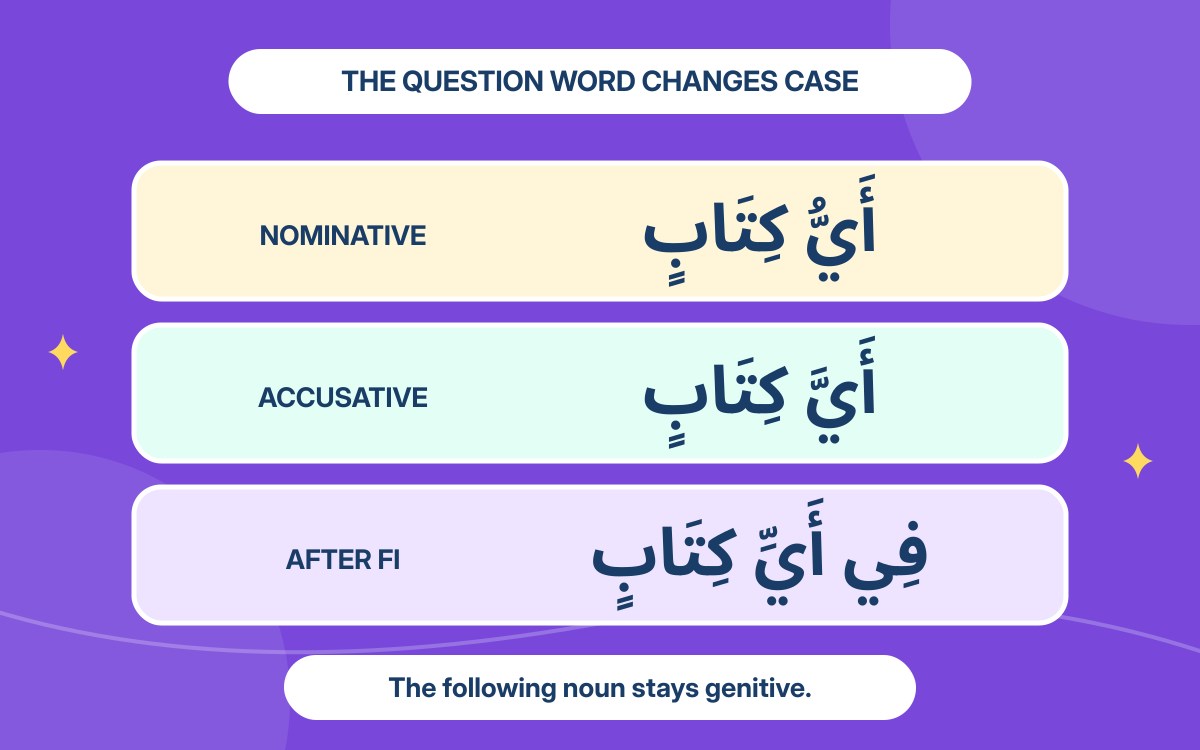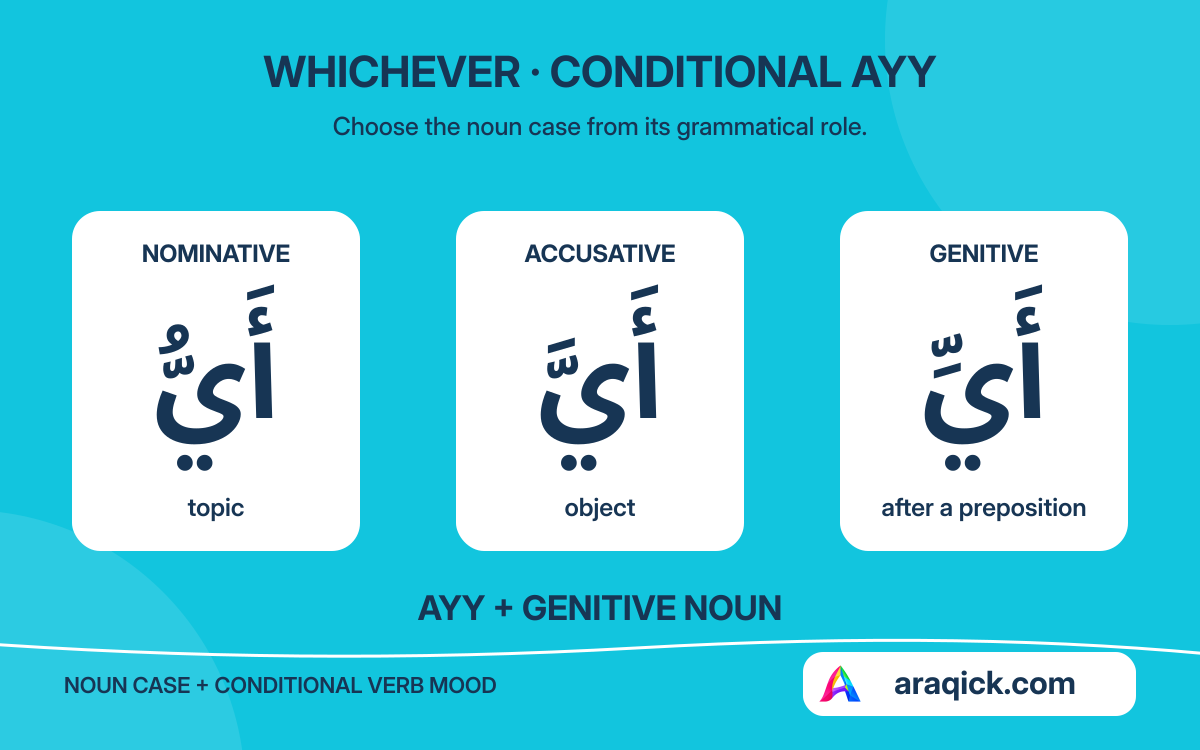
Conditional ayy lets you say whichever student, whichever book or whichever tool. Unlike most conditional words, ayy changes its case ending. Its noun role determines whether you see ayyu, ayya or ayyi. The following noun is genitive, while the verbs follow conditional mood rules.
01Pair ayy with a noun
أَيَّ كِتَابٍ تَقْرَأْ تَسْتَفِدْ مِنْهُ
ayya kitabin taqra tastafid minhu
Whichever book you read, you will benefit from it.
Ayy identifies an open choice within the category named by kitabin. The two words form an idafa: ayy is the first noun and kitabin is its genitive partner. Ayy has no tanween in this construction. The kasra and tanween on kitabin remain.
02Use ayya when it is the object
In the book example, ayy is the object of taqra: what do you read? Whichever book. That noun role gives ayy its accusative form أَيَّ. The condition’s verb taqra and the direct result tastafid are jussive.
Tastafid comes from تَسْتَفِيدُ and loses its internal long vowel in this jussive form. Learn noun endings and verb changes separately; the fatha on ayya does not make the verbs subjunctive.
03Use ayyu as the topic with an intransitive verb
أَيُّ طَالِبٍ يَجْتَهِدْ يَنْجَحْ
ayyu talibin yajtahid yanjah
Whichever student works hard will succeed.
Here ayy is a nominative topic, or mubtada. The following intransitive verb yajtahid has an understood subject referring back to that student. Ayy therefore appears as ayyu. Talibin remains genitive because the idafa has not changed.
The singular wording presents any qualifying student as an individual. It does not name a particular student in advance.
04Use ayyi after a preposition
بِأَيِّ قَلَمٍ تَكْتُبْ أَكْتُبْ بِهِ
bi ayyi qalamin taktub aktub bihi
Whichever pen you write with, I will write with it.
Bi makes ayy genitive, so the form is ayyi. Qalamin is also genitive, but for another reason: it is the second noun of the idafa. In bihi, the suffix hu refers back to the pen and takes the pronunciation hi after bi.
05Separate whichever from which
أَيَّ كِتَابٍ تَقْرَأُ؟
ayya kitabin taqrau
Which book are you reading?
This is a question with ordinary indicative taqrau and no conditional result. Ayy still has the object ending ayya. Case alone cannot tell you whether ayy asks a question or introduces a condition.
Compare the existing which with ayy guide. Review noun case endings and conditional in to keep the two systems clear.
What to remember
- Conditional ayy means whichever and commonly forms an idafa with a genitive noun.
- Use ayyu, ayya or ayyi according to the role of ayy.
- Conditional verbs are jussive in the simple pattern; interrogative ayy does not cause that mood.
Your reference shelf
Open a guide whenever you need it.
Ayy: three case formsThe following noun stays genitive in these idafas
| Role of ayy | Form | Example phrase |
|---|---|---|
| Nominative topic | أَيُّ | أَيُّ طَالِبٍ |
| Accusative object | أَيَّ | أَيَّ كِتَابٍ |
| Genitive after bi | أَيِّ | بِأَيِّ قَلَمٍ |
These models cover common beginner cases. Ayy can take other syntactic roles, including time and manner expressions, which require their own analysis.
Same noun phrase, different clauseLook beyond the ending of ayy
| Type | Example | Clue |
|---|---|---|
| Question | أَيَّ كِتَابٍ تَقْرَأُ؟ | Asks which book; indicative verb |
| Condition | أَيَّ كِتَابٍ تَقْرَأْ تَسْتَفِدْ مِنْهُ | Whichever book; condition and result |
Both examples have ayya because the chosen book is the object of reading. In the second sentence, tastafid is the jussive of tastafidu; see hollow verbs for similar vowel shortening.
Sources & further learning
References for the language explanations and learning guidance.