Arabic speakers can often communicate across dialects, but understanding varies with the people, varieties and situation. Familiar vocabulary and prior exposure help; unfamiliar sounds, expressions and rapid speech can make comprehension harder. Speakers may also rephrase or adjust their language. Neither “all Arabic dialects are automatically understood” nor “different dialects prevent conversation” describes every encounter.
01What does understanding each other mean?
Recognising the topic is different from catching every word, and following a familiar exchange differs from understanding an unfamiliar recording. A real conversation supplies shared context, opportunities to ask questions and feedback from the other person.
Research on Arabic cross-dialect conversations shows that people can use several linguistic resources to communicate. Success therefore reflects both what the listener already recognises and what the participants do together. A country label alone cannot predict the outcome of one particular exchange.
02Which dialect differences affect comprehension?
Pronunciation, vocabulary and grammar can all differ. A familiar word may sound unfamiliar when its vowels or consonants change. Another variety may also use a different everyday word or question pattern. Several small differences in rapid speech can add up.
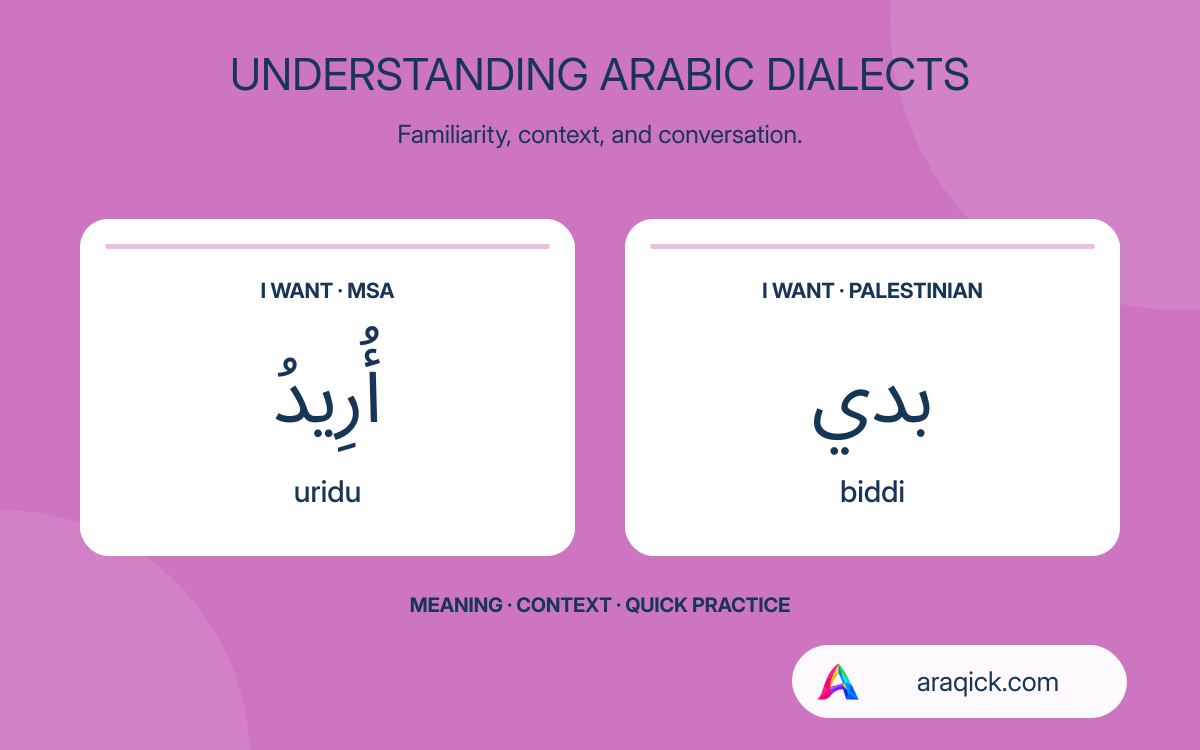
For “I want,” compare MSA أُرِيدُ (uridu), Egyptian عايز (ayiz, male speaker) and Palestinian بدي (biddi). The expressions perform a similar job, but their forms are different. One example does not describe every speaker in those regions.
03Why does previous exposure matter?
Repeated contact through conversation, programmes or other media can make another variety more familiar. Recognising a frequent expression may become easier even before someone can produce that variety confidently. Listening knowledge and speaking ability are separate skills.
This helps explain why two people with the same home variety may react differently to the same clip. Their experiences can differ. Linguistic similarity matters too, but physical distance between countries is not a complete measure of what an individual listener will understand.
04Is understanding always equal in both directions?
No. Imagine that Nadia regularly follows Sami’s regional programmes, while Sami has had little contact with Nadia’s home variety. Nadia may recognise more of Sami’s speech than he recognises of hers. This is an illustrative situation, not a ranking of two dialects.
The exchange can still succeed if they clarify unfamiliar words. Greater familiarity in one direction does not make one variety more correct or one speaker more intelligent. Claims about mutual understanding should identify the listeners, their experience and the task being assessed.
05How do speakers make an exchange clearer?
They may slow down, repeat a phrase, replace an unfamiliar word, give an example or draw on wording they expect the other person to know. These adjustments are often called accommodation. People need not abandon their entire home variety to make one sentence clearer.
For example, someone unsure of a destination word might point to a bus stop and ask هَلْ تَقْصِدُ الْمَحَطَّةَ؟ — “Do you mean the station?” This MSA example addresses a man. Checking a specific meaning is more informative than merely nodding along.
06Does everyone simply switch to MSA?
MSA provides a shared formal written resource, and it can contribute to spoken clarification. That does not mean every cross-dialect conversation becomes a fully standard exchange. Research describes speakers drawing on dialectal and standard resources in different combinations.
People also differ in their experience of formal reading and speaking. Ask whether the wording is understood instead of assuming uniform MSA proficiency. Reading a familiar announcement, explaining an idea formally and following fast informal speech make different demands on a listener.
07How can I judge an exchange fairly?
Choose a short conversation with a clear situation. First identify its main message. Then check a detail: where someone wants to go, what they requested, or when they will return. If a word is unclear, request a complete sentence or a rephrasing before guessing.
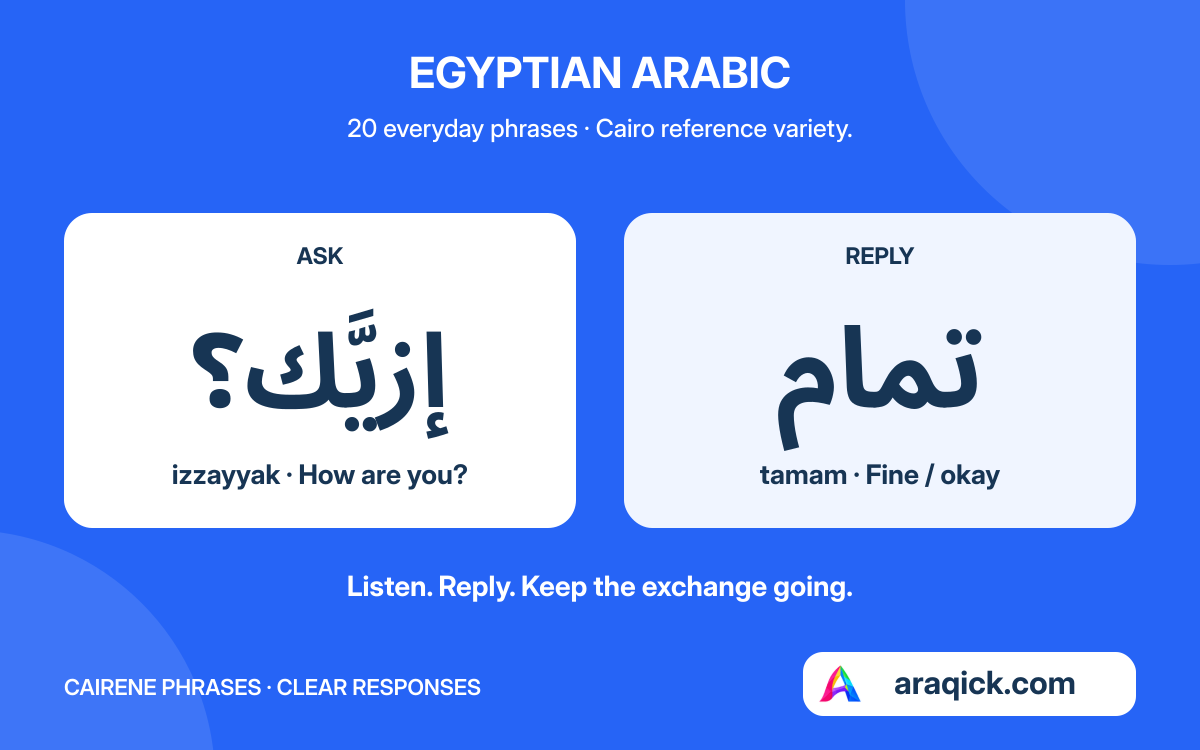
Treat the result as evidence about that exchange. One difficult joke does not prove that an entire variety is incomprehensible. Explore Arabic-speaking regions and the labelled Egyptian and Palestinian phrase examples to notice useful differences in context.
What to remember
- Cross-dialect understanding depends on linguistic differences, previous exposure, context and the task.
- Understanding can be unequal in the two directions; that is not a measure of a dialect’s worth.
- Speakers can clarify meaning through accommodation and shared resources without always switching completely to MSA.
Your reference shelf
Open a guide whenever you need it.
What changes the difficulty of an exchange?Assess the situation rather than assigning a fixed comprehension score to a country.
| Factor | What can happen | A useful response |
|---|---|---|
| Familiarity | A listener recognises frequently heard expressions | Check the listener’s previous contact with the variety. |
| Sound differences | A related word is not immediately recognised | Repeat it in a full phrase or provide another familiar word. |
| Vocabulary | An everyday term differs across varieties | Give a synonym, example or specific explanation. |
| Speech rate | Boundaries and small forms are difficult to hear | Slow down or repeat a short meaningful unit. |
| Context | A shared setting makes the intended meaning easier to identify | Point to the object or state the topic. |
| Task | A routine request is easier than an unfamiliar joke or specialist explanation | Compare similar tasks before making a wider claim. |
| Interaction | Feedback reveals where comprehension failed | Ask a focused question and confirm the intended meaning. |
One purpose, several formsSelected models for expressing a want; these are examples, not complete dialect descriptions.
| Variety / model | Arabic | Reading aid | Important distinction |
|---|---|---|---|
| Modern Standard Arabic | أُرِيدُ | uridu | The first-person verb works for a male or female speaker. |
| Egyptian Arabic: male speaker | عايز | ayiz | The adjective-like want form changes with the speaker. |
| Egyptian Arabic: female speaker | عايزة | ayza | A woman uses this form in the selected model. |
| Palestinian Arabic | بدي | biddi | The selected first-person form is used by a male or female speaker. |
The plain reading aids are approximate. The regional spellings are left unpointed; recordings from the relevant community provide a better pronunciation model than English letters alone.
Check meaning with a short standard questionOriginal MSA repair examples; listener forms are labelled where needed.
| Arabic | Reading aid | Meaning / listener |
|---|---|---|
| لَمْ أَفْهَمْ هٰذِهِ الْكَلِمَةَ. | lam afham hadhihi lkalima | I did not understand this word. |
| هَلْ تَقْصِدُ الْمَحَطَّةَ؟ | hal taqsidu lmahatta | Do you mean the station? Addressing one man. |
| هَلْ يُمْكِنُكَ أَنْ تُعِيدَ الْجُمْلَةَ؟ | hal yumkinuka an tuida ljumla | Can you repeat the sentence? Addressing one man. |
These are standard models. In a regional conversation, speakers may use local equivalents, a shared synonym, gesture or another language they both know. The aim is to establish the message, not to test whether someone uses only one register.
Sources & further learning
References for the language explanations and learning guidance.
- Rasha Soliman, University of Leeds: recorded Arabic cross-dialect conversations and communication strategies
- Emma Trentman and Sonia Shiri: The Mutual Intelligibility of Arabic Dialects (2020)
- Abdel-Rahman Abu-Melhim: Intra-lingual Code Alternation in Arabic, pp. 891–902 in the publisher’s issue PDF
- Michigan State University: Egyptian want forms and everyday request expressions
- Study in Palestine / Excellence Center: Palestinian Arabic expressions including biddi
- Research study: lexical knowledge, linguistic distance and spoken varieties in Arabic diglossia