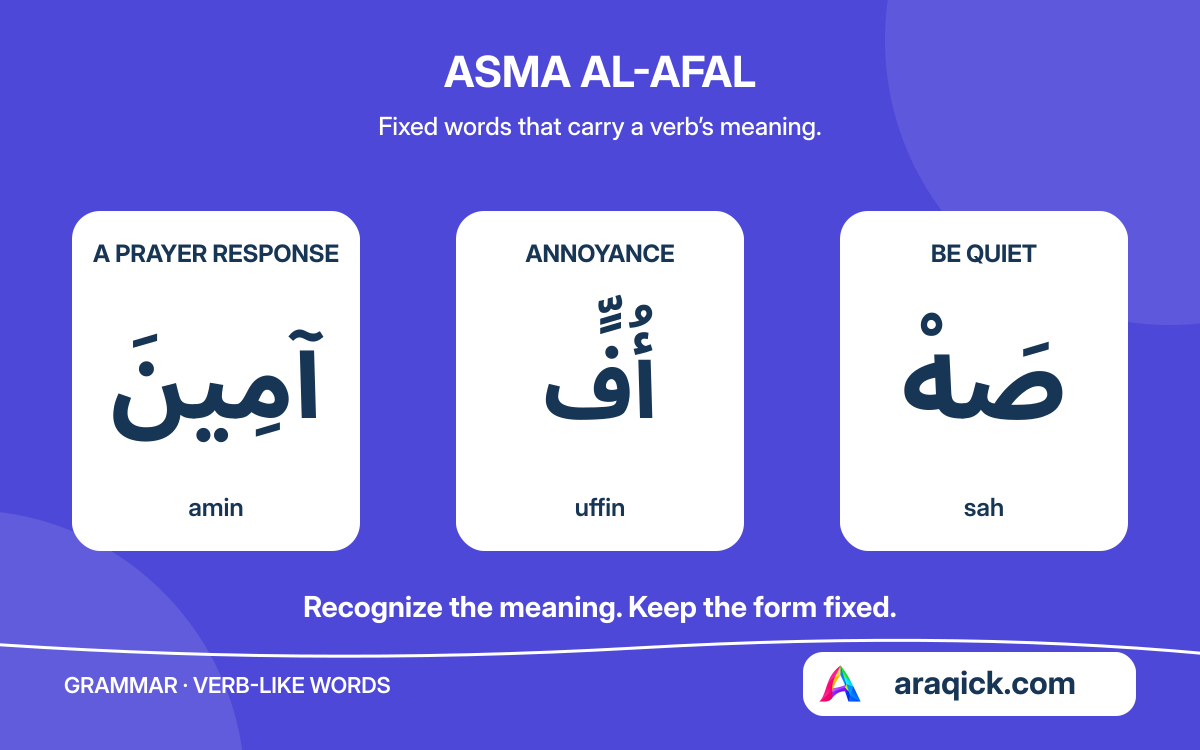
Asma al-afal are fixed words that convey a verb’s meaning without taking that verb’s normal conjugation. Amin expresses a request for a prayer to be answered, while uff expresses annoyance. Traditional grammar places these words in a special noun class. They are different from ordinary action nouns such as writing or silence.
01Recognize the request inside amin
آمِينَ يَا رَبِّ
amin ya rabbi
Amin, O Lord.
In traditional analysis, amin has the meaning of a request such as istajib, answer or respond. It is an ism fil amr: a word carrying an imperative meaning. In this prayer setting it expresses a plea for the prayer to be answered.
Its final fathah is part of its fixed grammatical form, not an accusative ending selected by a preceding verb. The related verb اِسْتَجِبْ has its own conjugation; see istajaba and istajib.
02Read uff as an expression of annoyance
أُفٍّ مِنْ هَذَا الضَّجِيجِ
uffin min hadha addajiji
Ugh, this noise!
Uffin carries the sense I am annoyed or I express displeasure. It is classified as an ism fil with a present-verb meaning, corresponding to أَتَضَجَّرُ. Its tone expresses irritation, so it is not a neutral word for noise.
The marked form here has kasrah tanwin. That does not make it a genitive noun governed by min: min comes after it. This is a fixed expression, and this tanwin does not make it an ordinarily declining noun.
03Use sah without person conjugation
صَهْ يَا أَصْدِقَائِي
sah ya asdiqai
Quiet, my friends.
Sah corresponds to the command uskut, be quiet. The friends are addressed as a group, but sah itself keeps the same form. You do not add a plural verb ending to this word.
An ordinary command would change from اُسْكُتْ to اُسْكُتُوا when addressing a male or mixed group. Sah remains fixed. This concise expression can sound firm or literary, so recognize its tone as well as its grammatical label.
04Recognize a past-meaning member of the class
هَيْهَاتَ اللِّقَاءُ
hayhata alliqau
The meeting is far off.
Hayhata is traditionally classified as an ism fil madi, corresponding to the past-form verb bauda, was or became distant. Its natural English translation can describe something remote or far off; it is not the ordinary word for meeting.
Alliqau is nominative as its subject. This shows why the class is more than a loose collection of English interjections: these words can have the grammatical relationships of their corresponding verbs. Hayhata itself has a fixed final fathah.
05Distinguish an ism fil from a verb and a masdar
صَهْ — اُسْكُتْ — سُكُوتٌ
sah — uskut — sukutun
Be quiet — Be quiet — Silence
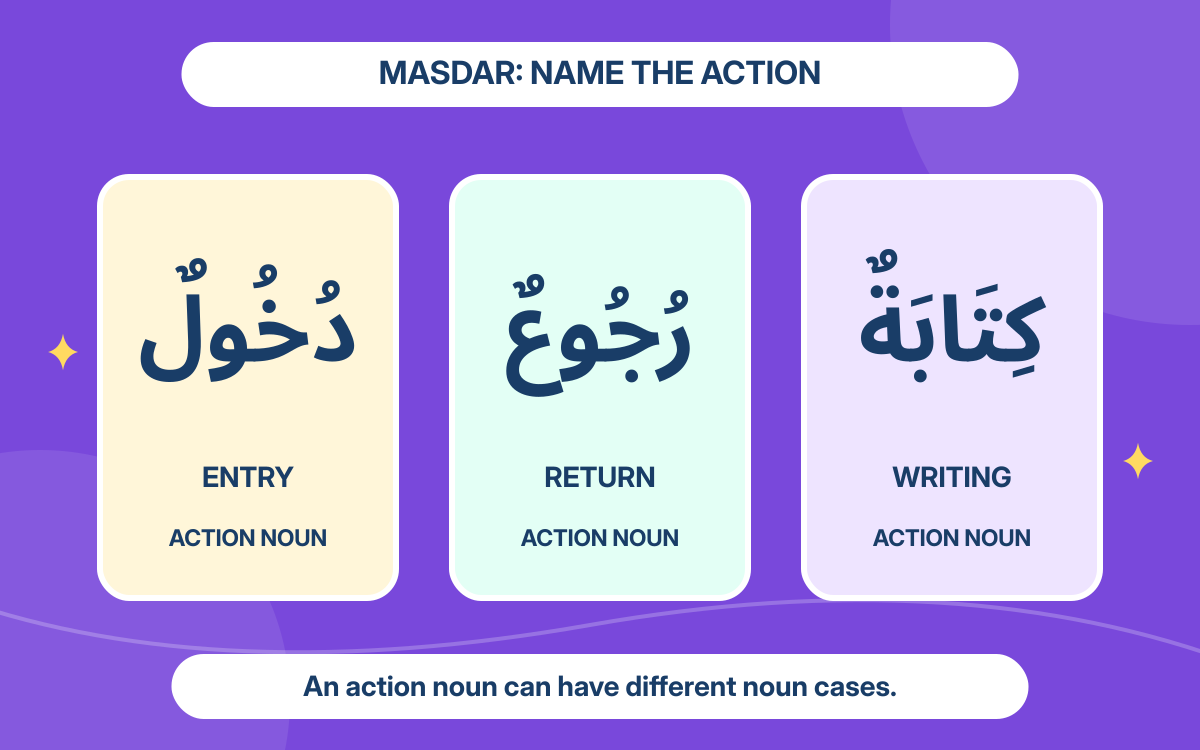
Sah is an ism fil. Uskut is an ordinary imperative verb, with normal command forms for different addressees. Sukutun is a masdar naming silence or being silent; its case depends on its sentence role.
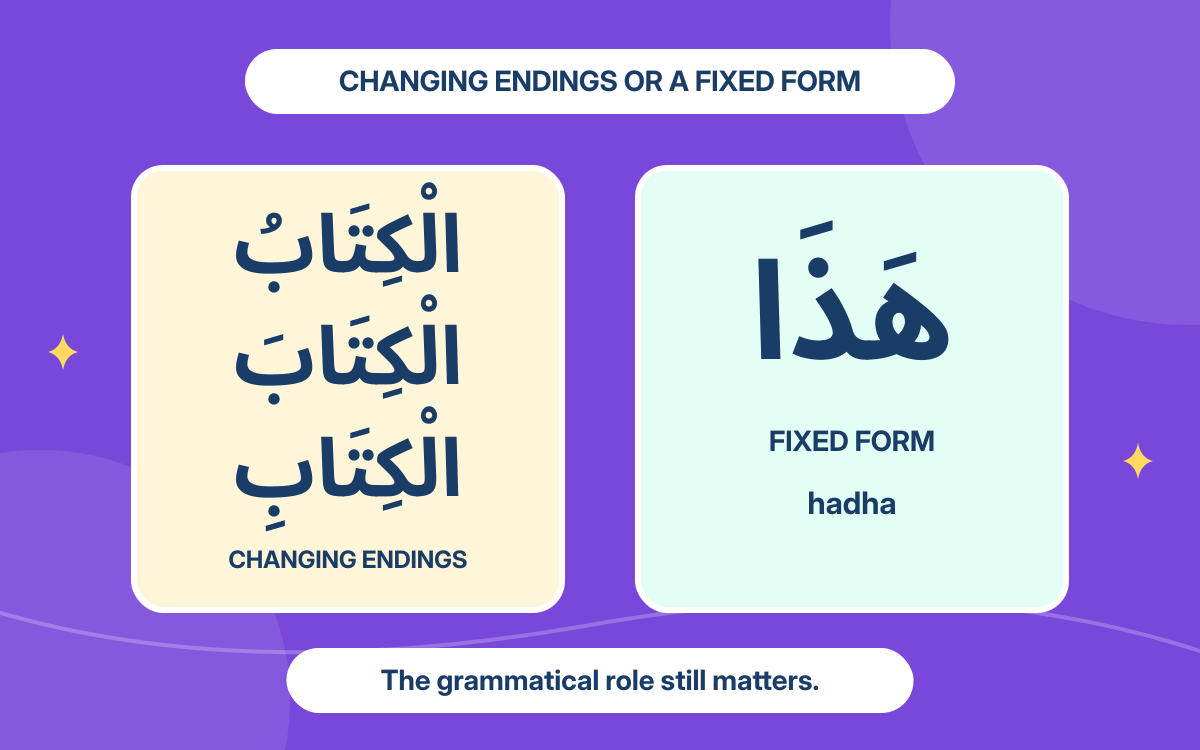
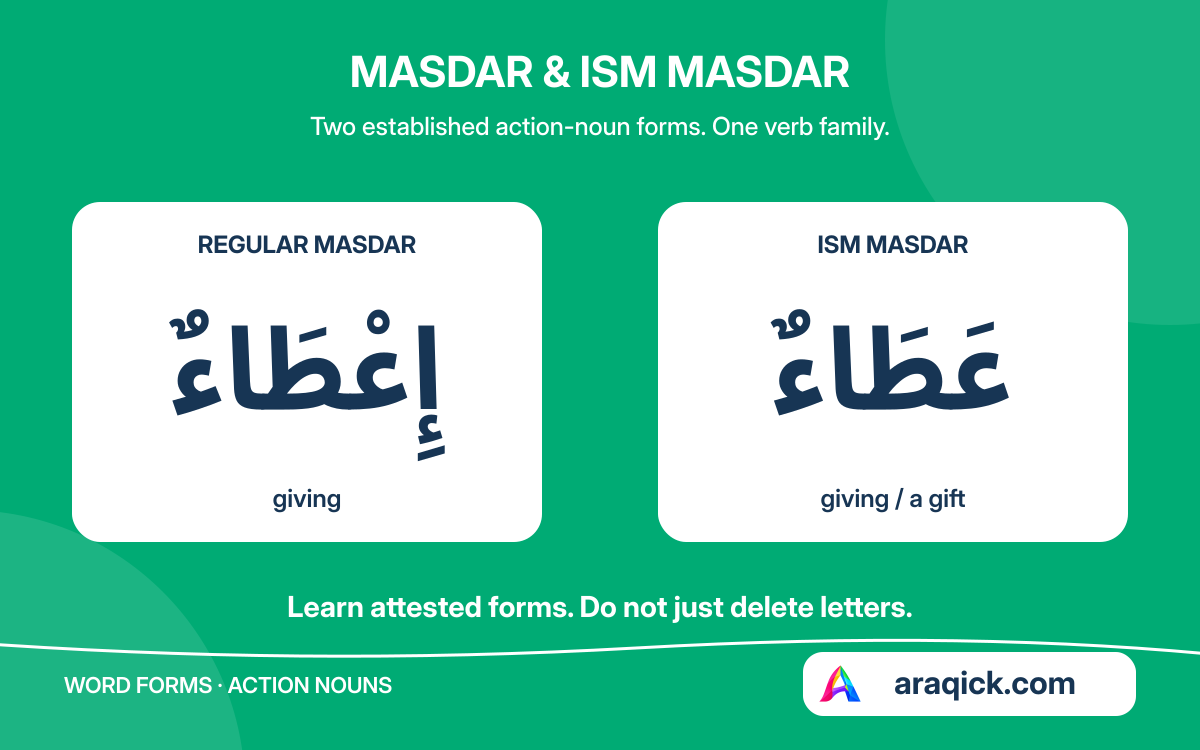
Similar English translations do not make these three grammatical categories identical. Nor is an ism fil the same term as an ism masdar. Compare masdar and ism masdar and fixed and changing word endings. Plain reading aids simplify Arabic sounds and vowel length.
What to remember
- Asma al-afal carry verb meanings while keeping fixed forms.
- Amin and sah have command meanings; uff has a present meaning and hayhata a past meaning.
- An ism fil is distinct from an ordinary verb, a masdar and an ism masdar.
Your reference shelf
Open a guide whenever you need it.
Five expressions and their verb meaningsLearn the marked form and its conventional use
| Expression | Corresponding verb | Traditional type | Meaning |
|---|---|---|---|
| آمِينَ | اِسْتَجِبْ | Command meaning | Answer the prayer |
| صَهْ | اُسْكُتْ | Command meaning | Be quiet |
| أُفٍّ | أَتَضَجَّرُ | Present meaning | I express annoyance |
| آهِ | أَتَوَجَّعُ | Present meaning | I am in pain |
| هَيْهَاتَ | بَعُدَ | Past meaning | Was / became distant |
These are recognition models, not a rule for turning any short word into an ism fil. Some expressions have additional attested vocalizations.
Similar meanings, different categoriesUse the Arabic form and its behaviour to classify it
| Arabic | Category | Behaviour |
|---|---|---|
| صَهْ | Ism fil amr | Fixed expression; no ordinary command-person endings |
| اُسْكُتْ | Imperative verb | Changes for person and number |
| سُكُوتٌ | Masdar | Names the action; case depends on sentence role |
| سَاكِتٌ | Active participle | Describes someone silent; agrees as appropriate |
Sources & further learning
References for the language explanations and learning guidance.