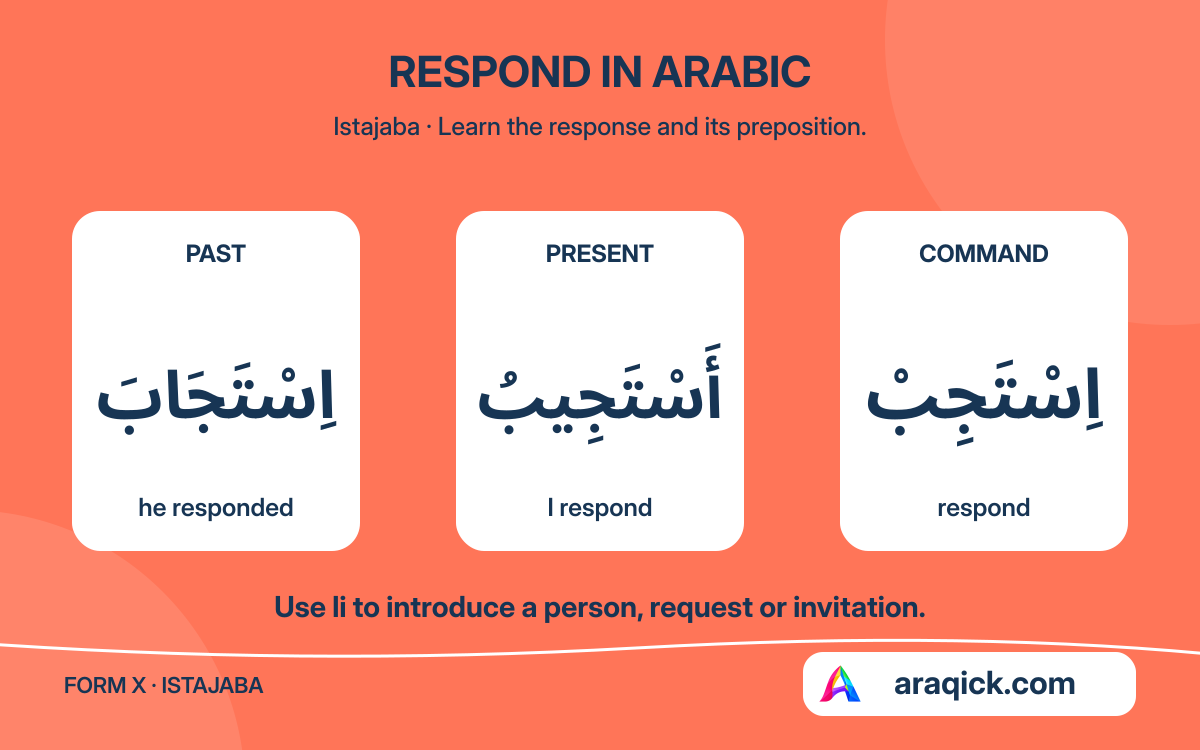
Istajaba means responded or answered a call. It commonly takes li to introduce the person, request or invitation receiving a response. This Form X verb has a weak middle root letter, so its long vowels shorten in some forms. Learn the full expression along with the conjugation.
01Respond to a request
اِسْتَجَابَ الْفَرِيقُ لِلطَّلَبِ
istajaba alfariqu littalabi
The team responded to the request.
The root is ج و ب. The team is the subject, and littalabi contains li plus the definite noun for the request. The noun is genitive after li.
Respond is often a better general English starting point than answer a question. Depending on context, istajaba can include complying with a request or accepting a call. Learn this li construction as a useful model rather than treating every English answer as the same Arabic verb.
02Shorten the stem before tu and na
اِسْتَجَبْتُ لِلدَّعْوَةِ
istajabtu liddawati
I responded to the invitation.
Istajabtu has a short a before ba, unlike the long a of istajaba. We responded is اِسْتَجَبْنَا. Do not attach tu or na to an unchanged long-vowel stem.
They responded for a male or mixed group is اِسْتَجَابُوا, keeping the long a. A female group uses اِسْتَجَبْنَ, with the short stem. The reference chart shows the contrast across persons.
03Use long i in the common present forms
نَسْتَجِيبُ لِرَسَائِلِ الْعُمَلَاءِ
nastajibu lirasaili alumalai
We respond to customers’ messages.
Nastajibu means we respond, while أَسْتَجِيبُ means I respond. The usual present has long i before the last root consonant. Its initial person prefix has fathah.
The messages phrase is an idafa: rasaili is governed by li and is also the first term of messages of the customers. Its genitive kasrah is appropriate here. The feminine-plural forms shorten the stem, so check them separately rather than copying the singular.
04Give a request to respond
اِسْتَجِبْ لِهَذَا الطَّلَبِ
istajib lihadha attalabi
Respond to this request. — to one man
The singular command istajib has a short i and final sukun. To one woman it is اِسْتَجِيبِي, and to a male or mixed group it is اِسْتَجِيبُوا, both with long i.
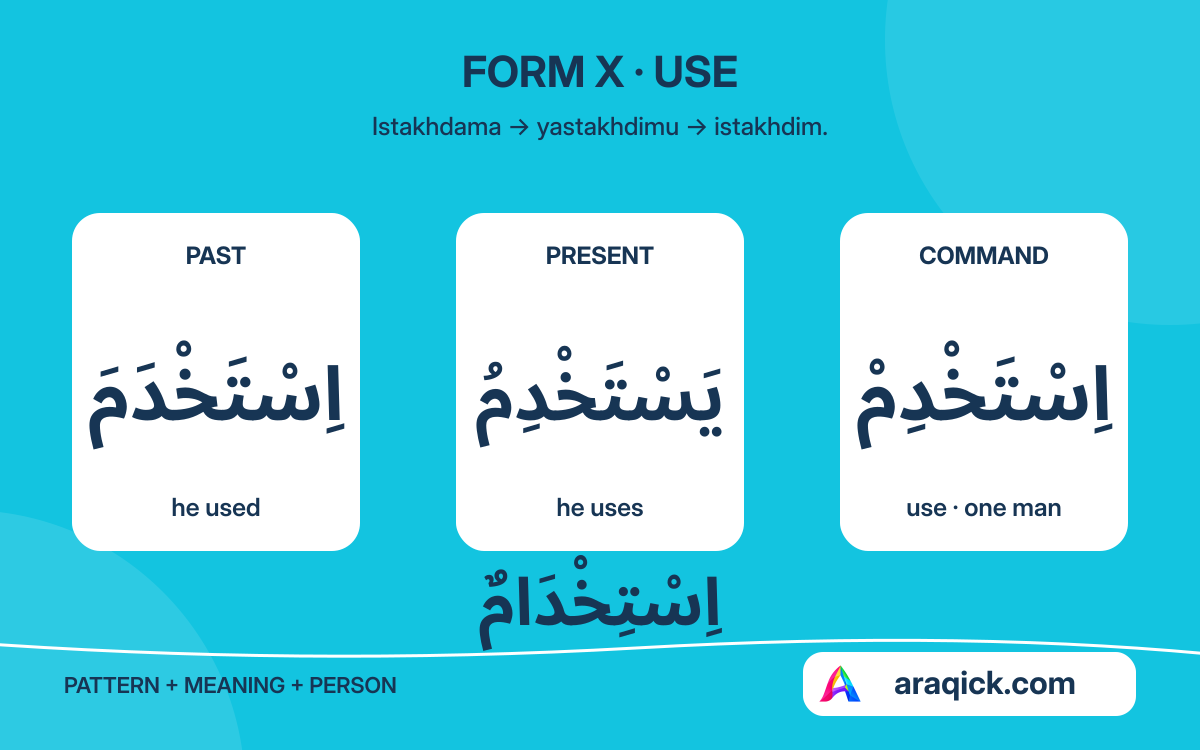
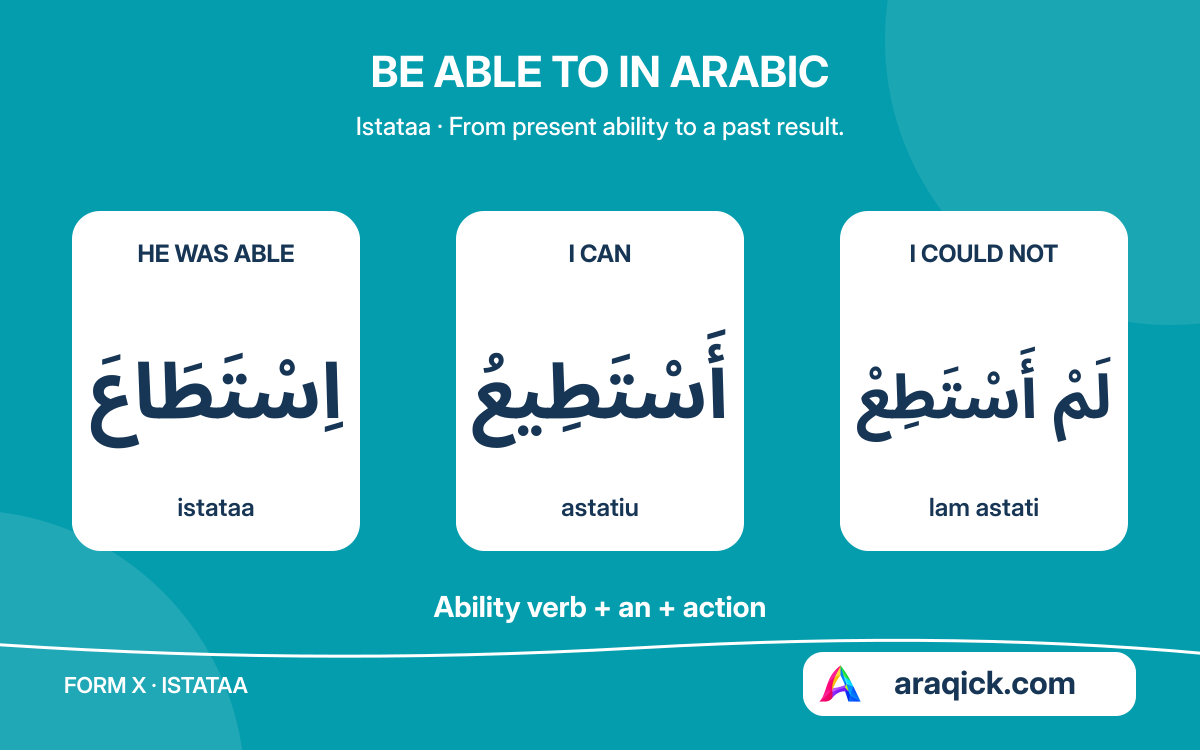
The masdar اِسْتِجَابَةٌ names a response or the act of responding. Compare the broader Form X guide and istataa for another hollow verb with a similar family of stem changes.
05Separate lam from lan
لَمْ أَسْتَجِبْ لِلرِّسَالَةِ
lam astajib lirrisalati
I did not respond to the message.
After lam, the verb is jussive: the long i shortens, and ba takes sukun. After lan, لَنْ أَسْتَجِيبَ means I will not respond; it keeps long i and ends in fathah.
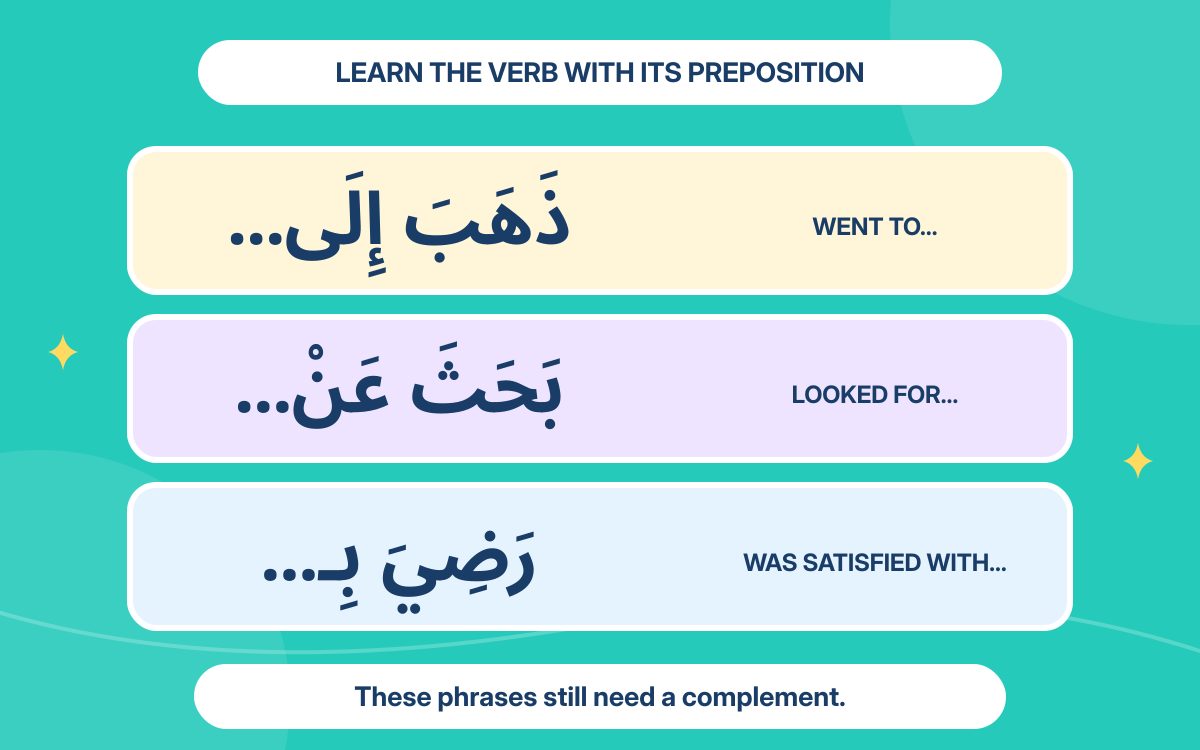
For answering a question, a common alternative is أَجَابَ عَنِ السُّؤَالِ. Ajaba is Form IV, not another person form of istajaba. Record the verb and its preposition together. Plain reading aids simplify Arabic sounds and vowel length.
What to remember
- Istajaba commonly uses li to introduce what receives a response.
- Istajabtu has a short past stem; astajibu has long i.
- Lam astajib shortens the stem, while lan astajiba keeps long i.
Your reference shelf
Open a guide whenever you need it.
Istajaba: past and present referenceLong and short stems depend on the ending
| Subject | Past | Present indicative |
|---|---|---|
| He | اِسْتَجَابَ | يَسْتَجِيبُ |
| They — two males | اِسْتَجَابَا | يَسْتَجِيبَانِ |
| They — male or mixed group | اِسْتَجَابُوا | يَسْتَجِيبُونَ |
| She | اِسْتَجَابَتْ | تَسْتَجِيبُ |
| They — two females | اِسْتَجَابَتَا | تَسْتَجِيبَانِ |
| They — female group | اِسْتَجَبْنَ | يَسْتَجِبْنَ |
| You — one man | اِسْتَجَبْتَ | تَسْتَجِيبُ |
| You — two people | اِسْتَجَبْتُمَا | تَسْتَجِيبَانِ |
| You — male or mixed group | اِسْتَجَبْتُمْ | تَسْتَجِيبُونَ |
| You — one woman | اِسْتَجَبْتِ | تَسْتَجِيبِينَ |
| You — female group | اِسْتَجَبْتُنَّ | تَسْتَجِبْنَ |
| I | اِسْتَجَبْتُ | أَسْتَجِيبُ |
| We | اِسْتَجَبْنَا | نَسْتَجِيبُ |
Commands, negatives and related expressionsKeep the verb family and its preposition together
| Function | Arabic | Meaning |
|---|---|---|
| Command — one man | اِسْتَجِبْ | Respond |
| Command — one woman | اِسْتَجِيبِي | Respond |
| Command — male or mixed group | اِسْتَجِيبُوا | Respond |
| Past negative — I | لَمْ أَسْتَجِبْ | I did not respond |
| Future negative — I | لَنْ أَسْتَجِيبَ | I will not respond |
| Action noun | اِسْتِجَابَةٌ | Response / responding |
| Related Form IV expression | أَجَابَ عَنِ السُّؤَالِ | He answered the question |
Sources & further learning
References for the language explanations and learning guidance.