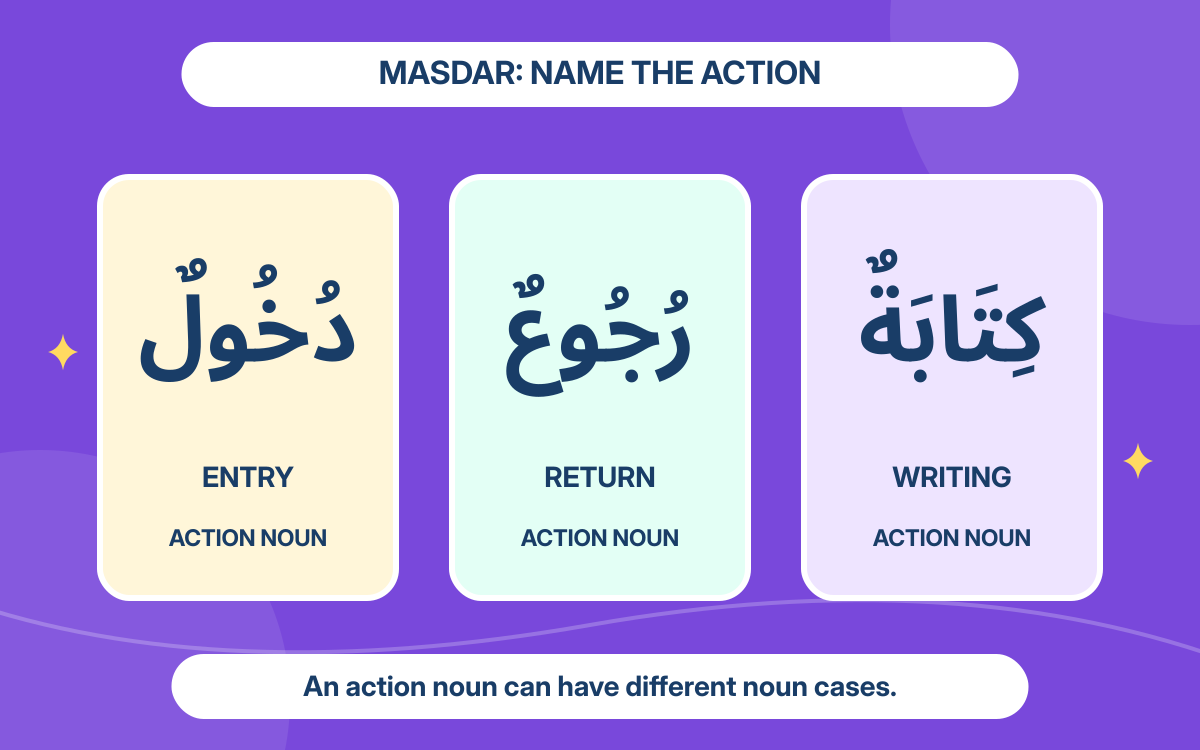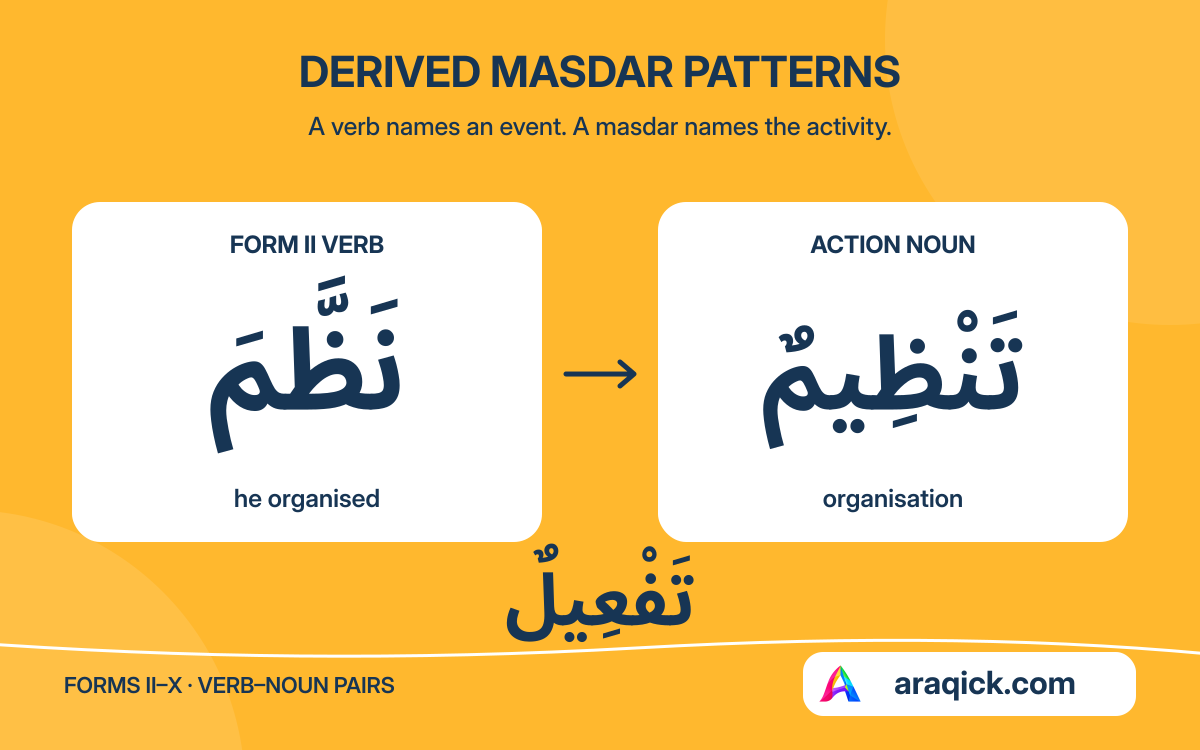
A masdar names an action without identifying a tense or subject. An ism masdar can express the same action meaning in a different, established form. The distinction concerns a word’s relationship to its verb, not whether the word happens to end in u, a or i in a sentence.
01Compare two nouns for giving
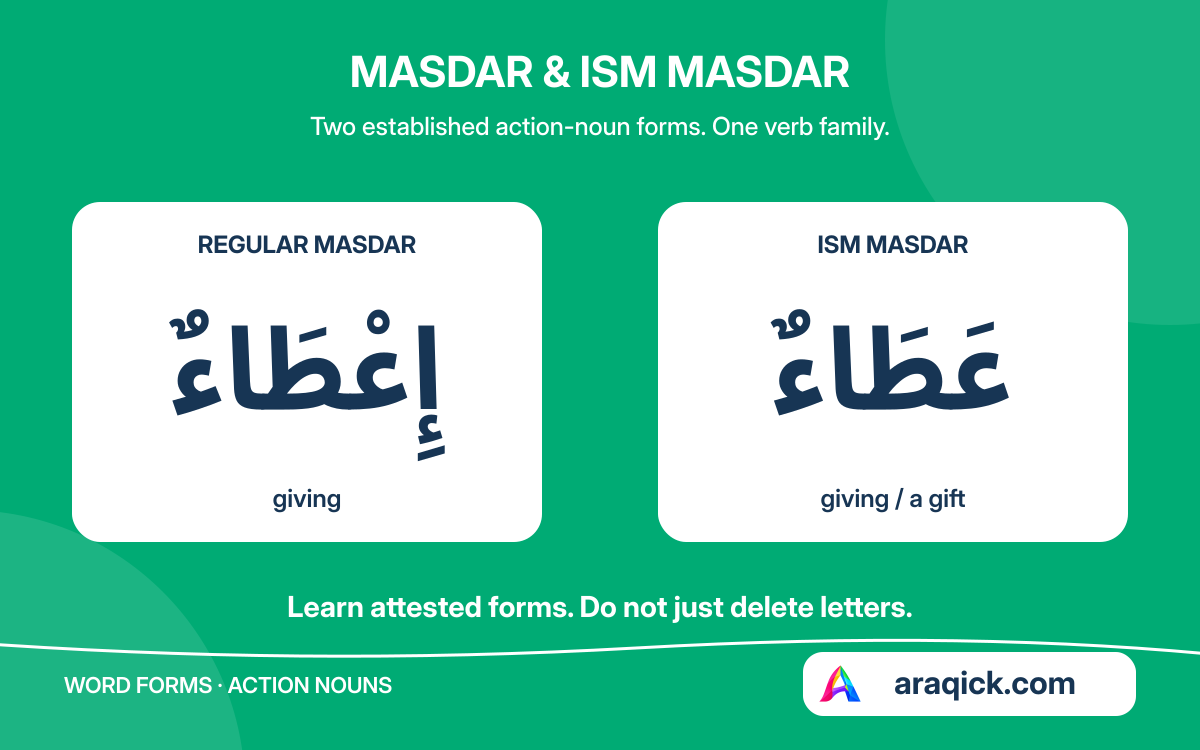
إِعْطَاءٌ — عَطَاءٌ
itaun — ataun
Giving — giving or a gift
The regular masdar of أَعْطَى is itaa, written إِعْطَاءٌ. Ataa, عَطَاءٌ, is an established ism masdar. It can denote giving, while context can also give it the concrete sense gift.
Traditional grammar identifies the ism masdar by letters of the verb that are absent without an understood or compensating replacement. Here the initial hamzah of aata is absent from ataa. This is more precise than merely calling any short noun an ism masdar.
02Connect salam to its verb family
سَلَّمْتُ عَلَى جَارِي سَلَامًا لَطِيفًا
sallamtu ala jari salaman latifan
I greeted my neighbour kindly.
Taslim is the regular masdar of sallama; salam is the ism masdar used for the greeting action here. Salaman latifan describes the kind of greeting and has an accusative role.
The noun salam also has familiar uses such as peace. Read the sense required by this sentence. A word-family relationship does not make two nouns interchangeable in every expression, even when both can name a related action.
03Do not manufacture forms by deleting letters
وَعَدَ — عِدَةٌ
waada — idatun
He promised — a promise
Idah is a masdar even though the original waw is not visible. Traditional analysis treats the ta marbutah as compensation for the missing letter. This is why simple counting is not a dependable test.
Learn established pairs from a grammar reference or dictionary. Do not remove the beginning of every derived masdar and assume the result is an accepted ism masdar. Many such invented forms will be different words or no word at all.
04Let the sentence choose the ending
هَذَا عَطَاءٌ كَرِيمٌ
hadha ataun karimun
This is a generous gift.
Ataun is a nominative predicate in this sentence. Its classification as an ism masdar does not force it into the accusative. In أُقَدِّرُ هَذَا الْعَطَاءَ, I appreciate this gift, alataa belongs to the accusative object phrase.
The ending describes the word’s current grammatical job. The word-family label describes its formation and meaning. These are separate questions, just as an ordinary masdar can be a subject, an object or a noun after a preposition.
05Check the verb before calling something an absolute object
نَسْمَعُ كَلَامًا وَاضِحًا
nasmau kalaman wadihan
We hear clear speech.
Kalam is an ism masdar associated with kallama, whose regular masdar is taklim. Here, however, kalaman is what we hear: it is the direct object of nasmau. It is not repeating the hearing action.
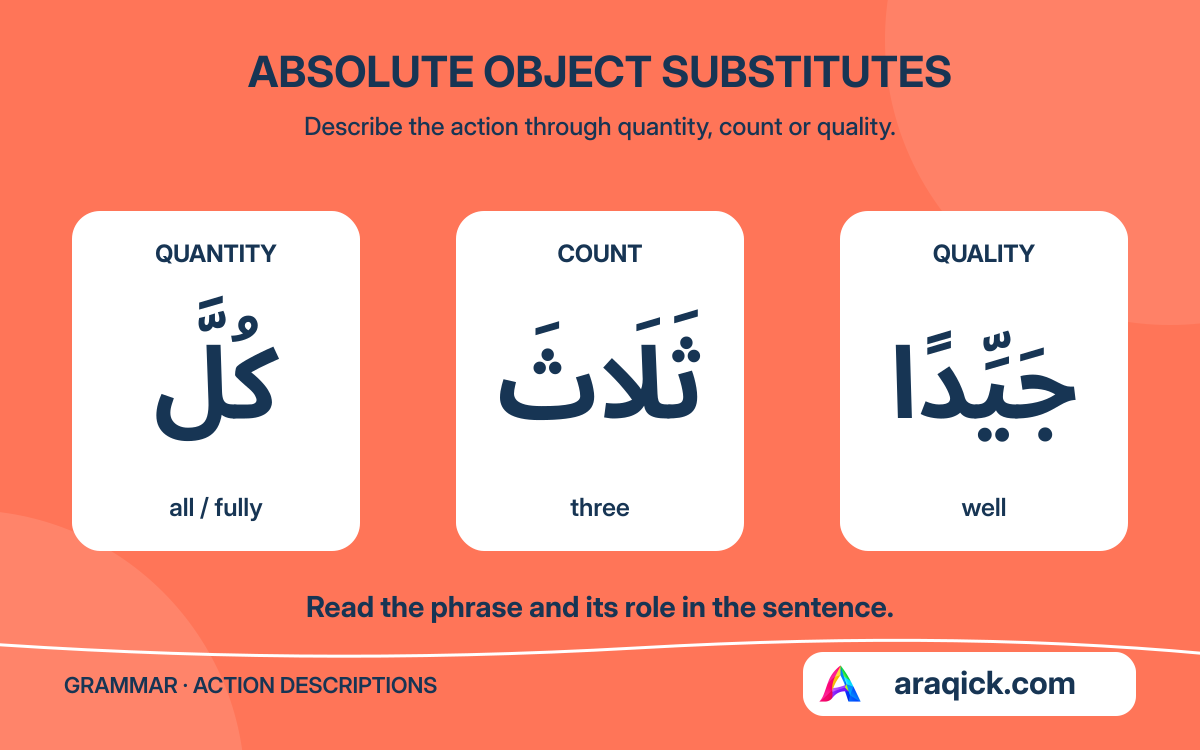
Compare action nouns and absolute-object substitutes. Ask three questions: which verb family, which meaning, and which sentence role? The charts show exact Arabic forms; plain reading aids simplify consonants and vowel length.
What to remember
- A masdar and an ism masdar can name the same action through different established forms.
- Missing letters and compensation matter; simple word length is not enough.
- The sentence decides case, independently of the noun’s word-family label.
Your reference shelf
Open a guide whenever you need it.
Established action-noun pairsLearn the whole family rather than deleting letters
| Verb | Regular masdar | Ism masdar |
|---|---|---|
| أَعْطَى | إِعْطَاءٌ | عَطَاءٌ |
| سَلَّمَ | تَسْلِيمٌ | سَلَامٌ |
| كَلَّمَ | تَكْلِيمٌ | كَلَامٌ |
| وَدَّعَ | تَوْدِيعٌ | وَدَاعٌ |
| تَوَضَّأَ | تَوَضُّؤٌ | وُضُوءٌ |
These pairings concern the action meanings. Individual nouns can have additional meanings or fixed expressions.
Word type and sentence role are differentKeep the two questions separate
| Example | Word under discussion | Its role here |
|---|---|---|
| هَذَا عَطَاءٌ كَرِيمٌ | عَطَاءٌ | Nominative predicate |
| أُقَدِّرُ هَذَا الْعَطَاءَ | الْعَطَاءَ | Part of an accusative object phrase |
| نَسْمَعُ كَلَامًا وَاضِحًا | كَلَامًا | Accusative direct object |
| كَلَّمْتُهُ كَلَامًا لَطِيفًا | كَلَامًا | Ism masdar substituting for an absolute object |
An an ending marks a common accusative form; it does not identify the role by itself.
Sources & further learning
References for the language explanations and learning guidance.