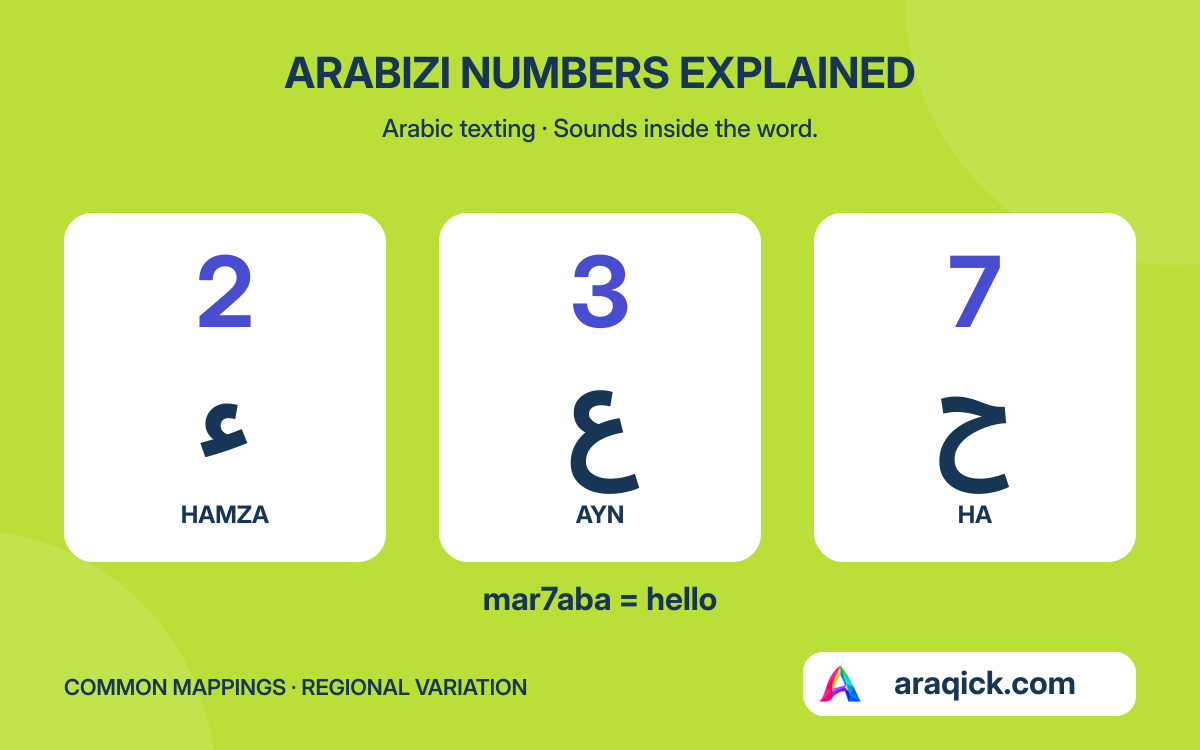
Arabizi writes Arabic with Latin letters and sometimes numbers. Common mappings include 2 for a glottal stop associated with ء, 3 for ع, and 7 for ح. Thus mar7aba represents مرحبا (hello). Read the digit as part of the word’s sound, not as a quantity. Spellings vary by dialect, community, and writer.
01Why are there numbers inside Arabic words?
Some Arabic sounds have no simple equivalent in ordinary English spelling. Chat writers use digits as extra symbols: 3arabi represents عربي (Arabic). Arabizi developed partly around technical limits on Arabic script, and it continues as an informal writing choice.
It is a way to write a language, not a separate spoken dialect. A message can mix Arabizi with English or another language.
02What do 2, 3 and 7 mean?
hamza
A brief closure in the throat.
ayn
A consonant missing from ordinary English spelling.
ha
Different from the letter ه.
The example so2al can represent سؤال (question); the hamza sits on a letter in the Arabic spelling. 3adi represents عادي (ordinary / okay), and 7abibi represents حبيبي (my dear).
03How do I decode a short message?
Arabic script
مرحبا يا سامي
marhaba ya Sami
Hello, Sami.
An informal spelling is mar7aba ya Sami. Replace the 7 with the sound of ح, recognise the whole word, and then read the message. Ya addresses Sami. Do not pronounce it as “mar seven aba.”
Vowels may be written differently: 3arabi and 3araby can represent the same word. Context helps you decide.
04Why can 2 correspond to the letter qaf?
In some urban Egyptian and Levantine speech, ق is pronounced as a glottal stop. A writer may therefore write 2ahwa for قهوة (coffee). The 2 follows the spoken sound even though the Arabic spelling contains qaf.
This does not mean qaf is always hamza or that all speakers pronounce it that way. Compare the separate Egyptian and Palestinian lessons.
05Are 8 and 9 fixed everywhere?
No. In some communities, 8 represents ق; in others, غ. The digit 9 often represents ص in eastern conventions, while some Maghrebi writers use it for ق. These are examples of variation, not a complete map of every country.
If a spelling is unfamiliar, use the word, dialect, and surrounding sentence together. Ask the writer to put the word in Arabic script when it remains unclear.
06When is Arabizi appropriate?
Arabizi is common in casual messages. Formal Arabic emails, study materials, and official forms generally call for Arabic script unless the recipient requests another format. Choose the script that fits the task and audience.
The numbers here are intentional texting symbols. They differ from the quantities and digit shapes in Arabic numbers. Elsewhere on this site, ordinary reading aids use plain letters rather than Arabizi numbers.
07How can I practise without guessing?
Take one familiar word, write its Arabic spelling, and compare an Arabizi version. Check every consonant before reading the whole phrase. Keep a note of the conventions used by the people you actually message.
Review the Arabic alphabet alongside the chart. Learning script helps distinguish letters that a simplified Latin spelling may blur. The goal is to understand a message, not to impose one universal chat spelling.
What to remember
- 2, 3 and 7 commonly represent a glottal stop, ayn and ح.
- Dialect pronunciation can affect the spelling, as in 2ahwa for قهوة.
- 8 and 9 vary across communities; context is essential.
Your reference shelf
Open a guide whenever you need it.
Common symbols and important variationA decoding aid, not a universal standard.
| Symbol | Arabic sound or letter | Example / note |
|---|---|---|
| 2 | ء | so2al → سؤال (question); may represent a spoken glottal stop corresponding to ق in some dialects. |
| 3 | ع | 3arabi → عربي (Arabic). |
| 5 / kh | خ | 5alas / khalas → خلاص (done / enough, depending on context). |
| 6 | ط | A common representation of emphatic t. |
| 7 | ح | mar7aba → مرحبا (hello). |
| 8 | ق / غ | The value depends on the community and word. |
| 9 | ص / ق | Often ص in eastern conventions; also ق in some Maghrebi conventions. |
| 3' / gh | غ | Other common spellings of ghayn; apostrophe conventions also vary. |
A Latin h alone can be ambiguous in informal messages. The table lists common uses rather than assigning every writer the same rules.
Sources & further learning
References for the language explanations and learning guidance.