Start a phone call with marhaban, hello, and ana followed by your name. Then learn how to explain a sound problem, request a message and say you will call later. These six Modern Standard Arabic phrases give you a small, practical call toolkit.
01Say hello and identify yourself
مَرْحَبًا
marhaban
Hello.
أَنَا سَامِي
ana sami
I am Sami. On a call: This is Sami.
Sami is our fictional caller. Replace the name with your own after ana, I. These two phrases let the listener know who is calling without a long introduction.
A male or female speaker uses ana in the same way. The name changes, but this opening pattern does not.
02Say when you cannot hear well
لَا أَسْمَعُكَ جَيِّدًا
la asmauka jayyidan
I cannot hear you well. To one man.
لَا أَسْمَعُكِ جَيِّدًا
la asmauki jayyidan
I cannot hear you well. To one woman.
Jayyidan means well. These sentences describe hearing the other person poorly, perhaps because the connection is weak. Choose asmauka or asmauki for the person whose voice you are trying to hear, regardless of your own gender.
03Describe the sound itself
الصَّوْتُ غَيْرُ وَاضِح
assawt ghayr wadih
The sound is unclear.
Assawt means the sound. Ghayr wadih means unclear in this model. This sentence focuses on the audio rather than directly addressing the caller, so it does not change for a male or female listener.
Use it when the words are broken up or difficult to hear. It describes an audio problem; it does not say that you need an explanation of the meaning.
04Switch to a written message
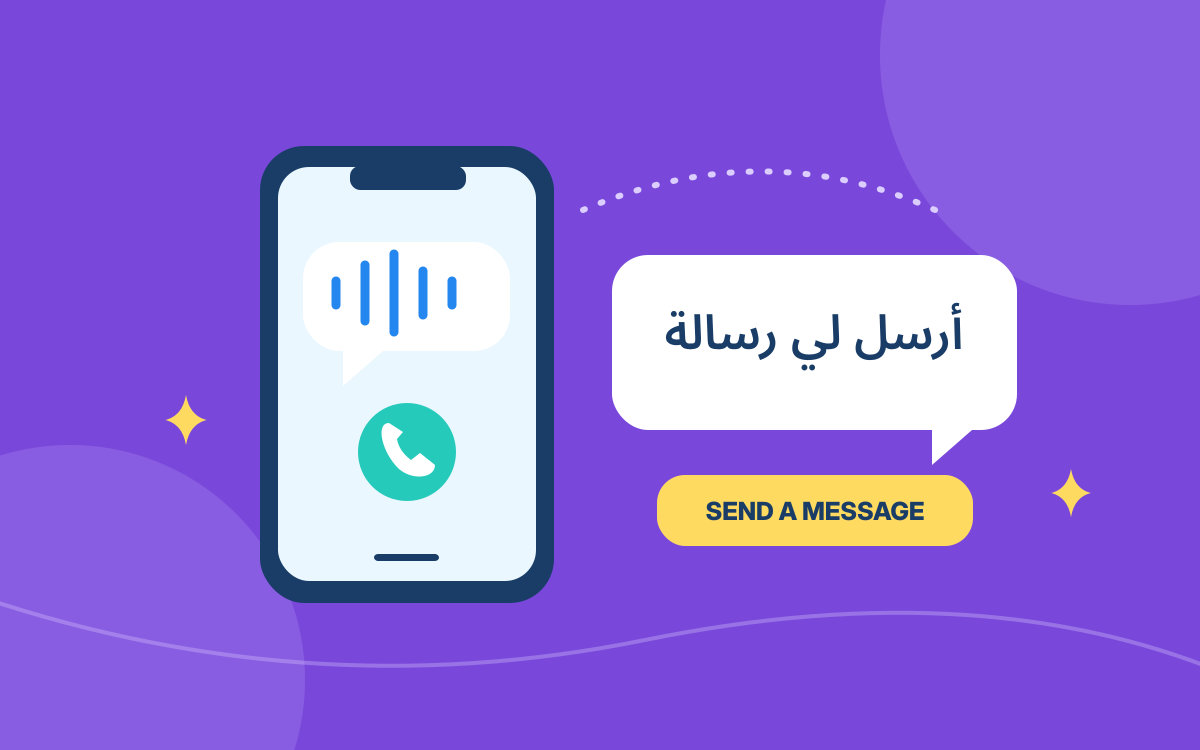
أَرْسِلْ لِي رِسَالَة، مِنْ فَضْلِكَ
arsil li risala min fadlika
Send me a message, please. To one man.
أَرْسِلِي لِي رِسَالَة، مِنْ فَضْلِكِ
arsili li risala min fadliki
Send me a message, please. To one woman.
Arsil or arsili asks the listener to send. Li means to me, and risala means a message. Keep the please ending matched to the same listener. The request can help when a written detail would be easier to follow.
05Say you will call later
سَأَتَّصِلُ بِكَ لَاحِقًا
saattasilu bika lahiqan
I will call you later. To one man.
سَأَتَّصِلُ بِكِ لَاحِقًا
saattasilu biki lahiqan
I will call you later. To one woman.
The attached sa marks the future here. Lahiqan means later. Bika and biki identify the person you will call; the first-person verb remains the same.
For the practice order, start with I will call, follow with you, and end with later. This sentence gives a future intention without naming an exact time. Use it when you plan to continue the conversation after the current call.
What to remember
- Open with marhaban and ana followed by your name.
- Use the hearing or unclear-sound phrase when the audio is difficult to follow.
- Match male or female listener forms in message requests and promises to call later.
Your reference shelf
Open a guide whenever you need it.
Save the six call phrasesOpen the full phrase list and listener variants
| Meaning | Arabic | Plain reading aid |
|---|---|---|
| 1. Hello | مَرْحَبًا | marhaban |
| 2. I am Sami / This is Sami | أَنَا سَامِي | ana sami |
| 3. I cannot hear you well: to a man | لَا أَسْمَعُكَ جَيِّدًا | la asmauka jayyidan |
| 3. I cannot hear you well: to a woman | لَا أَسْمَعُكِ جَيِّدًا | la asmauki jayyidan |
| 4. The sound is unclear | الصَّوْتُ غَيْرُ وَاضِح | assawt ghayr wadih |
| 5. Send me a message, please: to a man | أَرْسِلْ لِي رِسَالَة، مِنْ فَضْلِكَ | arsil li risala min fadlika |
| 5. Send me a message, please: to a woman | أَرْسِلِي لِي رِسَالَة، مِنْ فَضْلِكِ | arsili li risala min fadliki |
| 6. I will call you later: to a man | سَأَتَّصِلُ بِكَ لَاحِقًا | saattasilu bika lahiqan |
| 6. I will call you later: to a woman | سَأَتَّصِلُ بِكِ لَاحِقًا | saattasilu biki lahiqan |
Repeated numbers group variants of the same phrase. The reading aids use plain letters and simplify some sounds and grammatical endings. The doubled t in saattasilu reflects the Arabic shadda.
Sources & further learning
References for the language explanations and learning guidance.