A word family connects vocabulary through a shared root, but related words do not all have the same meaning. A useful study set combines a familiar action, a person or thing related to it, and one sentence showing the difference. Start small, verify each member and practise choosing the word you actually need.
01Begin with an action in a sentence
كَتَبَتْ سَلْمَى مُلَاحَظَةً قَصِيرَةً
katabat salma mulahazatan qasiratan
Salma wrote a short note.
Katabat belongs to the root ك ت ب. The sentence gives the action a clear setting before you add more relatives. Its dictionary past is kataba, he wrote.
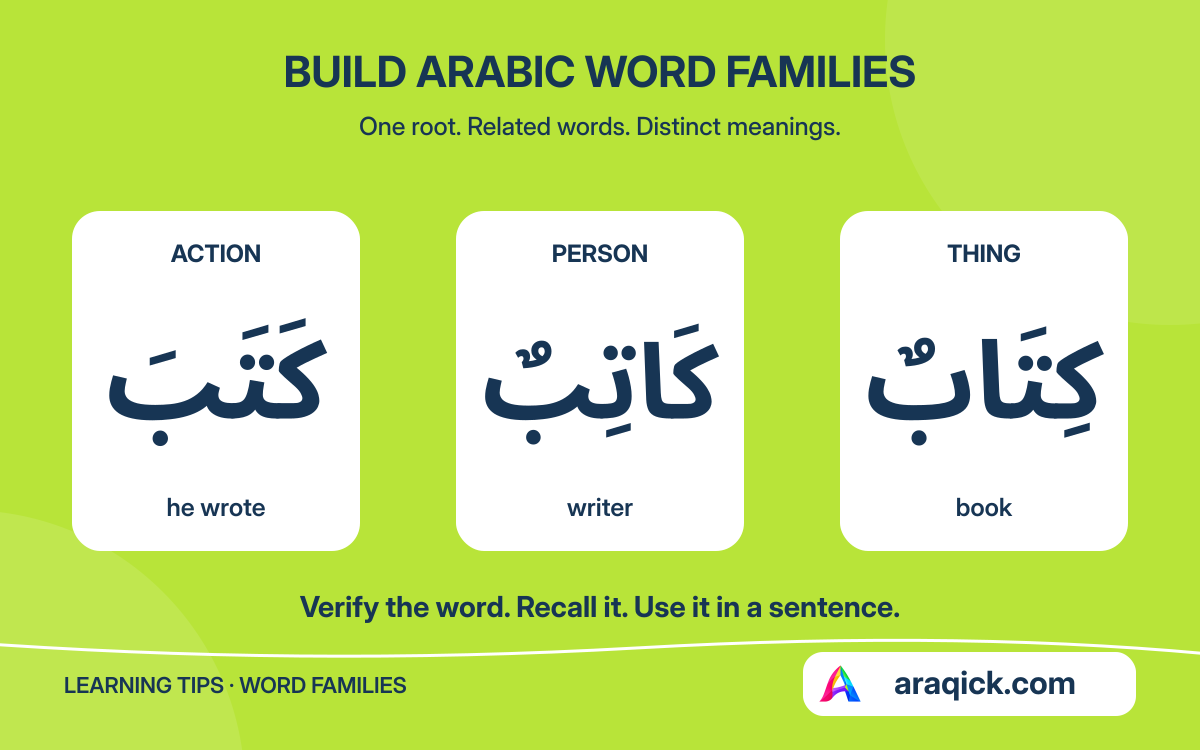
Create a small family around this known action: kataba, wrote; kitabah, writing; katib, writer; and kitab, book. Write a separate meaning beside each item. A shared root is a connection, not a complete English translation.
02Contrast people and their actions
الْمُعَلِّمُ يُعَلِّمُ، وَالْمُتَعَلِّمُ يَتَعَلَّمُ
almuallimu yuallimu wa almutaallimu yataallamu
The teacher teaches, and the learner learns.
These words share the root ع ل م, but the teacher and learner have different roles. Muallim belongs with allama, teach; mutaallim belongs with taallama, learn.
Put related forms beside each other and ask what changed in the meaning. Do not record both people simply as someone connected with knowledge. The active participle guide helps you read the added letters and vowels.
03Verify meanings instead of guessing from the pattern
هَذِهِ مَكْتَبَةٌ، وَهَذَا مَكْتَبٌ
hadhihi maktabatun wa hadha maktabun
This is a library, and this is a desk.
Maktabah and maktab share the writing root, but their established meanings differ. Maktab can mean a desk or office; maktabah can mean a library or bookshop. The context selects the sense.
Use a dictionary or a trusted lesson to verify a new family member. Recognizing a pattern gives you a useful hypothesis; it does not guarantee the meaning of every word built on it. Avoid filling a whole pattern chart with invented vocabulary.
04Recall a contrast before checking it
عَلَّمَ — تَعَلَّمَ
allama — taallama
He taught — He learned
Cover the Arabic and use the two English prompts to recall the forms. Then reveal them and check the added ta, the doubled lam and the meaning. If one is wrong, practise that contrast again inside a short sentence.
In this routine, a correct answer needs both the right form and the right role. Recognizing familiar letters is not enough if teach and learn have been exchanged. Keep the first set short enough to review carefully, then add another verified word.
05Bring the family back into real sentences
اِشْتَرَيْتُ كِتَابًا مِنَ الْمَكْتَبَةِ
ishtaraytu kitaban mina almaktabati
I bought a book from the bookshop.
The buying context makes bookshop the natural reading of maktabah here. Kitaban is the thing bought; almaktabati follows min and is genitive. The family connection does not replace sentence grammar.
On a later review, alternate a meaning prompt with a short sentence prompt. Record any uncertain form for checking rather than guessing. Use verb patterns and dictionary lookup to expand your set. Plain reading aids simplify Arabic sounds; keep the fully marked Arabic beside them.
What to remember
- Group a few verified words by root while keeping their meanings separate.
- Contrast closely related forms such as allama and taallama.
- Recall the form, check the meaning and use it in a sentence before expanding the set.
Your reference shelf
Open a guide whenever you need it.
A compact writing-family setAll six items share ك ت ب, but each needs its own meaning
| Arabic | Reading aid | Meaning to record |
|---|---|---|
| كَتَبَ | kataba | He wrote |
| كِتَابَةٌ | kitabatun | Writing |
| كَاتِبٌ | katibun | Writer |
| كِتَابٌ | kitabun | Book |
| مَكْتَبٌ | maktabun | Desk / office |
| مَكْتَبَةٌ | maktabatun | Library / bookshop |
Dictionary forms here show nominative nouns; sentence roles can change their endings.
A small word-family review routineUse one clear action at each step
| Step | What to do | Example |
|---|---|---|
| Anchor | Read one word in a sentence | كَتَبَتْ سَلْمَى مُلَاحَظَةً |
| Connect | Add a verified related word | كَاتِبٌ — writer |
| Contrast | Separate two close meanings | عَلَّمَ / تَعَلَّمَ — taught / learned |
| Recall | Hide the Arabic and answer a meaning prompt | Learner → مُتَعَلِّمٌ |
| Check | Compare the complete form and meaning | Check the added ta and doubled lam |
| Revisit | Use a later sentence prompt | Choose library or bookshop from context |
Sources & further learning
References for the language explanations and learning guidance.