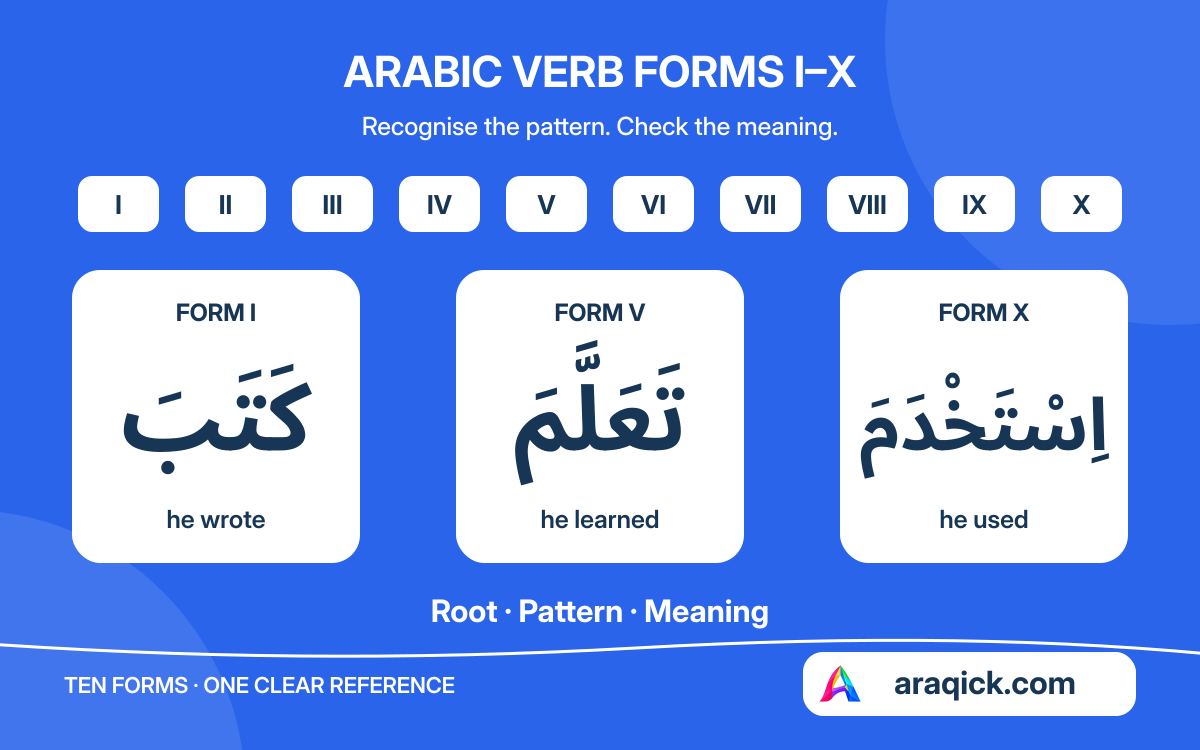
A derived verb can contain person markers, an object suffix and added pattern letters around its root. Successful lookup means separating those layers without deleting original letters. This guide moves beyond basic katabtu to longer forms, hidden weak roots and four-letter verbs, then checks the meaning in its original sentence.
01Separate person and object information
يُعَلِّمُونَهَا
yuallimunaha
They teach her.
The final ha is the object her. The una ending marks the male or mixed plural subject in this indicative form. After recognizing those pieces, identify the verb as allama, he taught, rather than searching for the whole string as a root.
Its root is ع ل م. Use that root in a root-organized dictionary, or the citation form عَلَّمَ in a headword search. Check the dictionary’s organization first. The root and citation-form introduction explains the basic distinction.
02Find the right derived entry under the root
تَعَلَّمْتُ كَلِمَةً جَدِيدَةً
taallamtu kalimatan jadidatan
I learned a new word.
Removing the recognized past I ending leads to the citation form taallama. Its root is again ayn, lam, mim, but it is Form V and means learned. Allama is Form II and means taught.
Finding the root is therefore only one part of the search. Under that root, select the entry matching the derived pattern. The first definition you see for the base verb may not translate the derived verb in your sentence.
03Restore a weak root letter through verification
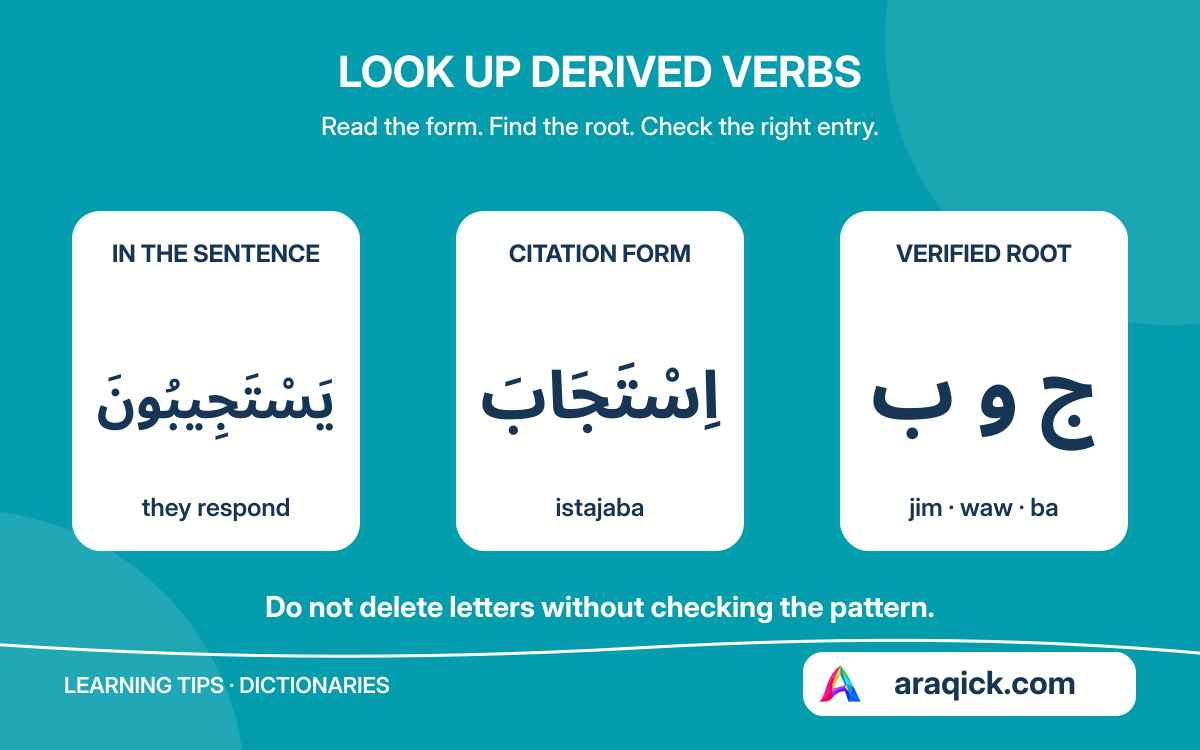
يَسْتَجِيبُونَ
yastajibuna
They respond.
The citation form is اِسْتَجَابَ, istajaba, in Form X. Its verified root is ج و ب. The visible long i in the present does not mean that the middle root must be ya.
Do not obtain the root merely by deleting the first few letters of the visible word. Compare a known conjugation chart and the dictionary entry, then record the confirmed result. Review istajaba’s short and long stems for forms such as lam astajib.
04Allow four original letters
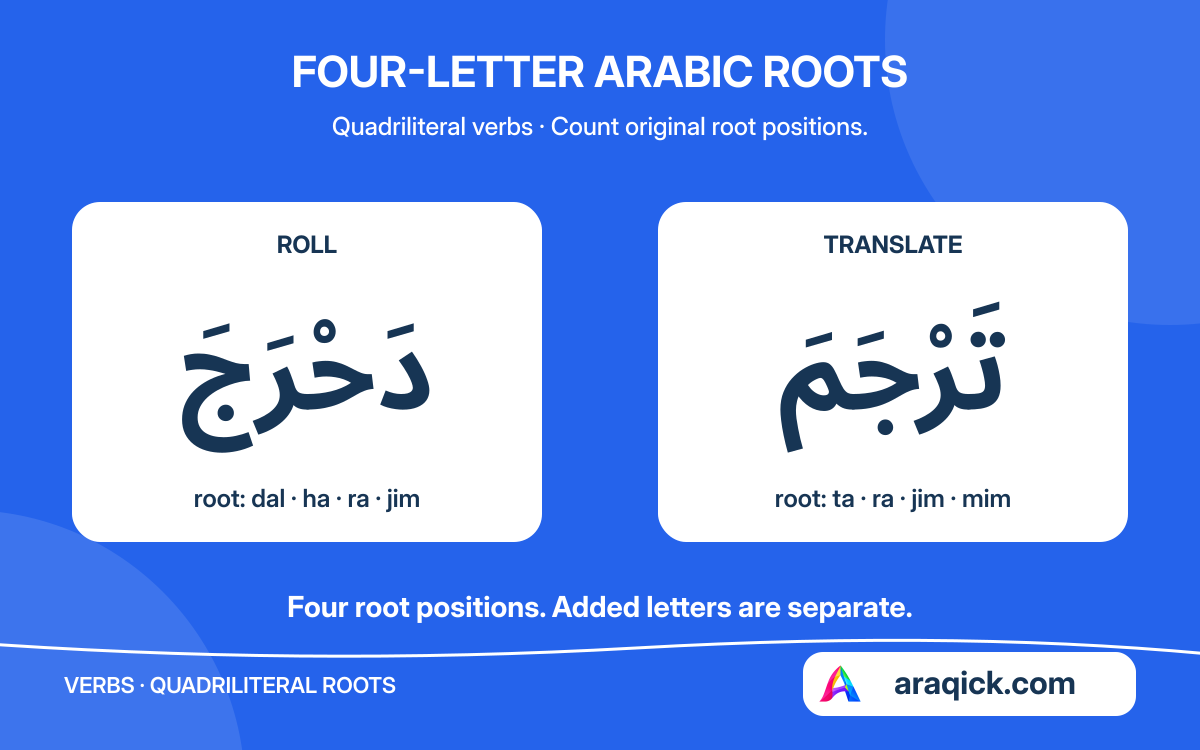
تَرْجَمَ — تَدَحْرَجَ
tarjama — tadahraja
He translated — He or it rolled
Tarjama has the root ت ر ج م: its first ta is original. Tadahraja has the root د ح ر ج: its first ta is added to a four-letter base. Neither should be forced into a three-letter root.
This is why a universal remove-ta rule fails. Use the recognized pattern and a verified entry together. The quadriliteral guide contrasts basic and derived four-root-letter verbs.
05Check the preposition and record the usable phrase
يَسْتَجِيبُ لِلنَّصِيحَةِ
yastajibu linnasihati
He heeds the advice.
The li phrase helps select the sense: the response includes taking the advice. Record the verb with its preposition, not just an isolated English answer. Context can distinguish responding to advice from answering a factual question.
Keep a short record containing the citation form, present form, root, construction and one example. Then return to the original sentence and check who acts and what the object suffix refers to. The reference card shows the method; plain reading aids simplify sounds and vowel length.
What to remember
- Separate known person and object endings before identifying the derived pattern.
- Verify hidden weak letters and allow four-letter roots.
- Choose the matching derived entry and record its preposition and sentence meaning.
Your reference shelf
Open a guide whenever you need it.
Worked lookup pathsCitation form and root answer different search questions
| Encountered form | Citation form | Verified root | Entry to select |
|---|---|---|---|
| يُعَلِّمُونَهَا | عَلَّمَ | ع ل م | Form II — teach |
| تَعَلَّمْتُ | تَعَلَّمَ | ع ل م | Form V — learn |
| يَسْتَخْدِمُ | اِسْتَخْدَمَ | خ د م | Form X — use |
| يَسْتَجِيبُونَ | اِسْتَجَابَ | ج و ب | Form X — respond |
| تَرْجَمْتُ | تَرْجَمَ | ت ر ج م | Basic quadriliteral — translate |
| تَدَحْرَجَتْ | تَدَحْرَجَ | د ح ر ج | Derived quadriliteral — roll |
A reusable dictionary recordRecord a usable verb rather than a bare guess
| Field | Example | Reason to keep it |
|---|---|---|
| Citation form | اِسْتَجَابَ | Identifies the derived verb entry |
| Present form | يَسْتَجِيبُ | Shows the learned stem vowel |
| Root | ج و ب | Locates the root family |
| Construction | اِسْتَجَابَ لِـ | Preserves the preposition |
| Sentence | يَسْتَجِيبُ لِلنَّصِيحَةِ | Shows the sense heeds the advice in context |
Sources & further learning
References for the language explanations and learning guidance.