“Before the lesson” tells us when something happens. “In front of the house” tells us where. Arabic can build both expressions with a noun called a zarf, an adverb of time or place. Some adverbs use a reference noun; others already give a complete time or place.
01Separate when from where
قَبْلَ الدَّرْسِ
qabla ddarsi
Before the lesson
أَمَامَ الْبَيْتِ
amama lbayti
In front of the house
Qabla gives a time relationship here; amama gives a place relationship. Each phrase adds a reference point: the lesson or the house. The whole phrase tells us more than either word alone.
02Say before or after the lesson
وَصَلْتُ قَبْلَ الدَّرْسِ
wasaltu qabla ddarsi
I arrived before the lesson.
خَرَجْتُ بَعْدَ الدَّرْسِ
kharajtu bada ddarsi
I went out after the lesson.
Qabla means “before,” and bada means “after” here. Both are accusative adverbs, so they end in a fathah. The following noun, addarsi, is genitive because it completes an idafa.
The two words have different jobs and different endings: qabla, then addarsi. In connected reading, the article’s initial vowel disappears and its lam assimilates to dal, giving qabla ddarsi. The meaning remains “before the lesson.”
03Say in front of or behind
جَلَسْتُ أَمَامَ الْبَيْتِ
jalastu amama lbayti
I sat in front of the house.
جَلَسْتُ خَلْفَ الْبَيْتِ
jalastu khalfa lbayti
I sat behind the house.
Amama and khalfa locate the action. In these sentences they are accusative adverbs, while albayti is the genitive noun completing the phrase. The house is the reference point, not the thing receiving the action.
Changing from front to behind changes the location. It does not change the house’s genitive ending. Keep the meaning and the case pattern together as you practise.
04Compare an adverb with fi
جَلَسْتُ فِي الْبَيْتِ
jalastu fi lbayti
I sat in the house.
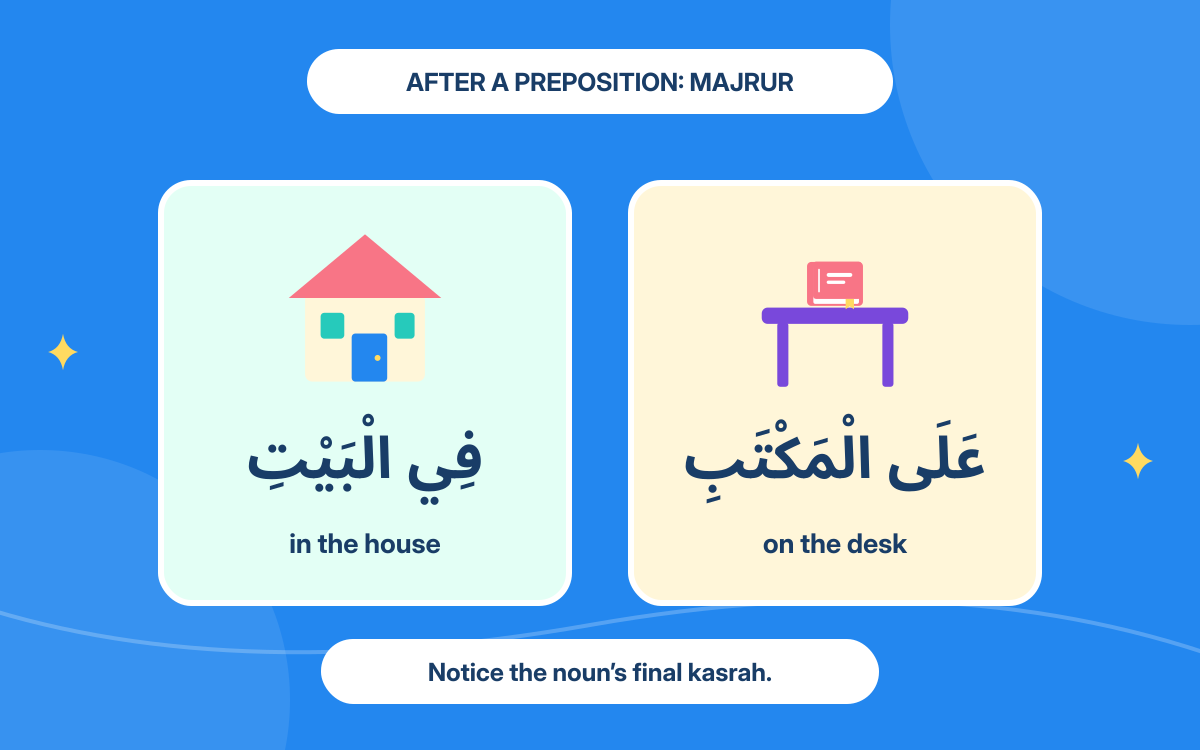
Fi is a preposition in traditional Arabic grammar. It directly governs the genitive noun albayti. Amama is a noun used as an adverb and forms an idafa with albayti. Both constructions can answer “where?”, but their first words belong to different grammatical types.
Do not add fi to the front of every location expression. Amama lbayti already means “in front of the house.” Its English translation contains “of,” but Arabic needs no separate word for that relationship.
05Use now, yesterday, here and there
Some adverbs need no following noun: الآنَ (alana) means “now,” أَمْسِ (amsi) means “yesterday,” هُنَا (huna) means “here,” and هُنَاكَ (hunaka) can mean “there” or “over there” when locating an action.
أَنَا هُنَا الآنَ
ana huna lana
I am here now.
In this connected reading, the article’s opening wasl vowel drops after huna. The hamza inside الآن is still pronounced; our plain reading aid does not mark it separately.
جَلَسْتُ هُنَاكَ أَمْسِ
jalastu hunaka amsi
I sat there yesterday.
These four words keep fixed forms in these uses. Amsi has a fixed kasrah in the ordinary “yesterday” pattern here, without al or an idafa complement. It still occupies an accusative adverbial position; the kasrah does not make it genitive.
Compare أَمَامِي (amami), “in front of me”: its attached pronoun supplies the reference point. Huna needs no such complement. Hunaka also introduces “there is” statements; see the hunaka guide for that use.
What to remember
- Qabla and bada can locate an action in time; amama and khalfa can locate it in place.
- In our simple phrases, the adverb is accusative and the noun completing its idafa is genitive.
- Some adverbs stand alone: alana and amsi give a time, while huna and hunaka can give a place.
Your reference shelf
Open a guide whenever you need it.
Idafa phrases and standalone adverbsReview meanings, fixed forms and useful limits
| Arabic | Reading | Meaning |
|---|---|---|
| قَبْلَ الدَّرْسِ | qabla ddarsi | Before the lesson |
| بَعْدَ الدَّرْسِ | bada ddarsi | After the lesson |
| أَمَامَ الْبَيْتِ | amama lbayti | In front of the house |
| خَلْفَ الْبَيْتِ | khalfa lbayti | Behind the house |
| الآنَ | alana | Now |
| أَمْسِ | amsi | Yesterday |
| هُنَا | huna | Here |
| هُنَاكَ | hunaka | There or over there in a location statement |
The grammar labels are ظَرْفُ زَمَانٍ for an adverb of time and ظَرْفُ مَكَانٍ for an adverb of place. Our four examples show a noun used adverbially and followed by an idafa complement. Our four standalone words require no idafa complement. Do not extend one ending rule to every adverb: some are declined, and others are mabni with fixed forms.
For example, مِنْ بَعْدِ الدَّرْسِ has a genitive badi after min, while addarsi remains the genitive idafa complement. The main lesson practises bada without that additional preposition. Bada contains the consonant ayn, ع; the plain reading aid does not spell it with a separate symbol.
Alana is fixed on fathah. The usual amsi, “yesterday,” is fixed on kasrah when used without al or an idafa complement. If ams is made indefinite, takes al or becomes the first noun of an idafa, it is declined instead. Huna and hunaka are fixed place demonstratives used adverbially here. Their fixed forms do not remove their grammatical position; compare muarab and mabni.
Likewise, qabla, bada, amama and khalfa are accusative in our simple examples, but a preceding preposition can change their case. A pronoun can supply their reference point, as in amami. غَدًا (ghadan), “tomorrow,” is another standalone adverb, with an ordinary accusative ending.
Sources & further learning
References for the language explanations and learning guidance.
- Madinah Arabic: adverbs of time and idafa
- Madinah Arabic: adverbs of place
- Al Jazeera Learning Arabic: adverbs of time
- Cairo Arabic Language Academy: bada and its constructions
- Madinah Arabic: fixed forms of now and yesterday
- Cairo Arabic Language Academy: ams and the conditions for declension
- Al Jazeera Learning Arabic: here and there as place adverbs
- University of California: hunaka in existence statements