Open a bag and tell someone what you find: “There is a book in the bag.” Arabic can begin with the location and introduce the book afterwards. The order is useful, and it also explains why two nearby nouns can have different case endings.
01Start with the place
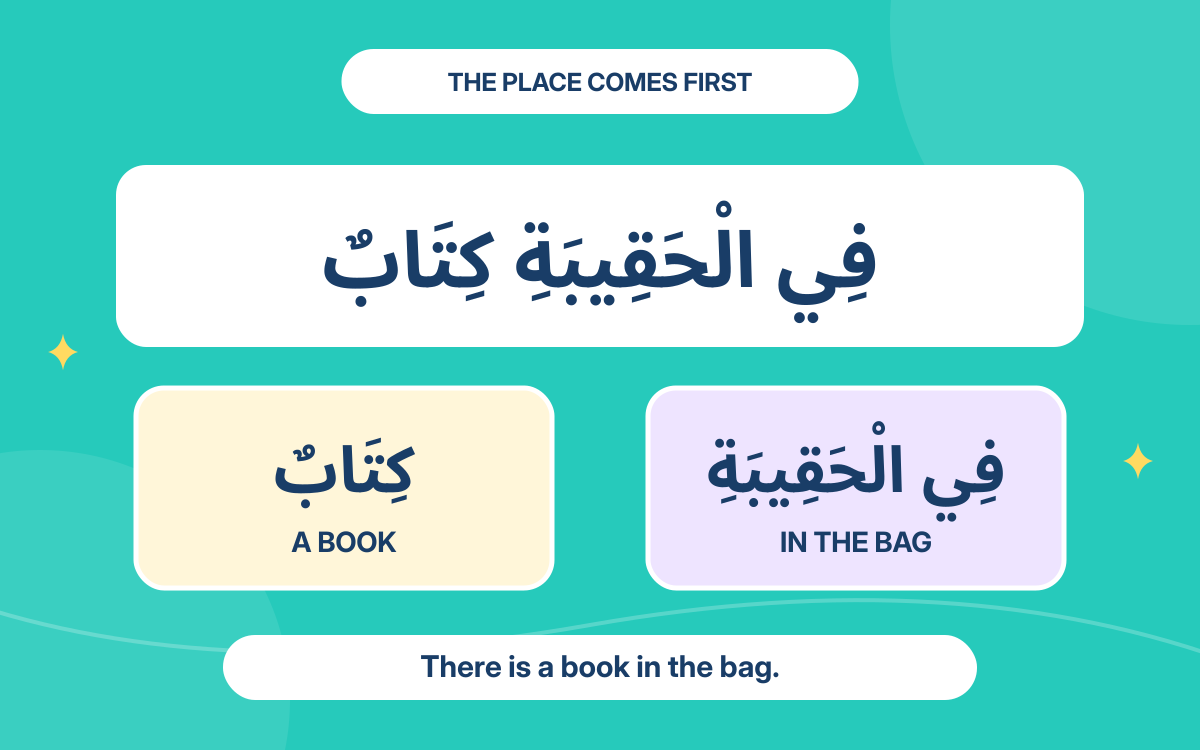
فِي الْحَقِيبَةِ كِتَابٌ
fi lhaqibati kitabun
There is a book in the bag.
Fi lhaqibati means “in the bag.” Kitabun introduces “a book.” Together they make a complete present statement. English naturally supplies “there is”; you do not need to insert a separate Arabic word for each English word in this pattern.
02Separate the location from the book
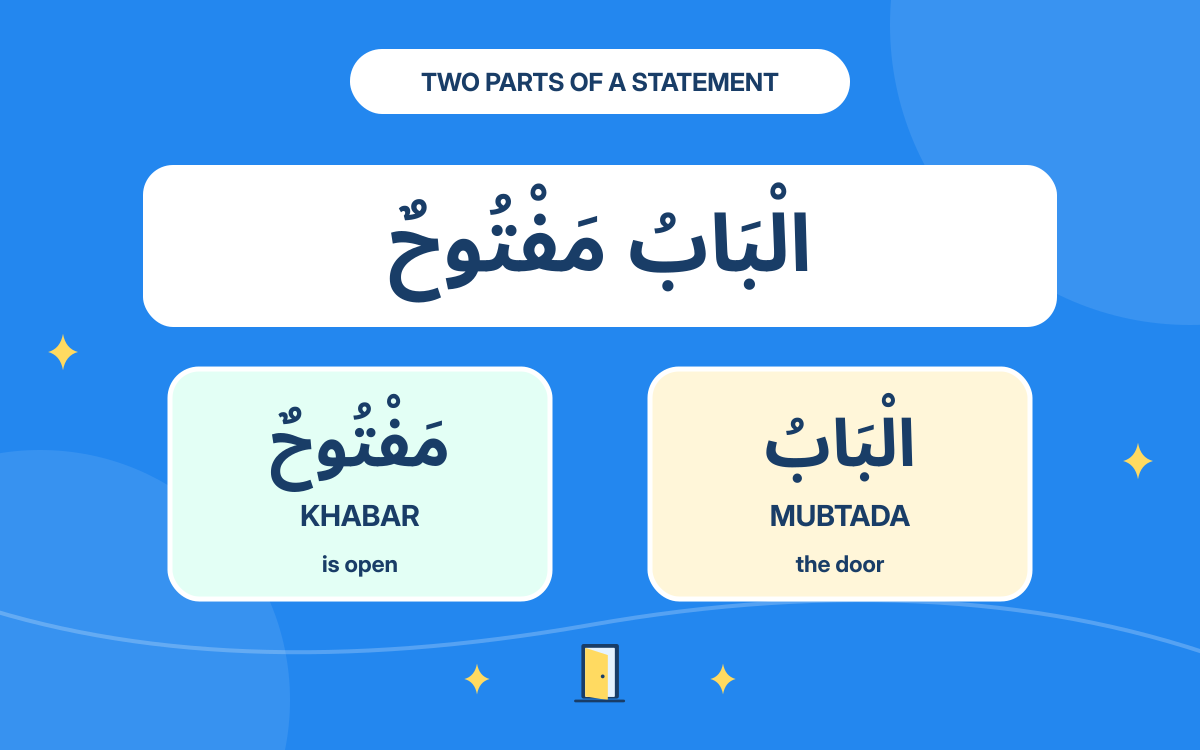
The location phrase gives the predicate, or information, before the subject. It is called a fronted predicate: خَبَر مُقَدَّم (khabar muqaddam). The book is the delayed subject: مُبْتَدَأ مُؤَخَّر (mubtada muakhkhar).
These labels describe order, not time. “Delayed” does not mean that the book arrived late. It simply means that the subject comes after the predicate in this sentence.
فِي الْحَقِيبَةِ
fi lhaqibati
In the bag — the location phrase
Keep fi and its noun together. The whole phrase provides the location information; the bag by itself is not the sentence’s subject.
03Stop the preposition’s effect at its noun
فِي الْحَقِيبَةِ كِتَابٌ
fi lhaqibati kitabun
In the bag, there is a book.
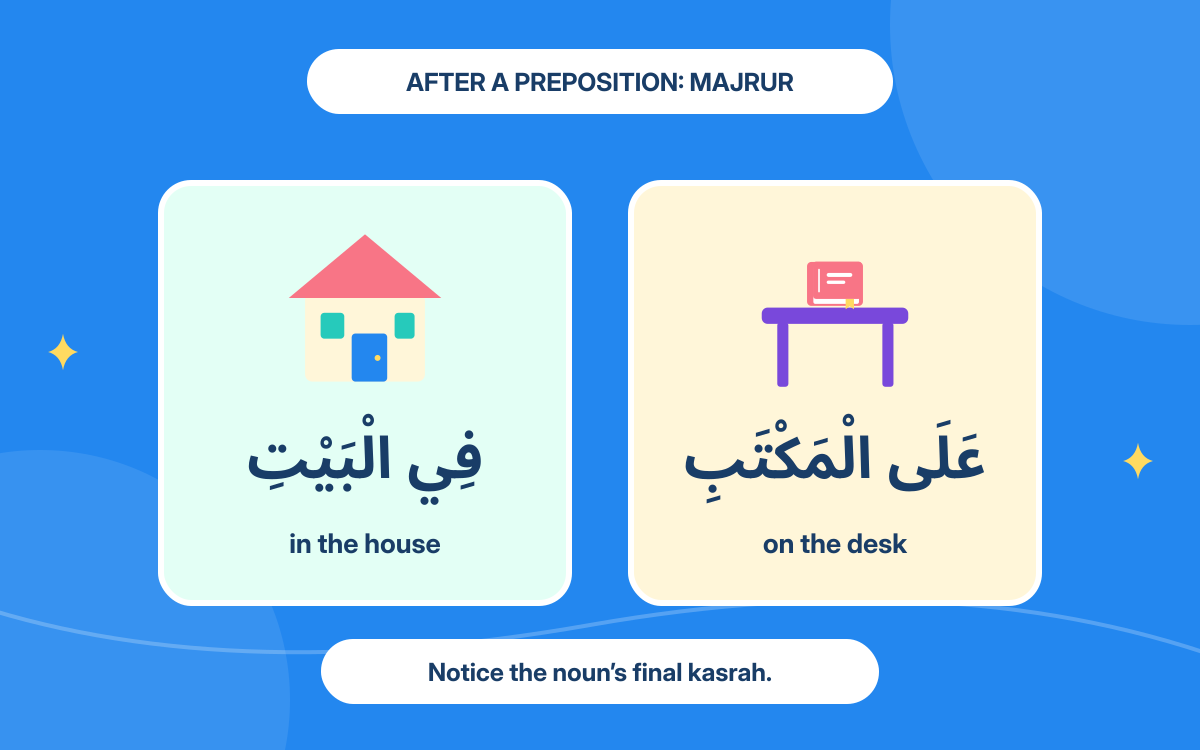
Alhaqibati is genitive because fi governs it. Kitabun is nominative because it is the delayed subject. The preposition does not turn every later noun into a genitive noun.
Both nouns appear after fi on the page, but only the bag belongs inside this prepositional phrase. Find each word’s grammatical job before choosing its ending. Our regular singular examples show genitive i and nominative un clearly in full formal reading.
04Compare a known book with a new introduction
الْكِتَابُ فِي الْحَقِيبَةِ
alkitabu fi lhaqibati
The book is in the bag.
Here we begin with a definite book that the listener can identify. We then give its location. This naturally answers “Where is the book?”
By contrast, فِي الْحَقِيبَةِ كِتَابٌ introduces a book at a location and naturally answers “What is in the bag?” The change is more than moving words: alkitabu is definite, while kitabun is indefinite. Both orders can make complete nominal sentences.
05Use the pattern in another place
عَلَى الْمَكْتَبِ قَلَمٌ
ala lmaktabi qalamun
There is a pen on the desk.
Ala lmaktabi gives the place first. Qalamun introduces the pen afterwards. Maktabi is genitive inside the location phrase, while qalamun is the nominative subject. Changing “in” to “on” does not change this division of jobs.
For practice, choose a place, then introduce one ordinary indefinite object there. Keep the place phrase together and give the object its nominative form. This is a common beginner pattern, not a rule that every location must come first. Final case endings may be dropped at a pause; the examples retain them for study.
What to remember
- A location phrase can come first, followed by an indefinite subject: “There is a book in the bag.”
- The noun inside the prepositional phrase is genitive; the delayed subject is nominative.
- Starting with a known object and giving its location is another useful nominal sentence pattern.
Your reference shelf
Open a guide whenever you need it.
Two orders and their grammatical rolesReview the case boundary and the meaning of fronted predicate
| Arabic | Natural meaning | Subject |
|---|---|---|
| فِي الْحَقِيبَةِ كِتَابٌ | There is a book in the bag. | كِتَابٌ — nominative |
| الْكِتَابُ فِي الْحَقِيبَةِ | The book is in the bag. | الْكِتَابُ — nominative |
In both sentences, الْحَقِيبَةِ remains genitive because it is governed by fi. The prepositional expression supplies the predicate; its internal noun does not become nominative merely because the whole expression serves that role.
A fronted location commonly allows a new indefinite subject to be introduced. Arabic also allows other word orders and kinds of indefinite subjects in suitable contexts. We are practising one clear pattern, not exhausting the rules of nominal sentences.
The literal spatial word “there” can be expressed separately in Arabic when needed. English “there is” in our translations is an existence construction, so it need not correspond to a separate word in these Arabic examples.
Sources & further learning
References for the language explanations and learning guidance.