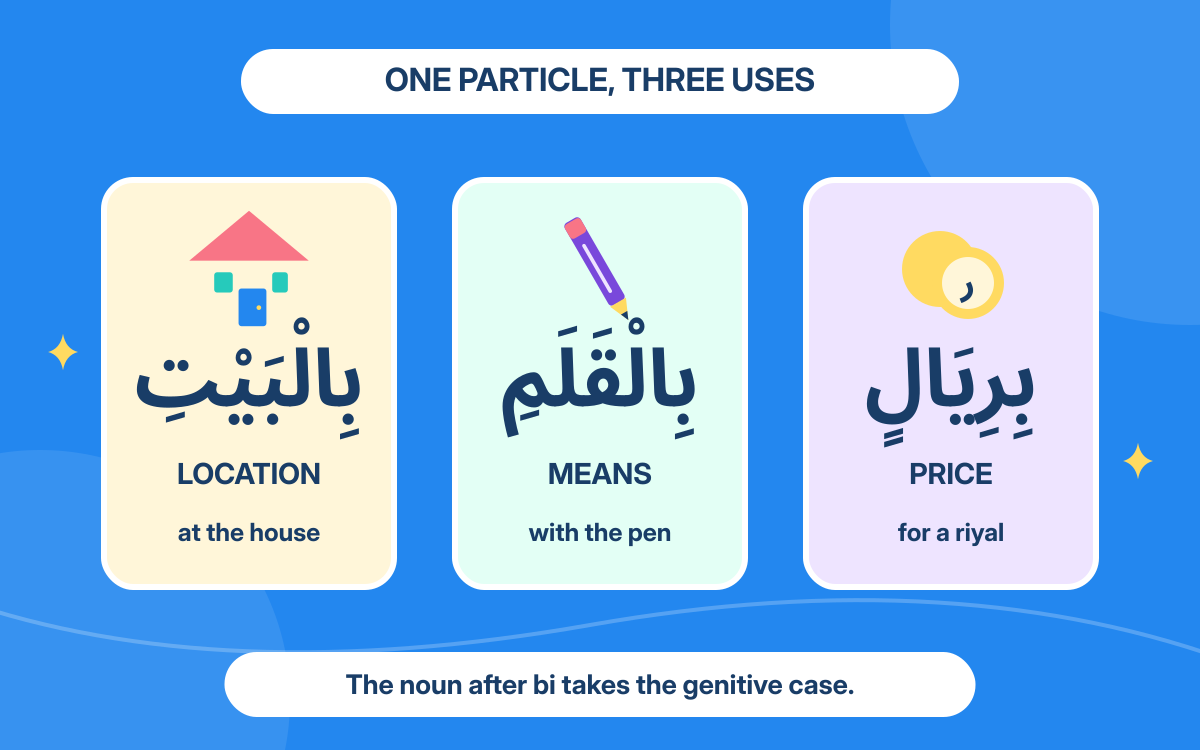
A small word can determine a noun’s grammatical case. After fi, meaning “in,” the regular noun albayt takes the genitive form albayti. Learn four useful prepositions, then check the noun each one governs. The rule applies inside longer sentences too.
01Look immediately after fi
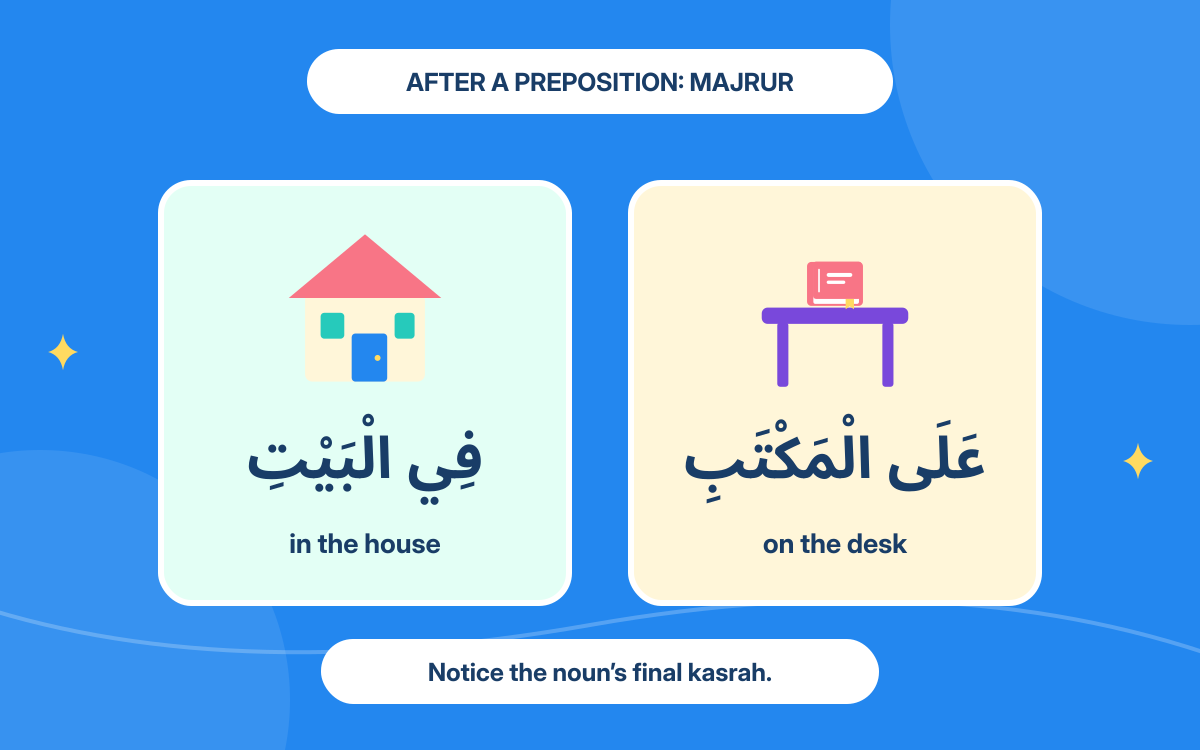
فِي الْبَيْتِ
fi lbayti
In the house
Fi is a preposition. The noun it governs is genitive, called مَجْرُور (majrur). Here the kasrah under the final t gives bayti its i ending. The phrase tells us a location, but does not yet say what is there. The reading label keeps the full formal ending.
02Use four familiar starting points
عَلَى الْمَكْتَبِ
ala lmaktabi
On the desk
مِنَ الْبَيْتِ
mina lbayti
From the house
إِلَى الْبَيْتِ
ila lbayti
To the house
Alongside fi, use ala for “on,” min for “from,” and ila for “to” in these examples. Each governs a genitive noun. Changing the preposition changes the relationship; it does not remove the noun’s genitive case.
The dictionary form min is written مِنْ. Before the definite article here, it is read mina to make the connection pronounceable. In connected reading, the initial vowel of ال drops: fi lbayti, rather than a separate albayti.
03Choose i or in for these regular nouns
فِي بَيْتٍ
fi baytin
In a house
Compare this with fi lbayti, “in the house.” Both nouns are genitive. The ordinary indefinite form baytin has tanween, pronounced in; the definite form albayti has a single i. Do not put tanween on a noun that already carries ال.
The preposition does not make a house definite. That is a separate choice about meaning. Use “a house” when the house is not identified, and “the house” when the context identifies it.
04Keep each noun’s job separate
الْقَلَمُ عَلَى الْمَكْتَبِ
alqalamu ala lmaktabi
The pen is on the desk.
Alqalamu is the subject of this simple nominal sentence, so it is nominative. Almaktabi is the noun governed by ala, so it is genitive. The preposition does not turn every noun in the sentence into a genitive noun.
Together, “on the desk” tells us where the pen is. Arabic needs no separate present tense word for “is” here. Find ala first, then identify its noun; this is more dependable than choosing an ending from word position alone.
05Separate case from the visible sign
For our regular singular nouns, kasrah or kasrah tanween shows genitive case. This is a useful starting pattern, not a rule that every majrur word must visibly end in i. Duals, certain plurals, diptotes and fixed forms need additional rules.
When stopping at the end of fi lbayti, the final short i is normally dropped. At a pause, fi baytin normally loses in. Our examples retain endings to show the grammar; unvowelled writing may omit the marks entirely.
Practise in two steps: choose the relationship you mean, then check the governed noun’s form. Keep a preposition and its noun together as one meaningful group.
What to remember
- Fi, ala, min and ila govern genitive nouns in the examples here.
- Regular definite albayti ends in i; regular indefinite baytin ends in in.
- Find the governed noun rather than changing every noun in the sentence.
Your reference shelf
Open a guide whenever you need it.
Four prepositions and the limits of kasrahReview the phrases, connected reading and one exception
- فِي الْبَيْتِ — in the house
- عَلَى الْمَكْتَبِ — on the desk
- مِنَ الْبَيْتِ — from the house
- إِلَى الْبَيْتِ — to the house
Does majrur always mean a written kasrah?
No. For example, إِلَى أَحْمَدَ means “to Ahmad.” Ahmad is a diptote name, and this genitive form ends with fathah. Other noun patterns may use letters as case signs, or may not show a changing ending. Learn those patterns separately; our quizzes use regular singular nouns.
Does the noun have to start as nominative?
No. A noun does not have one case before being placed in every sentence. Its actual role determines the case. Comparing albaytu with fi lbayti is a learning contrast, not a claim that every noun always starts with u.
How should I use the reading labels?
They show connected reading with full case endings for study. Simple Latin letters cannot reproduce every Arabic consonant or vowel length. At a real pause, final short vowels are normally omitted; keep the written grammar and the pause pronunciation separate.
Sources & further learning
References for the language explanations and learning guidance.