Arabic oath expressions can begin with wa, bi or ta. These particles govern a genitive noun, but the oath phrase is only the introduction: a following statement tells you what is being asserted. This guide explains the structure you encounter in formal and literary Arabic.
01Recognize the oath use of wa
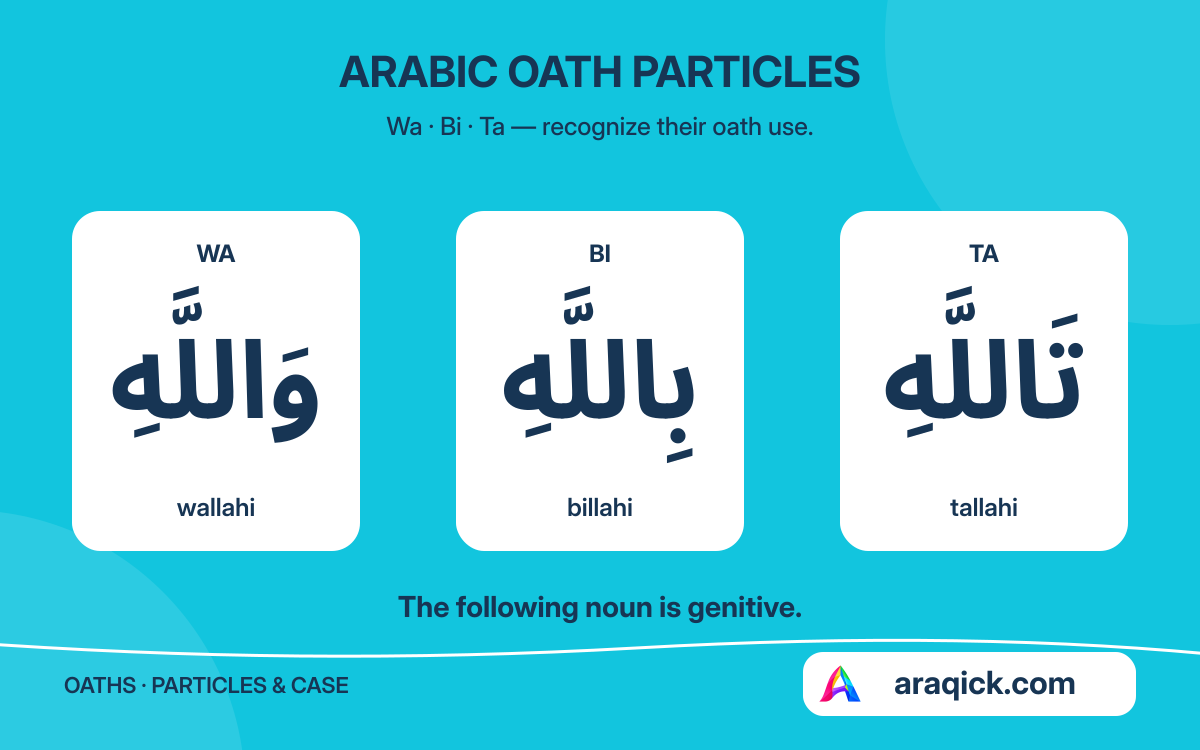
وَاللَّهِ إِنَّ الْخَبَرَ لَصَحِيحٌ
wallahi inna alkhabara lasahihun
By Allah, the news is indeed true.
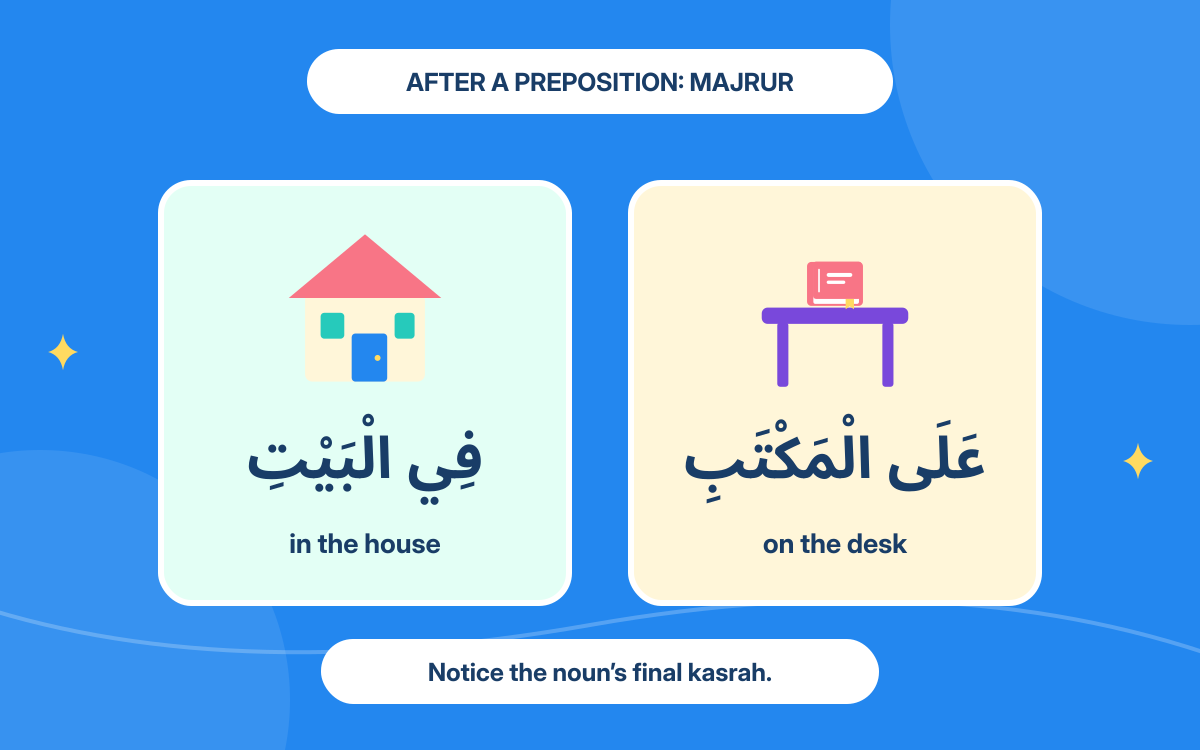
The opening wallahi combines the oath particle wa with the name Allah. The final kasrah marks the genitive. The following clause gives the sworn statement: the news is true.
Here wa is not the conjunction and. The same written letter has different grammatical uses. Read its relationship with the following noun and the larger sentence rather than assigning one English meaning to every wa.
02Use bi after an expressed oath verb
أُقْسِمُ بِاللَّهِ إِنَّ الْخَبَرَ لَصَحِيحٌ
uqsimu billahi inna alkhabara lasahihun
I swear by Allah that the news is indeed true.
Uqsimu means I swear. Bi introduces what the speaker swears by, and the following name is genitive. The verb can be omitted in an oath expression beginning billahi.
Among these three particles, bi is the flexible form to learn with an expressed oath verb. Do not simply replace it with wa in the same verb-plus-preposition frame. Compare the wider uses in the bi guide.
03Learn tallahi as a restricted expression
تَاللَّهِ إِنَّ الْخَبَرَ لَصَحِيحٌ
tallahi inna alkhabara lasahihun
By Allah, the news is indeed true.
Ta is also an oath particle, but its use is restricted. Tallahi is the main expression to recognize first. The particle is pronounced ta, and the following name still ends in the genitive.
Do not treat ta as a general replacement for bi before any noun. Other restricted expressions occur in classical usage; they do not make ta a freely interchangeable everyday preposition.
04Separate an oath from an ordinary preposition
كَتَبْتُ بِالْقَلَمِ
katabtu bilqalami
I wrote with the pen.
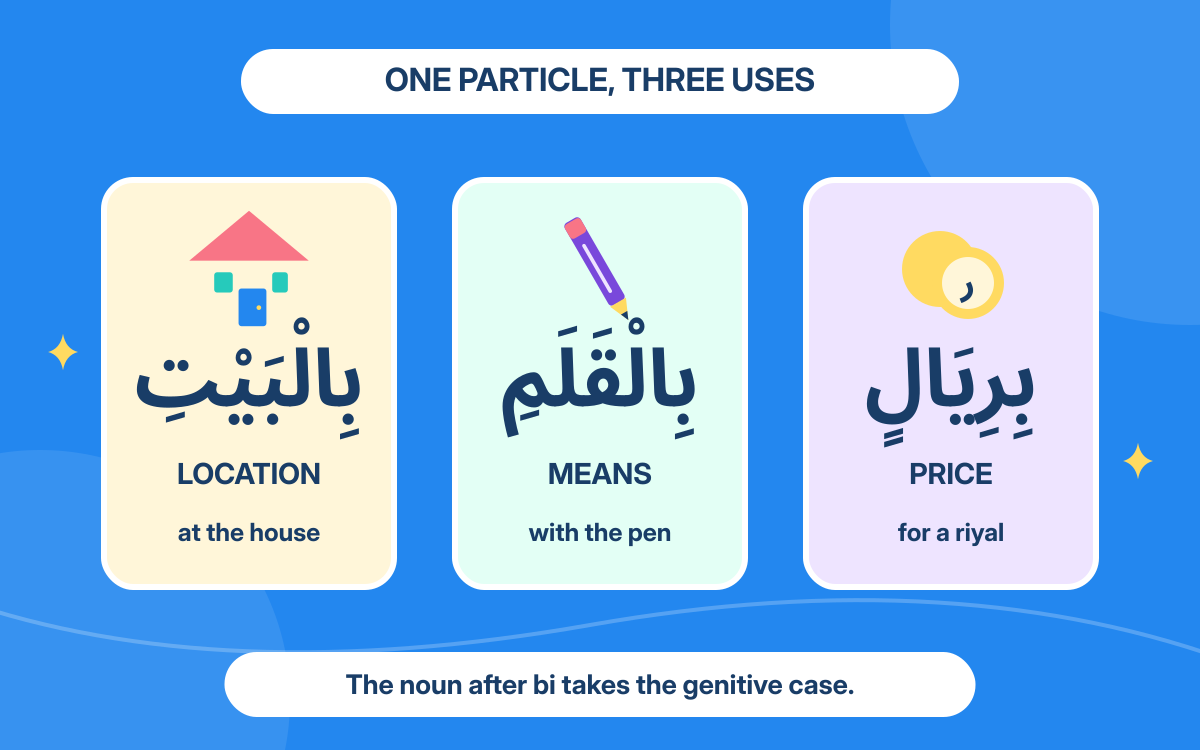
Bilqalami also contains bi followed by a genitive noun, but it describes the instrument used for writing. There is no oath in this sentence. The genitive ending alone cannot tell you the intended meaning.
Likewise, جَاءَ سَعِيدٌ وَخَالِدٌ means Saeed and Khalid came. Its wa joins two nominative names. In wallahi, oath wa itself governs a genitive noun. Review conjunctions and case for that contrast.
05Locate the statement being asserted
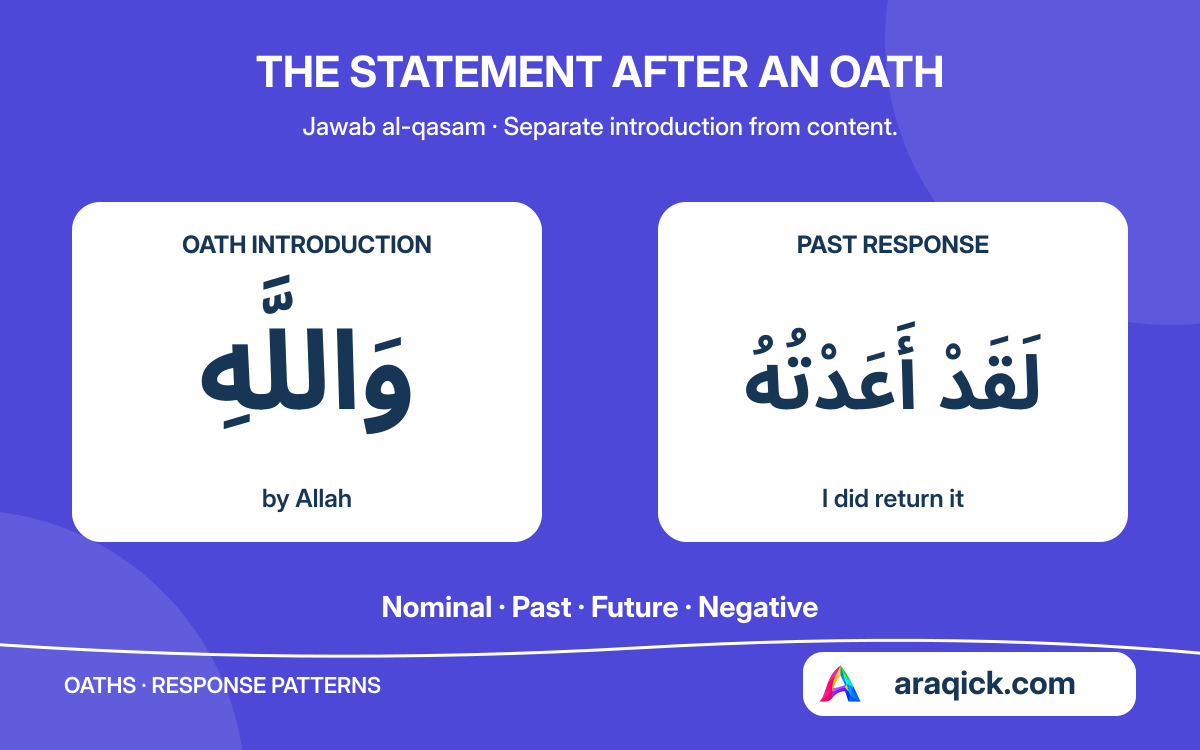
وَاللَّهِ لَقَدْ أَعَدْتُ الْكِتَابَ
wallahi laqad aadtu alkitaba
By Allah, I did return the book.
Wallahi introduces the oath; laqad aadtu alkitaba supplies its content. Traditional grammar calls that second part jawab al-qasam, the answer or response to the oath. It need not be an answer to a question.
Its form depends on whether the statement is nominal or verbal, affirmative or negative, and past or future. Continue with oath responses. These are models for understanding the construction; plain reading aids simplify Arabic sounds and vowel length.
What to remember
- Oath wa, bi and ta govern genitive nouns.
- Bi can accompany an expressed oath verb; ta has restricted usage.
- The oath phrase introduces a separate statement called jawab al-qasam.
Your reference shelf
Open a guide whenever you need it.
The three oath particlesCompare their form and range of use
| Particle | Core example | What to notice |
|---|---|---|
| Wa | وَاللَّهِ | Oath introduction; noun is genitive |
| Bi | أُقْسِمُ بِاللَّهِ | Can follow an expressed oath verb |
| Ta | تَاللَّهِ | Restricted usage; learn this fixed model |
In the short wa and ta models, the oath verb is not expressed.
The same letter can do different jobsRead the phrase and the sentence together
| Example | Function | Case clue |
|---|---|---|
| وَاللَّهِ | Wa introduces an oath | Genitive name after wa |
| سَعِيدٌ وَخَالِدٌ | Wa joins two names | Both names are nominative here |
| أُقْسِمُ بِاللَّهِ | Bi introduces what is sworn by | Genitive name after bi |
| كَتَبْتُ بِالْقَلَمِ | Bi marks an instrument | Genitive noun, but no oath |
Sources & further learning
References for the language explanations and learning guidance.