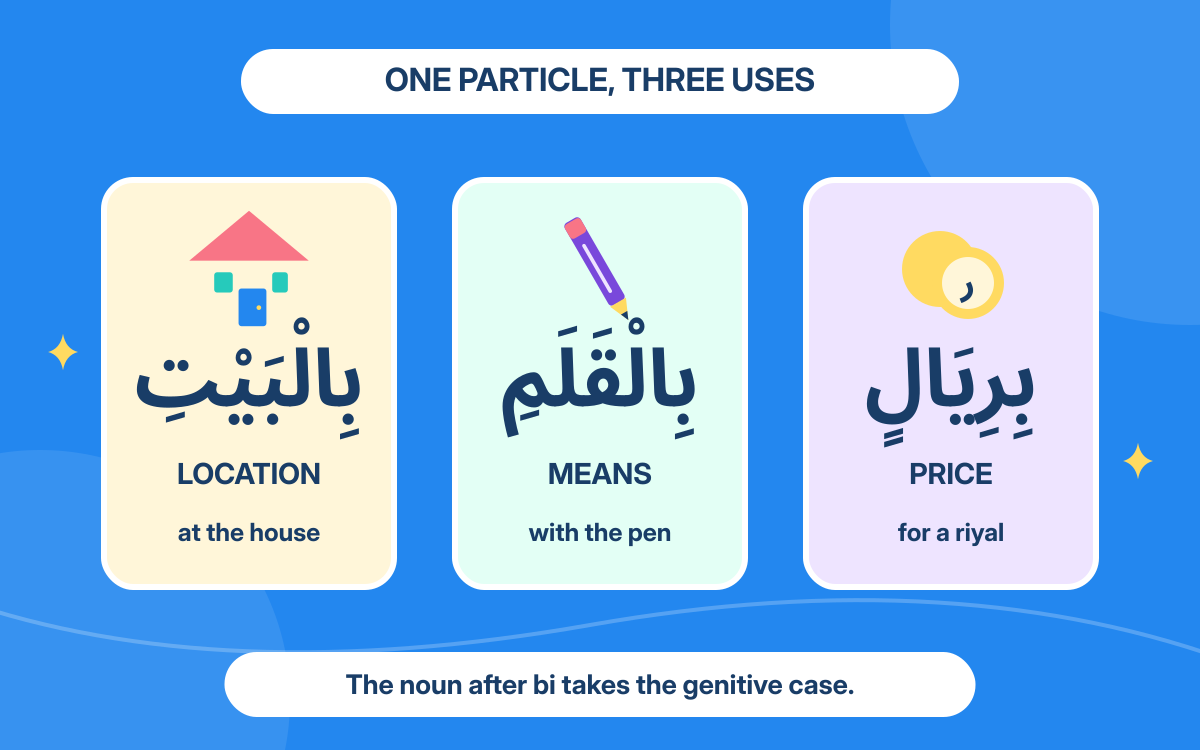
One small Arabic letter can locate someone, name a tool or introduce a price. Bi attaches to the next word, but its English translation depends on the whole expression. Learn three useful settings instead of assigning it one permanent English meaning. The noun after bi is genitive.
01Locate someone with bi
Bi can mean at or in when it introduces a location. It is written onto the following word, including its definite article.
هُوَ بِالْجَامِعَةِ
huwa biljamiati
He is at the university.
Biljamiati combines bi with aljamiati, the university. Keep the written alif of al, but its initial vowel is not pronounced after bi. The final kasrah belongs to the genitive noun. This sentence gives his location; it does not say that he is using the university as a tool.
02Name the tool used
With an action such as writing, bi introduces the instrument that makes the action possible. English usually translates this use as with or using.
كَتَبْتُ بِالْقَلَمِ
katabtu bilqalami
I wrote with the pen.
The pen is the tool, so bi fits this relationship. Alqalami is genitive and ends in i, even though the person is performing an action. Keep the attached spelling and the full formal ending. Do not translate this phrase as inside the pen.
03Extend the pattern to a means of travel
A means need not be a handheld tool. Bi can also introduce transport: the vehicle tells you how the journey happened.
سَافَرْتُ بِالْقِطَارِ
safartu bilqitari
I travelled by train.
Bi here answers how the person travelled. The train noun is genitive, just like the pen noun. Learn the complete expression by train. English by has other uses, so this example does not make bi the translation of every English by in every sentence.
04Introduce a price
In a price expression, bi introduces the amount paid or charged. Here English uses for, although the Arabic word is still bi.
هَذَا الْكِتَابُ بِخَمْسَةِ رِيَالَاتٍ
hadha lkitabu bikhamsati riyalatin
This book costs five riyals.
Bi makes khamsati genitive. Five and riyals form an idafa, so five has no tanween, and riyalatin is a genitive plural. Singular riyal is masculine; that is why five uses the form with taa marbuta, pronounced t inside this phrase.
05Choose the relationship before the translation
Fi normally locates something in a place. Bi has the location use above, but it also expresses means and price. The two words are not interchangeable in every construction.
الْقَلَمُ فِي الْحَقِيبَةِ
alqalamu fi lhaqibati
The pen is in the bag.
Here the bag is a location. In katabtu bilqalami, the pen is a tool. Replacing bi with fi would not preserve with the pen. First identify location, means or price; then read the genitive noun or number after bi.
What to remember
- Bi joins the following word in writing and governs a genitive noun or number.
- Its translation follows the expression: at or in a location, with a tool, by a means, or for a price.
- Bi and fi can overlap in some locations, but their other uses are not interchangeable.
Your reference shelf
Open a guide whenever you need it.
Four practical uses of biReview location, instrument, transport and price together
| Relationship | Arabic | Reading aid | Meaning |
|---|---|---|---|
| Location | بِالْجَامِعَةِ | biljamiati | At the university |
| Instrument | بِالْقَلَمِ | bilqalami | With the pen |
| Transport | بِالْقِطَارِ | bilqitari | By train |
| Price | بِخَمْسَةِ رِيَالَاتٍ | bikhamsati riyalatin | For five riyals |
In the price row, bi governs the number khamsati; the following currency plural is genitive through idafa. Do not put tanween on the number in this construction. The gender choice comes from singular riyal, not from the plural’s final letters.
This article uses regular nouns so their genitive kasrah is visible. Diptotes and other noun types can show genitive case differently. Bi also appears in expressions of cause and in fixed verb combinations; learn those with their own context rather than extending one of today’s translations automatically.
Sources & further learning
References for the language explanations and learning guidance.