An Arabic action can have a doer even when no separate name or pronoun appears beside the verb. Sometimes the subject is an attached ending; sometimes it is an understood pronoun. Traditional grammar calls that understood subject a damir mustatir. Learn to locate it without adding an extra word to the sentence.
01Find he or she in the context
فَتَحَ نَافِذَةً
fataha nafidhatan
He opened a window.
No separate name follows fataha here. Its subject is an understood huwa, he, supplied by the verb form and context. Nafidhatan is the object, so the window is not the opener.
فَتَحَتْ نَافِذَةً
fatahat nafidhatan
She opened a window.
The final t marks feminine agreement. The subject is understood hiya. That feminine marker is not itself the subject pronoun.
Question 1 of 2Try it now
02Use a named subject when one is given
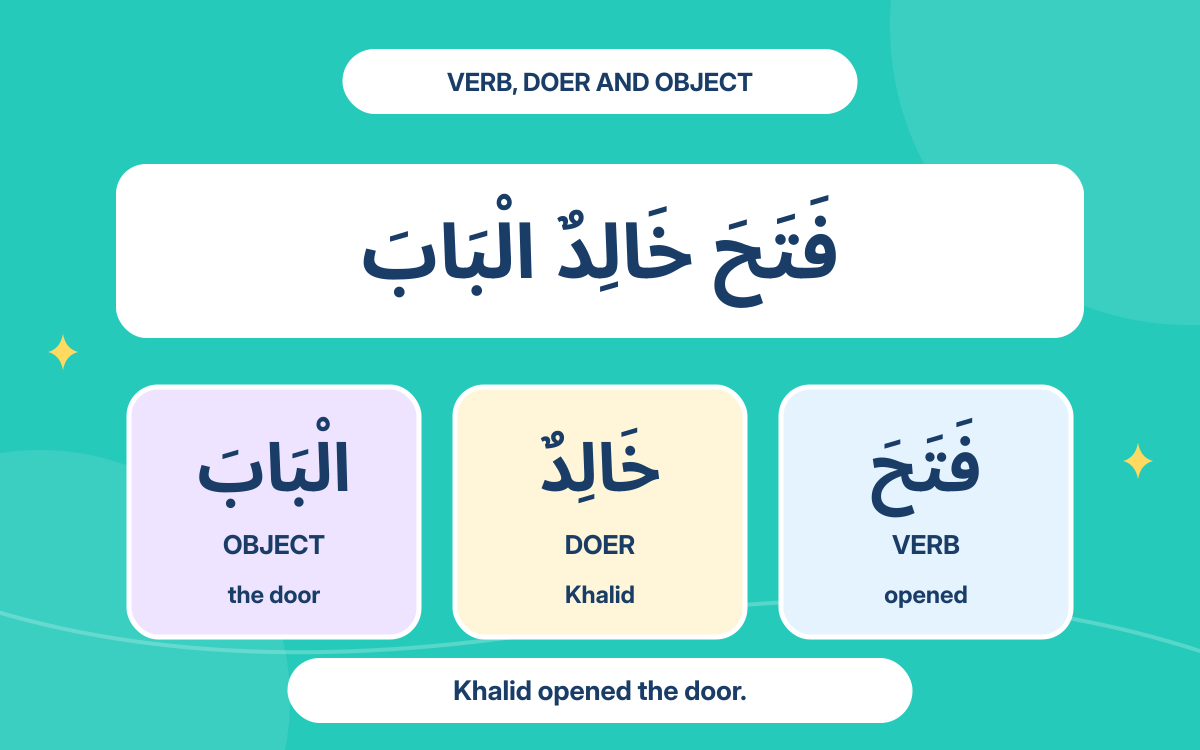
فَتَحَ سَعِيدٌ نَافِذَةً
fataha saidun nafidhatan
Said opened a window.
Saidun is now the explicit doer, or fail. Do not add another hidden he as a second subject of this same verb. Natural English simply says Said opened a window.
The subject is nominative; the window remains an accusative object. Compare the sentence with the previous he-opened model, where context identified the unnamed person.
Question 1 of 1Try it now
03Keep an attached subject separate from a hidden one
فَتَحْتُ نَافِذَةً
fatahtu nafidhatan
I opened a window.
The ending tu is an attached subject pronoun meaning I. It is written and pronounced as part of the verb, so this subject is not classified as hidden.
فَتَحْنَا نَافِذَةً
fatahna nafidhatan
We opened a window.
Na is the attached we subject here. The final root consonant has sukun before this ending. The subject is visible inside the verb even when no separate nahnu, we, appears before it.
Question 1 of 1Try it now
04Read a prefix as a clue
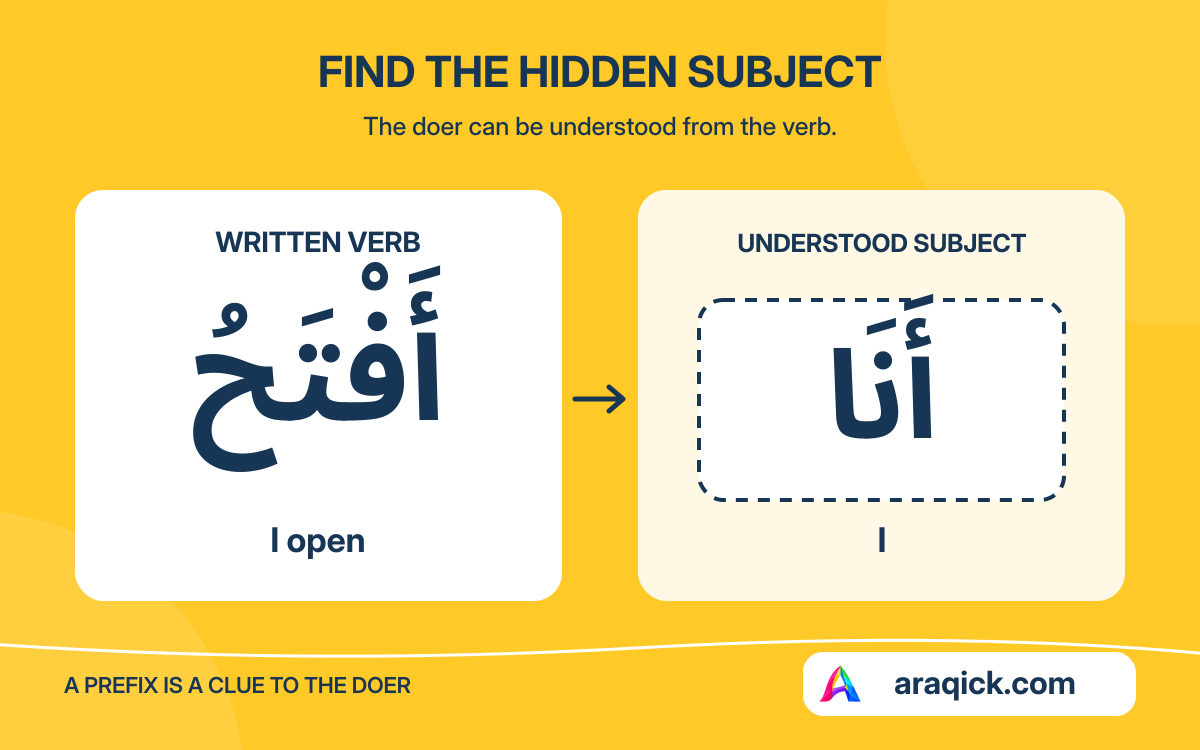
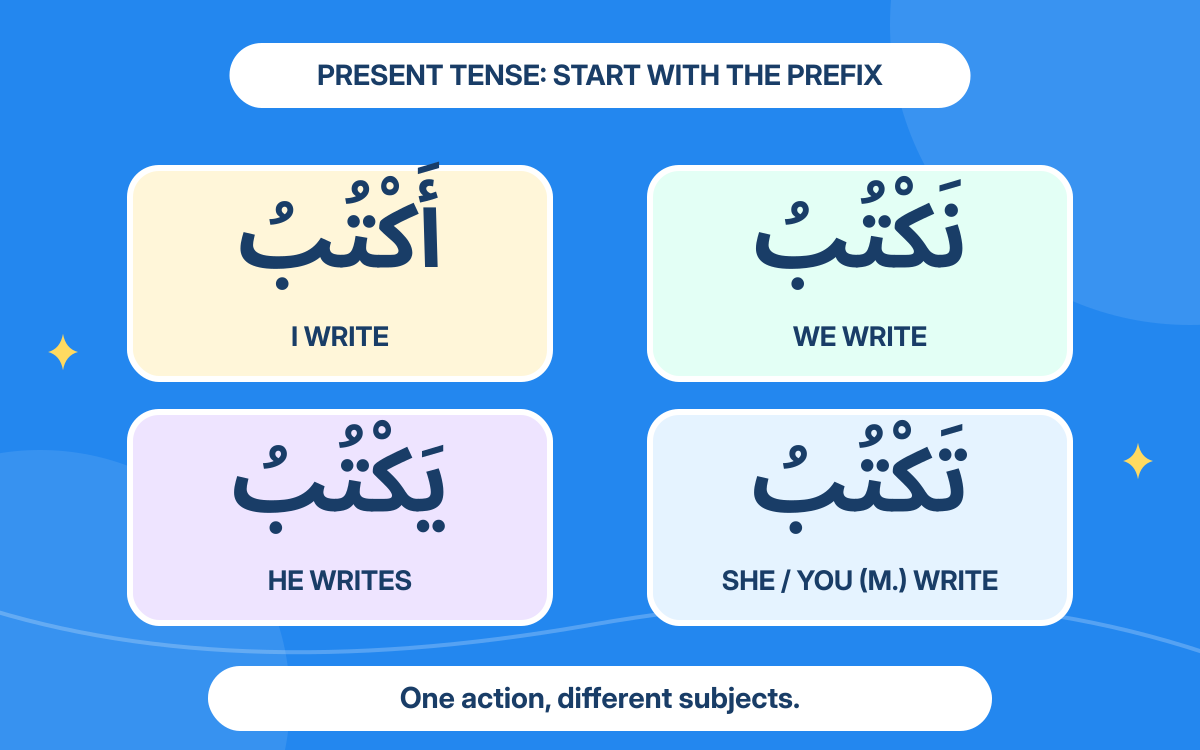
أَفْتَحُ نَافِذَةً
aftahu nafidhatan
I open a window.
نَفْتَحُ نَافِذَةً
naftahu nafidhatan
We open a window.
In traditional analysis, the subjects here are understood ana and nahnu. The a and n prefixes identify the person but are not themselves attached subject pronouns. This differs from past tu and na.
Use the prefix as evidence for the subject, while keeping its grammatical label separate. The present-tense prefixes guide practises these forms.
Question 1 of 1Try it now
05Find you inside a singular command
اِفْتَحْ نَافِذَةً
iftah nafidhatan
Open a window. — to one man
The understood subject is anta, you. The command directly addresses a listener even though anta is unwritten. The window is still the object of opening.
The label hidden describes grammar, not a word to insert automatically. Identify the intended person from the form and context. Review past endings and command formation for the neighbouring patterns. Plain reading aids simplify Arabic sounds and vowel length.
Question 1 of 2Try it now
TAKE IT WITH YOU
What to remember
A verb can have a named, attached or understood subject.
Past feminine t marks agreement; past tu is an attached subject pronoun.
Present a and n are person prefixes pointing to understood subjects in these examples.
KEEP THIS HANDY
Your reference shelf
Open a guide whenever you need it.
Three ways to express the doerRead the verb and its context before assigning a subject+
Subject analysis in opening examples
Verb or sentence
Subject
How it appears
فَتَحَ نَافِذَةً
هُوَ
Understood
فَتَحَتْ نَافِذَةً
هِيَ
Understood; t marks feminine agreement
فَتَحَ سَعِيدٌ نَافِذَةً
سَعِيدٌ
Separate nominative noun
فَتَحْتُ
تُ
Attached subject: I
فَتَحْنَا
نَا
Attached subject: we
أَفْتَحُ
أَنَا
Understood; a prefix marks person
نَفْتَحُ
نَحْنُ
Understood; n prefix marks person
اِفْتَحْ
أَنْتَ
Understood listener
Adding a separate pronoun at the front does not mean its letters become a verb suffix. In the standard analysis of أَنَا أَفْتَحُ نَافِذَةً, ana is the topic of a nominal sentence; the verbal predicate contains an understood ana subject referring back to it. Other conjugated forms have attached dual or plural subjects, taught in their own guides.
Sources & further learning
References for the language explanations and learning guidance.