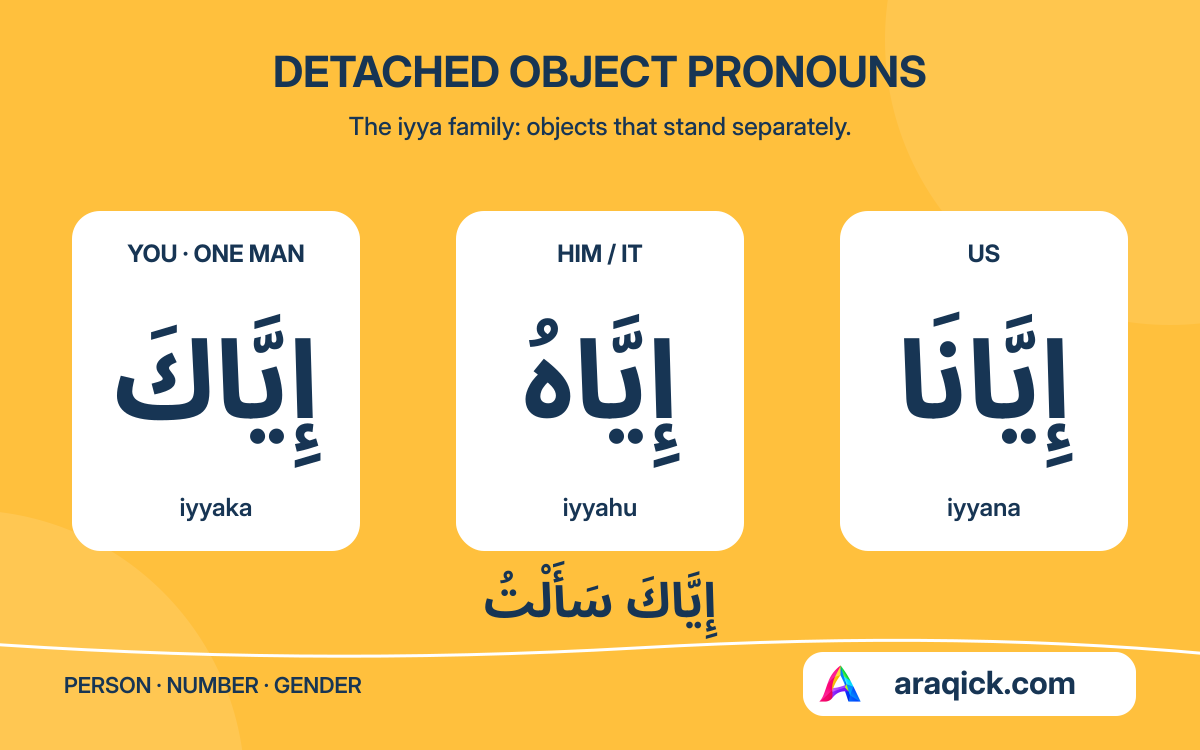
Arabic usually attaches an object pronoun to its verb, as in saaltuka, I asked you. The iyya family provides independent object forms such as iyyaka, you, and iyyahu, him or it. Use them when the object stands separately, especially before its verb or after illa.
01Compare an attached object with a separate one
سَأَلْتُكَ
saaltuka
I asked you. — to one man
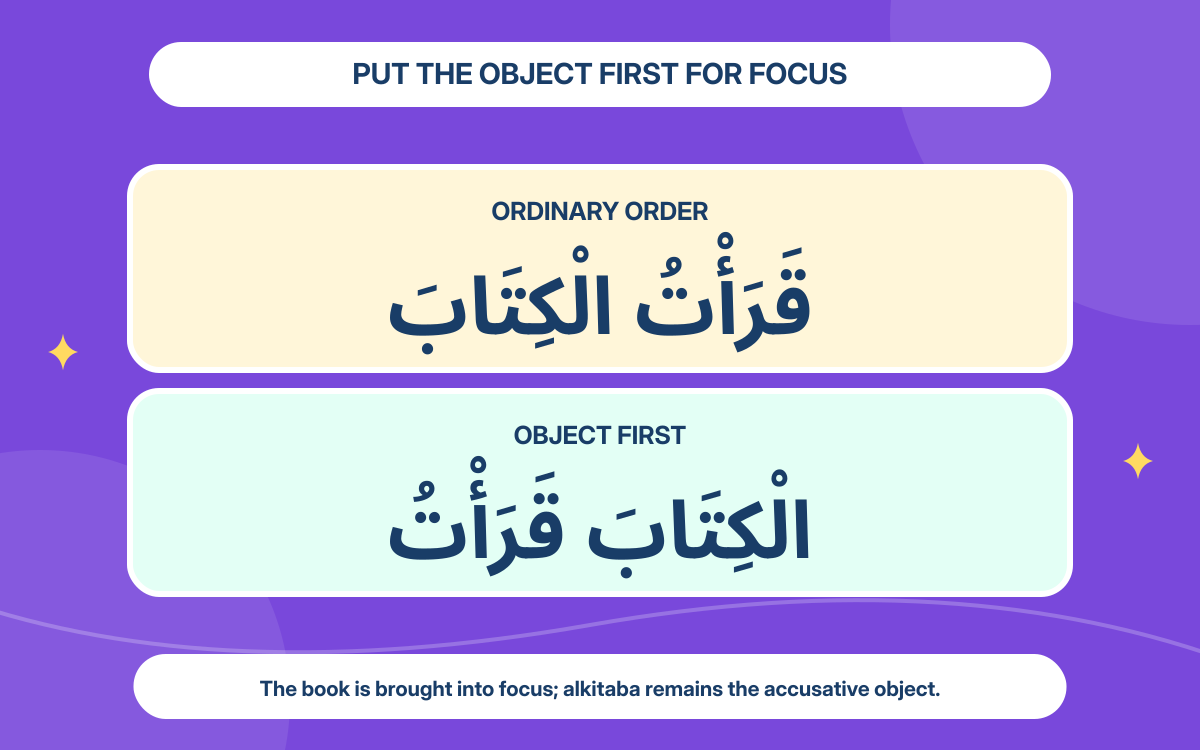
إِيَّاكَ سَأَلْتُ
iyyaka saaltu
It was you that I asked. — to one man
Ka attaches to the verb in the first sentence. Iyyaka stands before the verb in the second. The subject is still I, expressed by tu in saaltu. Fronting highlights the object; the exact emphasis depends on context.
02Choose the person and number
Iyyaka addresses one man, while إِيَّاكِ, iyyaki, addresses one woman. إِيَّاكُمَا refers to two listeners of either gender. Use إِيَّاكُمْ for a male or mixed group and إِيَّاكُنَّ for a female group.
إِيَّاكُمْ أَقْصِدُ
iyyakum aqsidu
You are the people I mean. — male or mixed group
The reference chart also includes me, us, him, her and them. Learn the full word as an independent object form rather than adding a free-standing ka to a sentence.
03Use a separate object after illa
مَا قَابَلْتُ إِلَّا إِيَّاهَا
ma qabaltu illa iyyaha
I met only her.
Illa separates the object from qabaltu, so the object appears as iyyaha. Hiya is an independent subject form; it cannot replace iyyaha as the object in this model. The pronoun points to a woman or a grammatically feminine referent.
For the full restriction pattern, see ma… illa for only.
04Recognise a separate second object
أَعْطَيْتُكَ إِيَّاهُ
aataytuka iyyahu
I gave it to you. — a grammatically masculine item
The verb أَعْطَى, gave, can take two objects. Ka identifies the recipient and iyyahu identifies the thing given. For a feminine item, use أَعْطَيْتُكَ إِيَّاهَا. The grammatical gender follows the Arabic noun you have in mind.
This separate second-object form is useful and clear. It does not mean every Arabic two-object construction must use iyya.
05Keep subject, object and prepositional forms apart
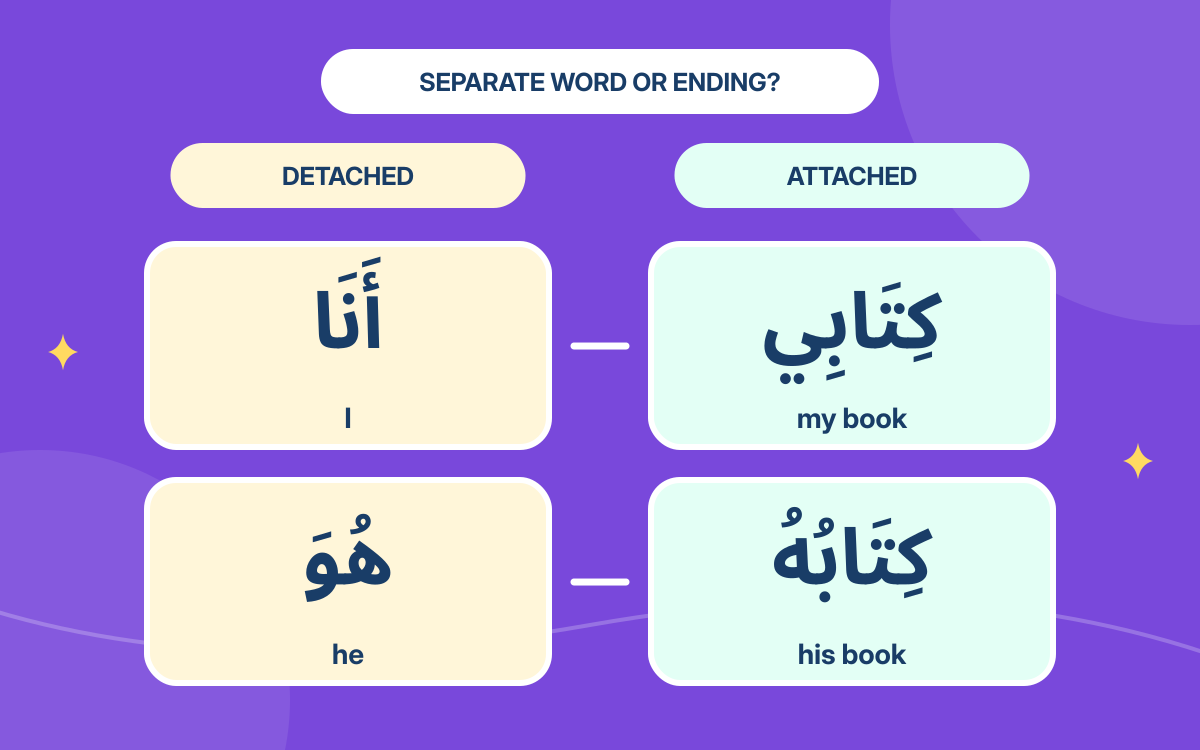
Huwa means he as a subject form; iyyahu is an independent object form. After a preposition, use its ordinary attached suffix, such as لَهُ, for him, rather than combining li with iyyahu.
These pronouns are fixed forms in an accusative position. They do not take ordinary noun tanween. Iyyana, إِيَّانَا, means us, while nahnu means we. Compare the basic pronoun guide, object fronting and prepositions with suffixes.
What to remember
- Iyyaka and related forms are independent object pronouns.
- Use the appropriate person, number and gender when the object stands separately.
- Subject forms and prepositional suffixes have different grammatical jobs.
Your reference shelf
Open a guide whenever you need it.
Detached object pronoun chartRead each form as an object, not a subject
| Meaning | Arabic | Plain reading |
|---|---|---|
| Me | إِيَّايَ | iyyaya |
| Us | إِيَّانَا | iyyana |
| You: one man | إِيَّاكَ | iyyaka |
| You: one woman | إِيَّاكِ | iyyaki |
| You: two people | إِيَّاكُمَا | iyyakuma |
| You: male or mixed group | إِيَّاكُمْ | iyyakum |
| You: female group | إِيَّاكُنَّ | iyyakunna |
| Him; masculine it | إِيَّاهُ | iyyahu |
| Her; feminine it | إِيَّاهَا | iyyaha |
| Them: two | إِيَّاهُمَا | iyyahuma |
| Them: male or mixed group | إِيَّاهُمْ | iyyahum |
| Them: female group | إِيَّاهُنَّ | iyyahunna |
The dual forms apply to either gender. These are simplified reading aids; Arabic spelling and vowel marks distinguish the exact forms.
One referent, different formsChoose according to grammatical position
| Job | Form | Example |
|---|---|---|
| Subject | هُوَ | هُوَ يَقْرَأُ — He reads. |
| Attached object | ـهُ | قَابَلْتُهُ — I met him. |
| Detached object | إِيَّاهُ | إِيَّاهُ قَابَلْتُ — It was him that I met. |
| After a preposition | لَهُ | هَذَا لَهُ — This is for him. |
The detached object has an accusative role, but its fixed spelling does not show the usual fatha or tanween of a declinable noun.
Sources & further learning
References for the language explanations and learning guidance.