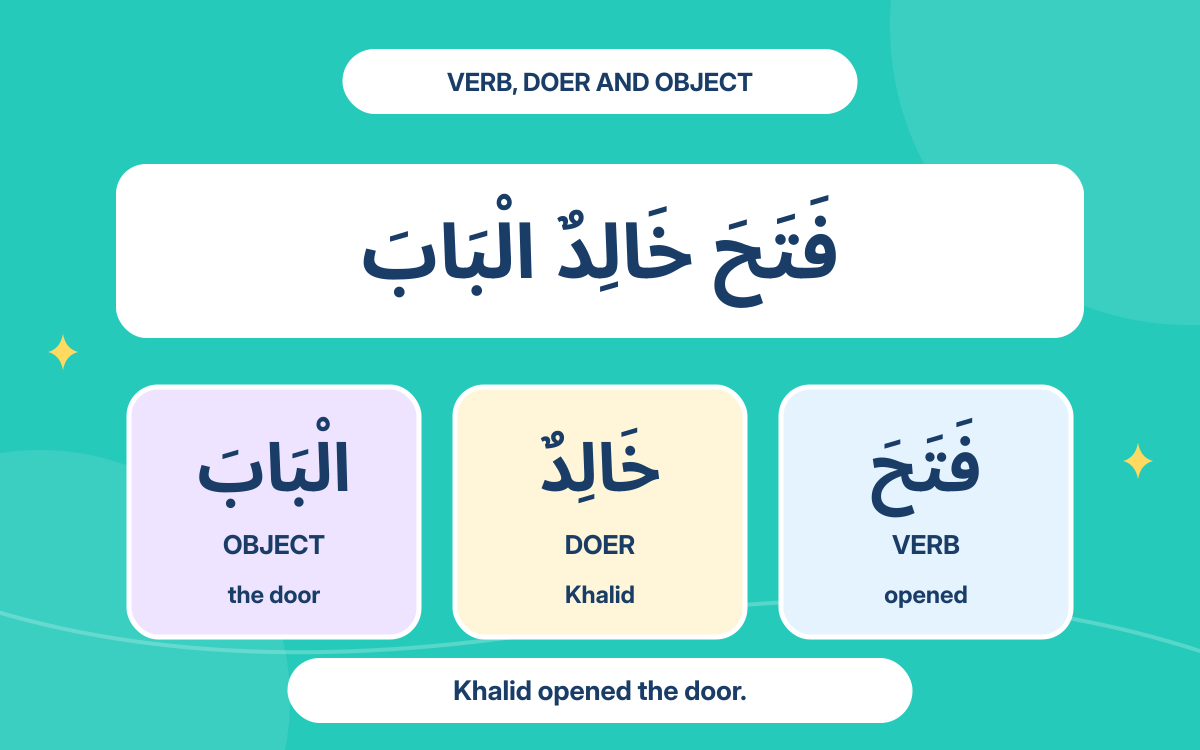
Arabic sometimes puts a particular object or place first to draw attention to it. You can follow that change without swapping the doer and object. Start with a book you read, then a place where you sat.
01Start with an ordinary action
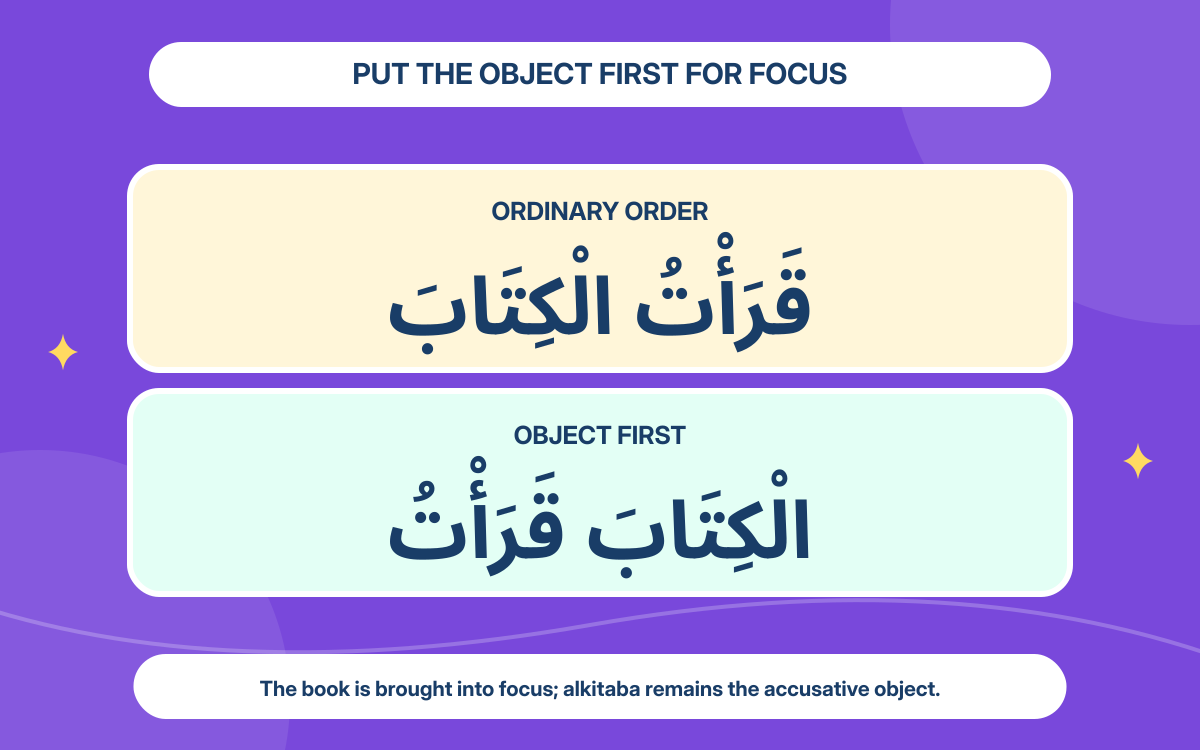
A direct object names what the action affects. In this simple active sentence, qaratu means “I read”: its tu identifies the speaker. The definite book is the object, so its regular accusative ending is a.
قَرَأْتُ الْكِتَابَ
qaratu lkitaba
I read the book.
Ask who read: I. Ask what was read: the book. This example has the verb with its attached doer before the object.
02Bring that same object forward
Suppose the discussion turns to the book. You can begin with it to give it attention. Move the whole object before the verb; keep its accusative a. It is still what you read.
الْكِتَابَ قَرَأْتُ
alkitaba qaratu
The book is what I read.
This English wording highlights the book. The Arabic does not make the book the reader. Fronting can serve different purposes in context; it does not automatically mean “only.” Our lesson uses attention to a particular object.
03Keep a preposition with its noun
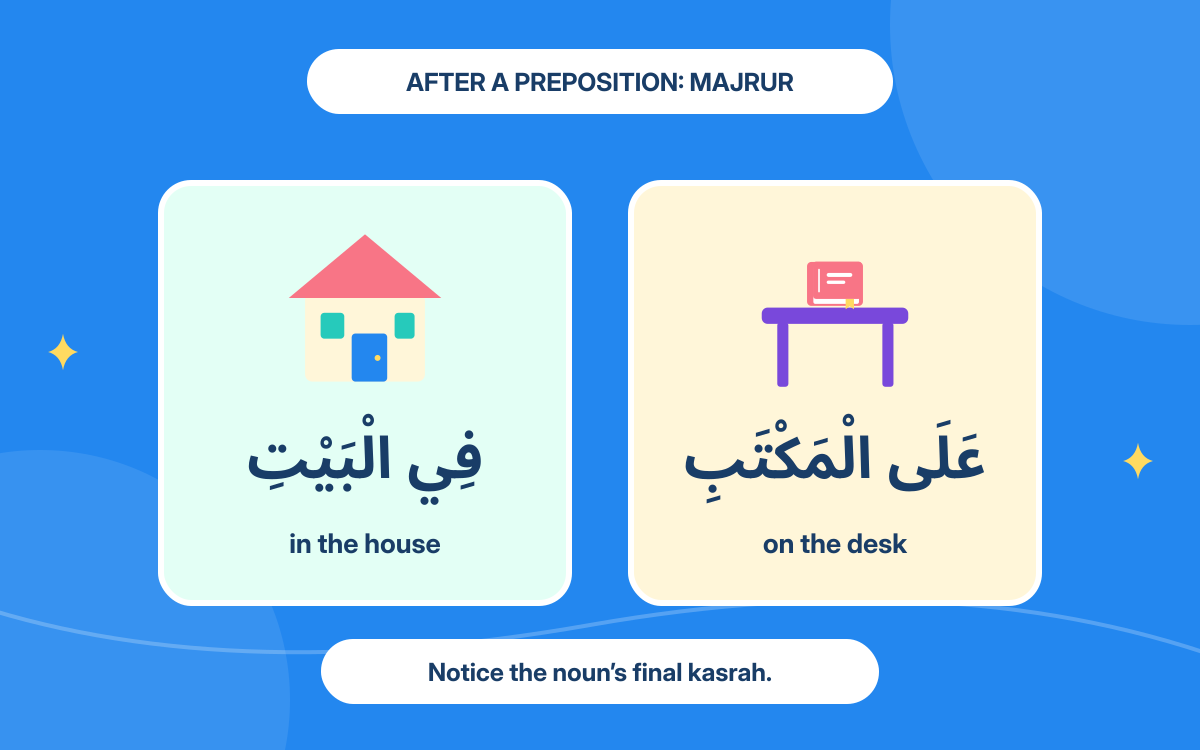
A prepositional phrase can also move. Fi means “in.” The following regular definite noun takes the genitive ending i. Here that phrase tells you where I sat; it is not a direct object.
جَلَسْتُ فِي الْبَيْتِ
jalastu fi lbayti
I sat in the house.
فِي الْبَيْتِ جَلَسْتُ
fi lbayti jalastu
In the house, I sat.
Bring fi and albayti forward together. The noun stays genitive because fi still governs it.
04Position does not replace grammar
Compare the beginnings below. Alkitaba is accusative because it is the object of reading. Albayti is genitive because it follows fi. Both expressions come first, but they have different jobs.
الْكِتَابَ قَرَأْتُ
alkitaba qaratu
The book is what I read.
فِي الْبَيْتِ جَلَسْتُ
fi lbayti jalastu
In the house, I sat.
Tu remains attached to each verb and still identifies I. Do not give the first noun a nominative u just because it starts the sentence.
05Follow the intended focus
For a general report, our verb-first models work. To draw attention to the book or the house, use the corresponding fronted model. The action and its participants remain the same; the context explains why you put something first.
فِي الْبَيْتِ جَلَسْتُ
fi lbayti jalastu
In the house, I sat.
These are two small patterns, not permission to rearrange every Arabic sentence freely. Other constructions have their own limits. Our ordering quiz specifies the opening phrase so that another grammatical order is not mistaken for an error.
What to remember
- A fronted direct object keeps its accusative role: alkitaba qaratu.
- Move a preposition and its noun together; fi still requires genitive albayti.
- Fronting draws attention in context, with different possible purposes; it does not automatically mean only.
Your reference shelf
Open a guide whenever you need it.
Two roles, two focused beginningsCompare our ordinary and fronted models without treating every order as interchangeable
| Role brought forward | Ordinary model | Fronted model |
|---|---|---|
| Direct object | قَرَأْتُ الْكِتَابَ qaratu lkitaba | الْكِتَابَ قَرَأْتُ alkitaba qaratu |
| Place phrase | جَلَسْتُ فِي الْبَيْتِ jalastu fi lbayti | فِي الْبَيْتِ جَلَسْتُ fi lbayti jalastu |
Fronting is often discussed as التَّقْدِيمُ (attaqdimu). Writers may use it for attention, contrast or restriction, among other purposes. This article teaches the roles and endings in two simple sentences, rather than a complete system of rhetorical interpretation.
Keep the accusative object separate from a nominative topic followed by a clause containing a pronoun that refers back to it. That is a different structure. Likewise, sentences with special particles or possible ambiguity may limit the allowed order. Follow a verified model before experimenting.
Sources & further learning
References for the language explanations and learning guidance.