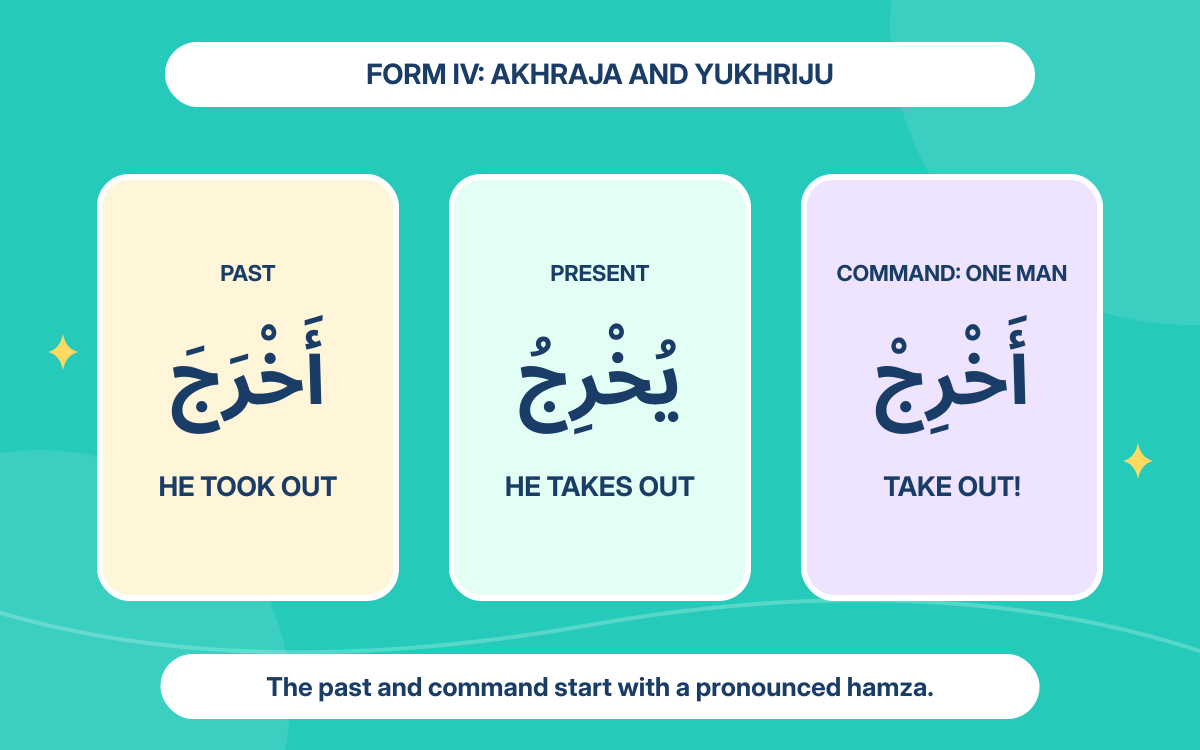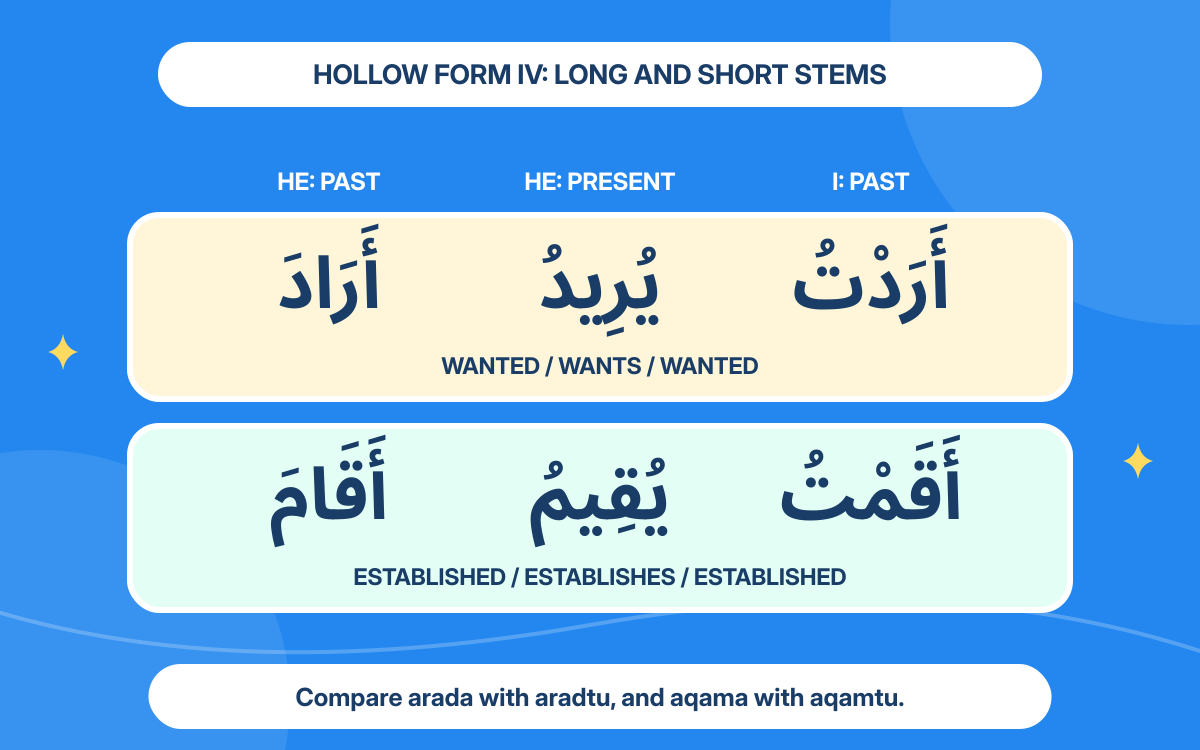
Arada, “he wanted,” and aqama, “he stayed” or “he established,” belong to Form IV, but their middle weak letter changes shape. Their past forms shorten to aradtu and aqamtu for “I.” Learn these common verbs as small families of forms rather than forcing them into the sound-verb spelling.
01Find the weak middle radical
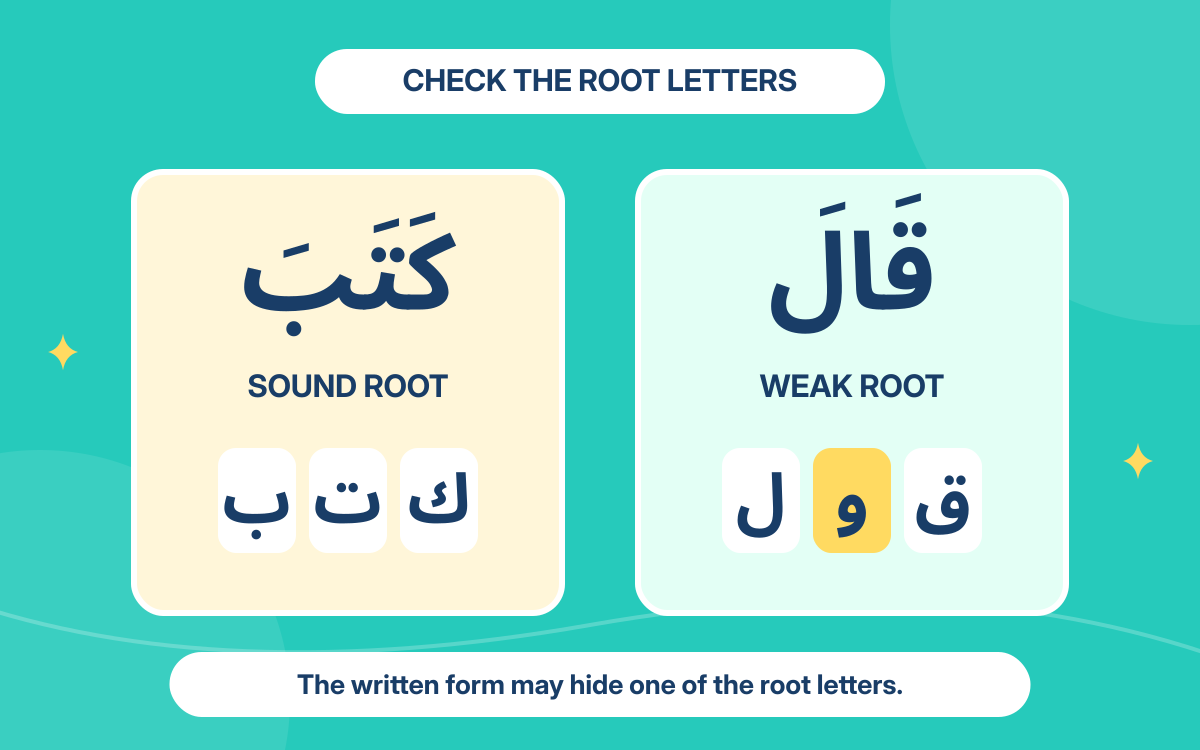
A hollow verb has a weak middle root letter. أَرَادَ belongs to ر و د, and أَقَامَ belongs to ق و م. Their initial hamza is the Form IV addition, not a fourth root radical. The middle alif represents a long a in these past forms.
أَرَادَ مَاءً
arada maan
He wanted water.
أَقَامَ فِي الْمَدِينَةِ
aqama filmadinati
He stayed in the city.
Aqama has several meanings; with fi and a place, it can mean “stay” or “reside.”
02Shorten the past before tu and na
Before subject endings such as tu, “I,” and na, “we,” these verbs replace the long middle a with a short a: أَرَدْتُ / أَرَدْنَا and أَقَمْتُ / أَقَمْنَا. The final root consonant has sukun before these endings.
أَرَدْتُ كِتَابًا / أَرَدْنَا كِتَابًا
aradtu kitaban / aradna kitaban
I wanted a book / We wanted a book.
أَقَمْتُ فِي الْمَدِينَةِ / أَقَمْنَا فِي الْمَدِينَةِ
aqamtu filmadinati / aqamna filmadinati
I stayed in the city / We stayed in the city.
Keep the first hamza and its a vowel. These are active past forms.
03Recognise the long i in the present
The ordinary “he” present forms are يُرِيدُ, he wants, and يُقِيمُ, he stays or establishes. Their middle vowel is long i. For “I,” use أُرِيدُ or أُقِيمُ.
أُرِيدُ كِتَابًا
uridu kitaban
I want a book.
The initial u marks this present “I” form. Compare past aradtu, “I wanted,” with present uridu, “I want.” The wanted noun is an accusative object.
04Keep the hamza in aqim
To tell one male to stay, use أَقِمْ. The middle i is short and the final mim has sukun. As a Form IV command, it keeps initial أَ, hamzat qat: pronounce it even after another word.
أَقِمْ فِي الْمَدِينَةِ
aqim filmadinati
Stay in the city. (To one male.)
Read aqim with short i, compared with the long i of yuqimu. Keep this selected command together with its verb family.
05Read the form and its context together
Use the whole phrase to select the meaning. Aqama with a place can describe staying; with a suitable object it can describe establishing or holding something. A change of meaning does not give it a new root.
يُقِيمُ فِي الْمَدِينَةِ
yuqimu filmadinati
He stays in the city.
Fi means “in” and makes almadinati genitive. Here yuqimu is present with long i; aqamtu was past with short a; aqim is a command with short i. These models build on Form IV; they do not describe every weak verb.
What to remember
- Arada and aqama have weak middle radicals in ر و د and ق و م; their first hamza is a Form IV addition.
- Their past stems shorten before endings such as tu and na: aradtu, aradna, aqamtu and aqamna.
- The present forms yuridu and yuqimu have long i; the command aqim has short i and keeps hamzat qat.
Your reference shelf
Open a guide whenever you need it.
Two small verb familiesCompare the selected past and present forms, then revisit aqim
| Subject and tense | Want | Stay / establish |
|---|---|---|
| He: past | أَرَادَ · arada | أَقَامَ · aqama |
| I: past | أَرَدْتُ · aradtu | أَقَمْتُ · aqamtu |
| We: past | أَرَدْنَا · aradna | أَقَمْنَا · aqamna |
| He: present | يُرِيدُ · yuridu | يُقِيمُ · yuqimu |
| I: present | أُرِيدُ · uridu | أُقِيمُ · uqimu |
Command to one male: أَقِمْ, aqim. With a place, أَقِمْ فِي الْمَدِينَةِ means “Stay in the city.” With a suitable direct object, aqama can mean “establish” or “hold”; learn the intended meaning from the whole phrase. In these active past forms, the shortened vowel is a, while the shortened command vowel is i. Check other verbs’ actual forms before extending this model. The plain reading aids simplify sounds and do not mark every vowel length.
Sources & further learning
References for the language explanations and learning guidance.