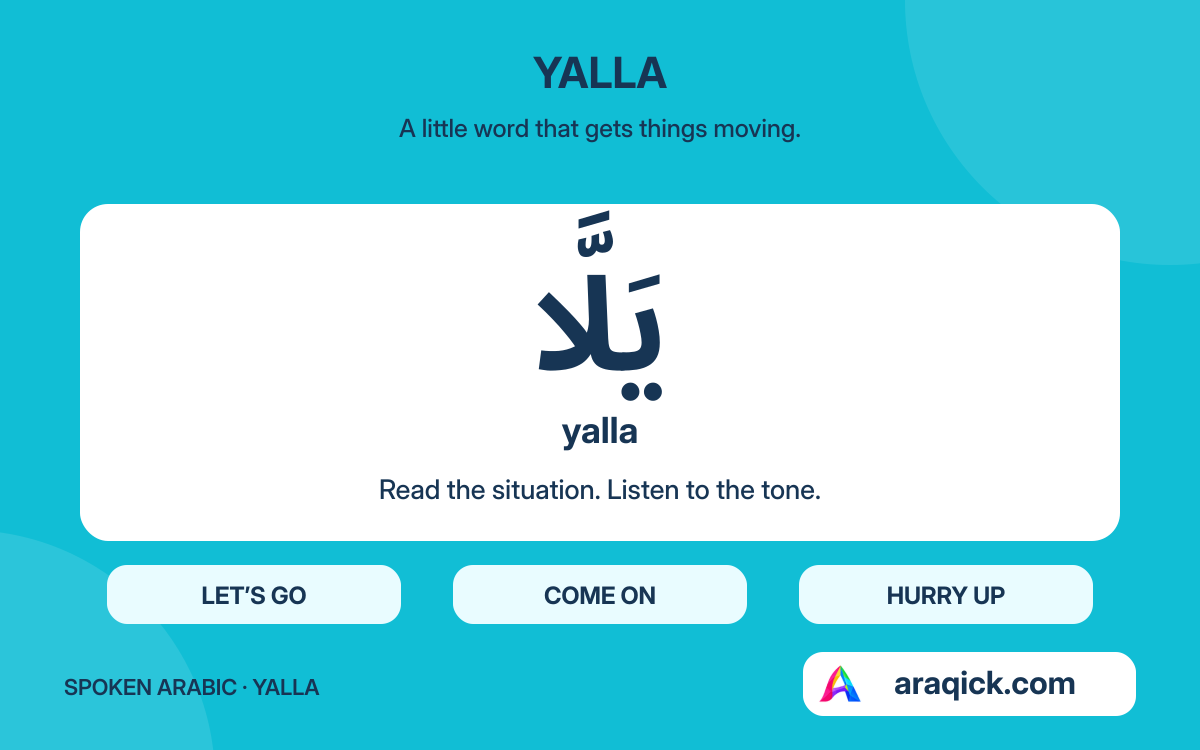
Yalla, written يلا or يلّا, is a common spoken Arabic expression. Depending on the situation, it can mean “let’s go,” “come on,” or “hurry up.” It often encourages an action. The word alone does not tell you which action is intended, and its tone can be friendly or impatient.
01What does yalla mean?
Imagine two friends standing by the door, ready to leave. One says yalla. In that setting, “Let’s go” is a useful English translation. The same word beside an unfinished task can encourage someone to begin or keep going.
Spoken Arabic
يَلَّا
yalla
Let’s go; come on.
The situation supplies the action. Start with that action before choosing an English translation.
02Leave together: yalla bina
Common Egyptian Arabic expression
يلا بينا
yalla bina
Let’s go.
This is a useful phrase when people are ready to move together. Learn it as a small spoken unit. It is not the form you would automatically choose for a formal written announcement.
Our MSA and Arabic dialects guide explains why a useful everyday phrase can differ from a classroom Standard Arabic sentence.
03Encourage someone to act
A friend has nearly finished a puzzle and hesitates over the last piece. A warm yalla can mean “Come on!” or “You can do it!” in that moment. It is encouragement, not necessarily a request to leave.
Spoken address
يلا يا عمر
yalla ya umar
Come on, Omar.
The word يا calls the listener. Compare direct address with ya before trying the phrase with another name.
04Notice when it means hurry up
Now imagine the same friend is keeping everyone waiting at the door. A quick, sharp yalla may communicate urgency: “Hurry up!” Repetition or a stronger voice can increase that pressure. You cannot recover all those details from a short written message.
The spelling has not changed, but the relationship, timing and voice matter. When speaking to someone you do not know well, choose a polite request that clearly explains what you need.
05Does yalla change for a man or woman?
Yalla itself stays the same in the examples here. If you add a verb, name or term of address, that extra wording may change with the listener. Do not treat yalla as a complete lesson in Arabic command endings.
yalla ya habibi
Come on, my dear.
yalla ya habibti
Come on, my dear.
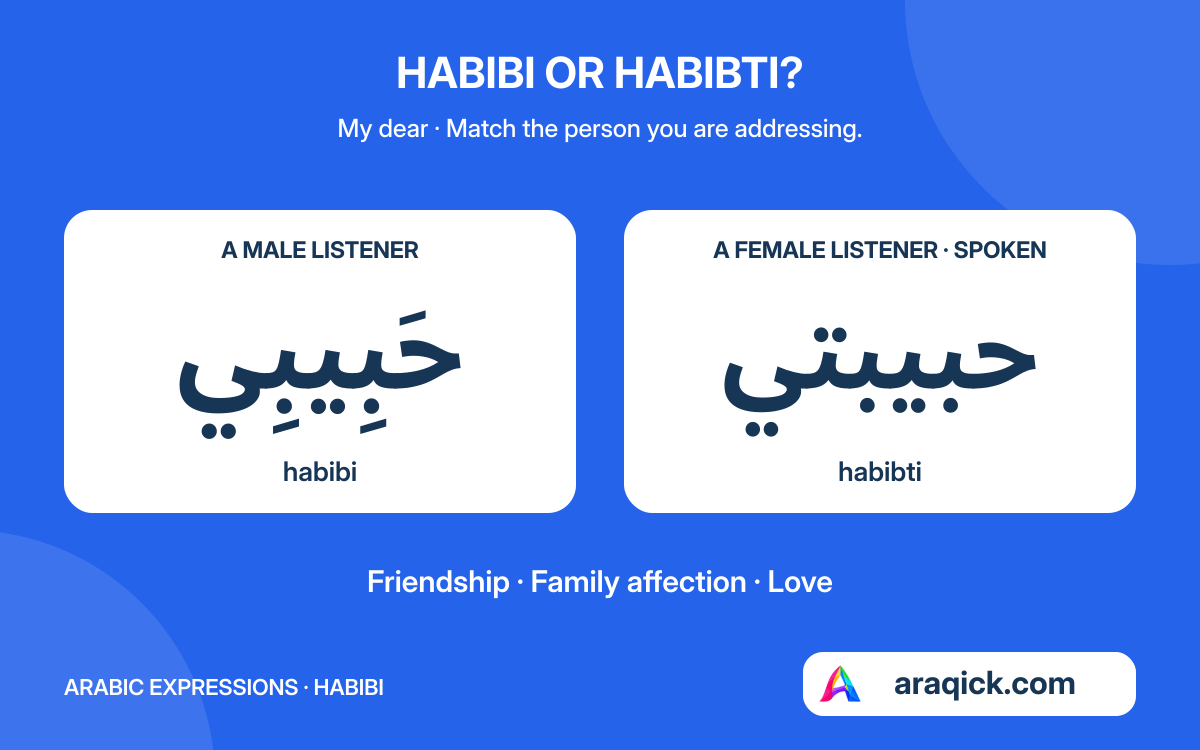
Read habibi and habibti for the affectionate forms.
06Respond to the actual suggestion
There is no special reply you must give whenever you hear yalla. If the suggestion is to leave, you can agree, ask for a moment, or explain that you cannot go. If it is encouragement during a task, the natural response may simply be to continue.
In an exercise, ask: Where are the speakers? What are they doing? What does one person want the other to do next?
07Yalla starts movement; khalas can close it
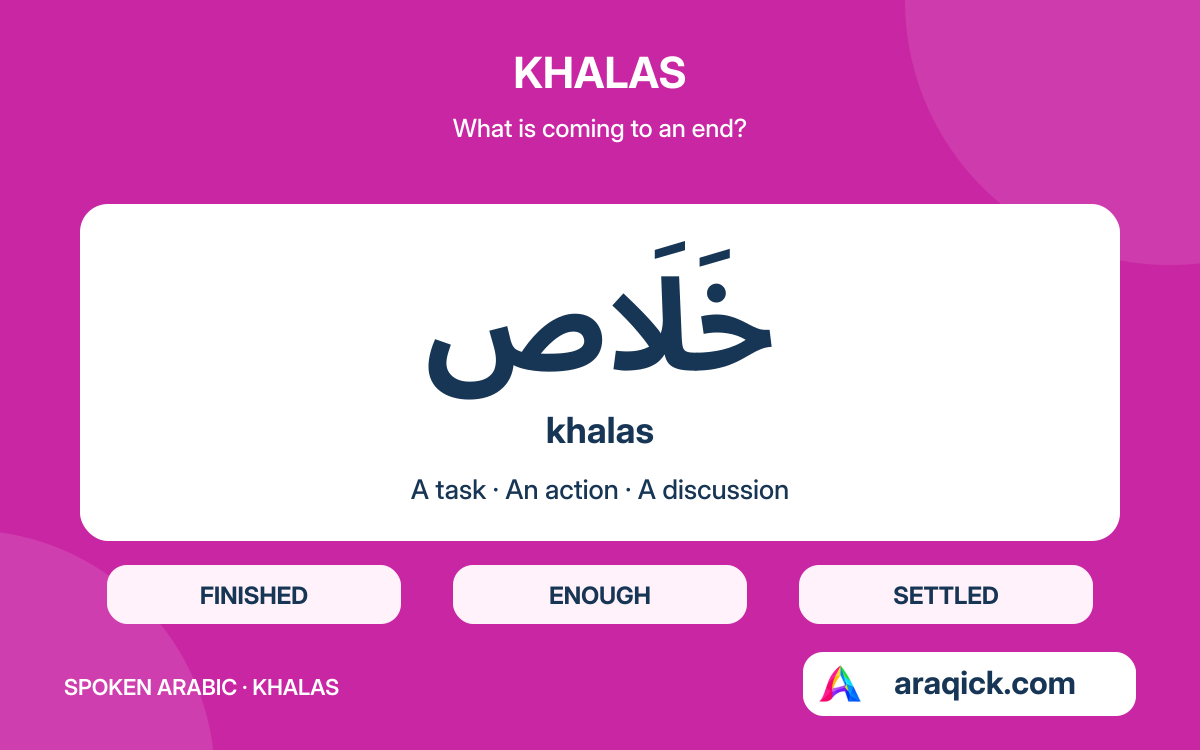
A useful contrast is action versus completion. Yalla can encourage the next step. Khalas can signal that something is finished, enough, or settled. These are flexible spoken expressions, not exact opposites in every sentence.
Practise with three situations: leaving home, encouraging a classmate, and keeping an appointment. Choose the intended action and say yalla with an appropriate tone. Your goal is understanding a real message, not memorising a single translation.
What to remember
- Yalla can mean let’s go, come on or hurry up in spoken Arabic.
- The situation identifies the action; tone helps show encouragement or urgency.
- Yalla stays the same here, while added listener forms may change.
Your reference shelf
Open a guide whenever you need it.
One word, several situationsUse context to choose the English meaning.
| Situation | Expression | Likely message |
|---|---|---|
| Ready at the door | يلا | Let’s go |
| Encouraging a friend | يلا يا عمر | Come on, Omar |
| Everyone is waiting | يلا | Hurry up; tone may be impatient |
| Going together · Egyptian | يلا بينا | Let’s go |
These translations describe the example situations. They are not a fixed meaning for every occurrence.
Sources & further learning
References for the language explanations and learning guidance.