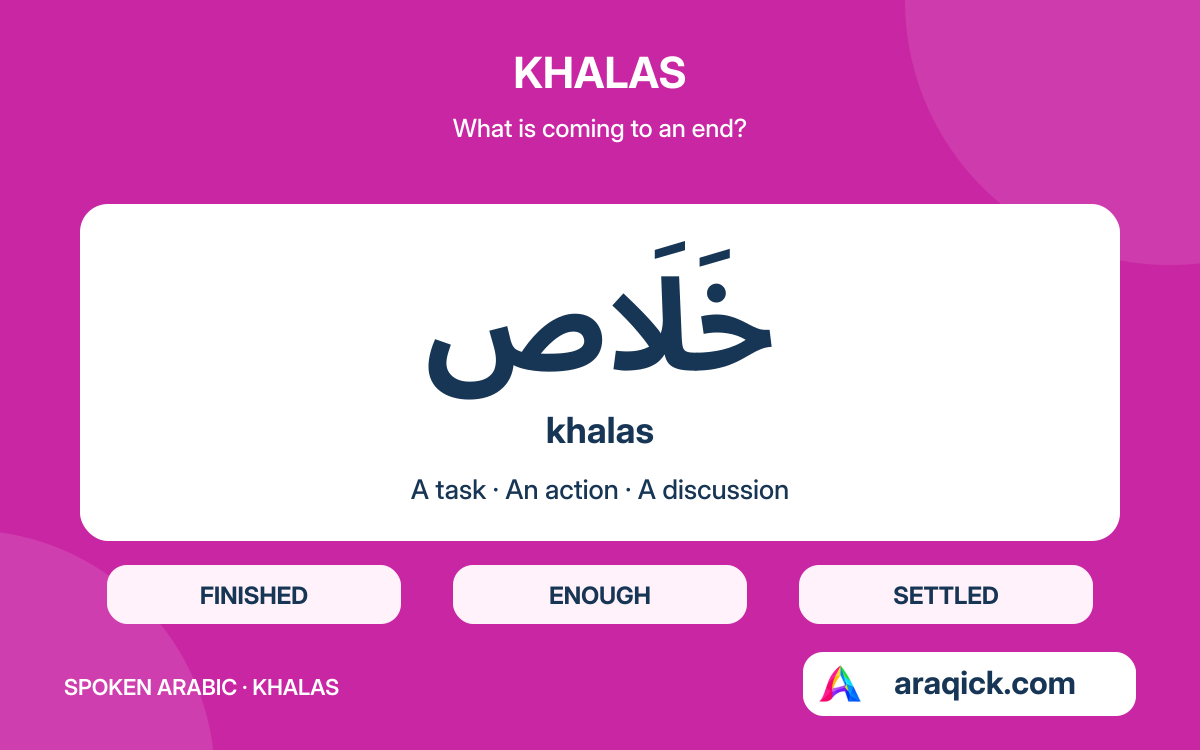
Khalas, خَلَاص, is a common spoken Arabic expression that can mean “finished,” “enough,” or “that’s settled.” The meaning depends on what is being closed: a task, an action, or a discussion. It can sound calm or firm. Listen to the surrounding words and the speaker’s tone.
01What does khalas mean?
Khalas often marks an endpoint. If someone points to completed work and says khalas, the message may be “Done.” If someone says it during an unwanted repeated action, the message may be “Enough.”
Spoken expression
خَلَاص
khalas
Finished; enough; settled.
Do not attach every possible translation to one occurrence. First identify what the speaker wants to bring to an end.
02A task is finished
Imagine a friend checking whether you have finished packing. A calm khalas can signal that the task is complete. Other words can make the answer clearer.
Egyptian Arabic · male speaker
خلاص، أنا جاهز
khalas ana gahiz
Done, I’m ready.
An Egyptian woman could say أنا جاهزة (ana gahza), “I’m ready.” Here ready describes the speaker. Khalas itself does not change.
03An action should stop
If someone keeps repeating the same question, khalas may mean “Enough” or “Stop now.” A firm voice can make it a boundary. It does not necessarily report that a task was successfully completed.
When using it yourself, think about how the other person may hear it. A calm explanation can help. A beginner should not assume a shouted khalas and a relaxed khalas communicate the same attitude.
04A decision is settled
Two friends have been comparing meeting places. Once they choose the library, one says khalas and repeats the arrangement. The expression can now mean “All right, that’s settled.”
Spoken example
خلاص، بكرة
khalas bukra
All right, tomorrow.
The word bukra supplies “tomorrow.” Khalas signals that the discussion has reached a decision; it does not itself name the time.
05Keep the expression separate from a verb
In these examples, khalas functions as a fixed expression. It does not have a new ending for every person. A full Standard Arabic sentence expressing completion uses different grammar.
Standard Arabic
أَنْهَيْتُ الْعَمَلَ
anhaytu alamala
I finished the work.
Compare the short conversational signal with the explicit subject and action in the full sentence. See MSA and spoken dialects for the difference in setting.
06Check what has actually ended
Suppose a colleague says khalas during a conversation about a document. The message could concern finishing the document or ending the discussion about it. Ask a specific question if that distinction matters.
Standard Arabic clarification
هَلِ الْعَمَلُ مُكْتَمِلٌ؟
hali alamalu muktamil
Is the work complete?
The question supplies a precise meaning. Practise building other clear questions with Arabic question words.
07Compare khalas with yalla
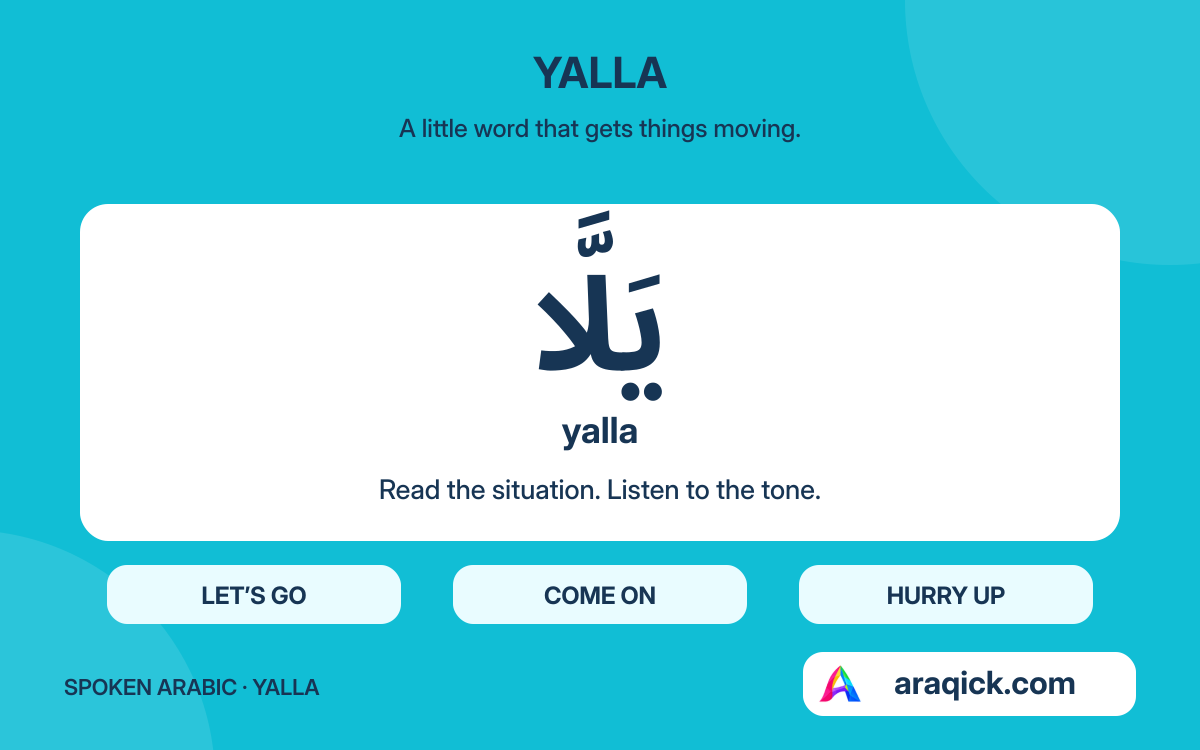
Yalla can push an activity forward: “Let’s go” or “Come on.” Khalas can signal an endpoint. A person can use both during one afternoon without either expression changing its basic conversational role.
Review a task, a boundary, and a settled plan. For each situation, say what khalas would close. Then try a complete sentence about the action using beginner Arabic sentence patterns.
What to remember
- Khalas can mean finished, enough or settled, depending on the situation.
- Identify what is ending and listen to the tone.
- The fixed expression is different from a full verb sentence such as anhaytu alamala.
Your reference shelf
Open a guide whenever you need it.
Khalas: identify the endpointCompare three situations and a complete Standard Arabic sentence.
| Setting | Likely meaning | What is ending? |
|---|---|---|
| Packing is complete | Done / finished | The task |
| An unwanted action continues | Enough / stop | The action |
| A meeting place is agreed | That’s settled | The discussion |
| أَنْهَيْتُ الْعَمَلَ | I finished the work | An explicit MSA verb sentence |
Sources & further learning
References for the language explanations and learning guidance.