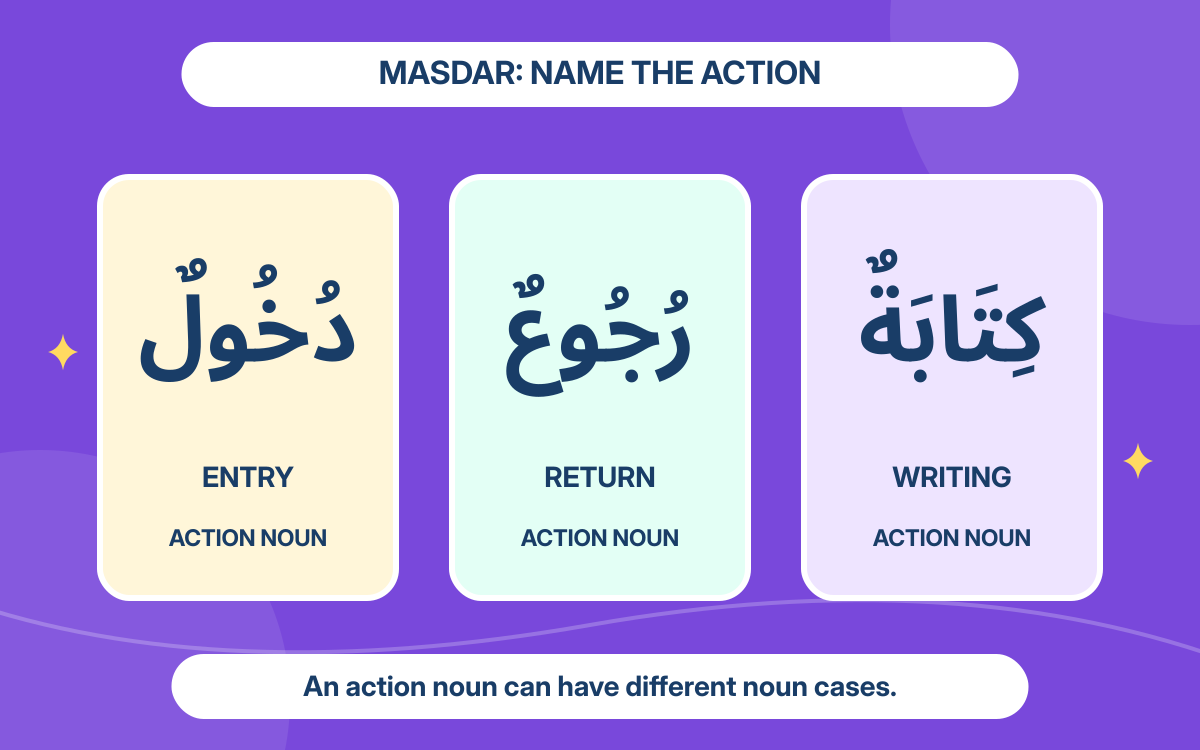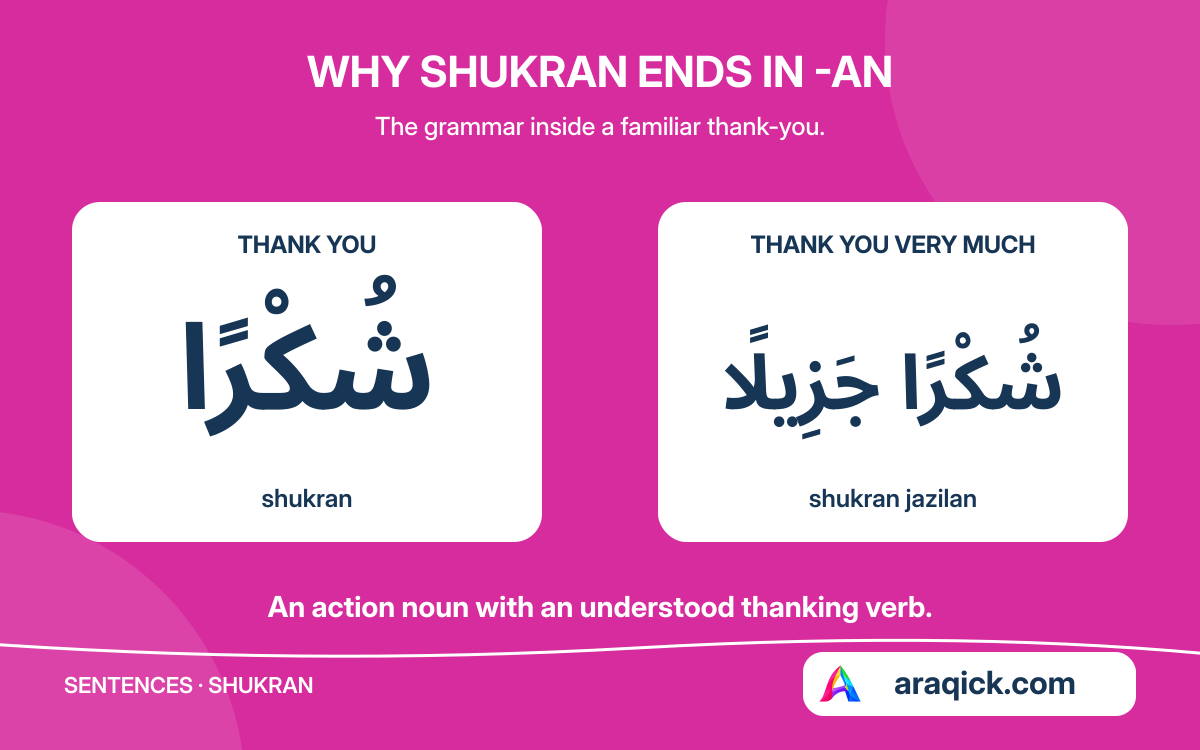
Shukran means thank you, but its Arabic form is a noun rather than a conjugated verb. The ending an is fathah tanwin. In the traditional analysis, shukran is an accusative action noun used with an understood thanking verb. That small expression therefore carries a complete communicative purpose.
01Read the ending as part of the noun
شُكْرًا لَكَ عَلَى النَّصِيحَةِ
shukran laka ala annasihati
Thank you for the advice. — to one man
The base noun shukr names thanks or gratitude. Here it is accusative and indefinite, giving shukran. The final n is pronounced in the reading form but is written as tanwin, not as a separate letter nun.
Laka identifies the person thanked, and ala annasihati identifies the reason. The noun shukran does not acquire a different personal ending when the listener changes; the following pronoun handles that information.
02Supply the thanking action mentally
أَشْكُرُكَ شُكْرًا
ashkuruka shukran
I thank you. — with the thanking action reinforced
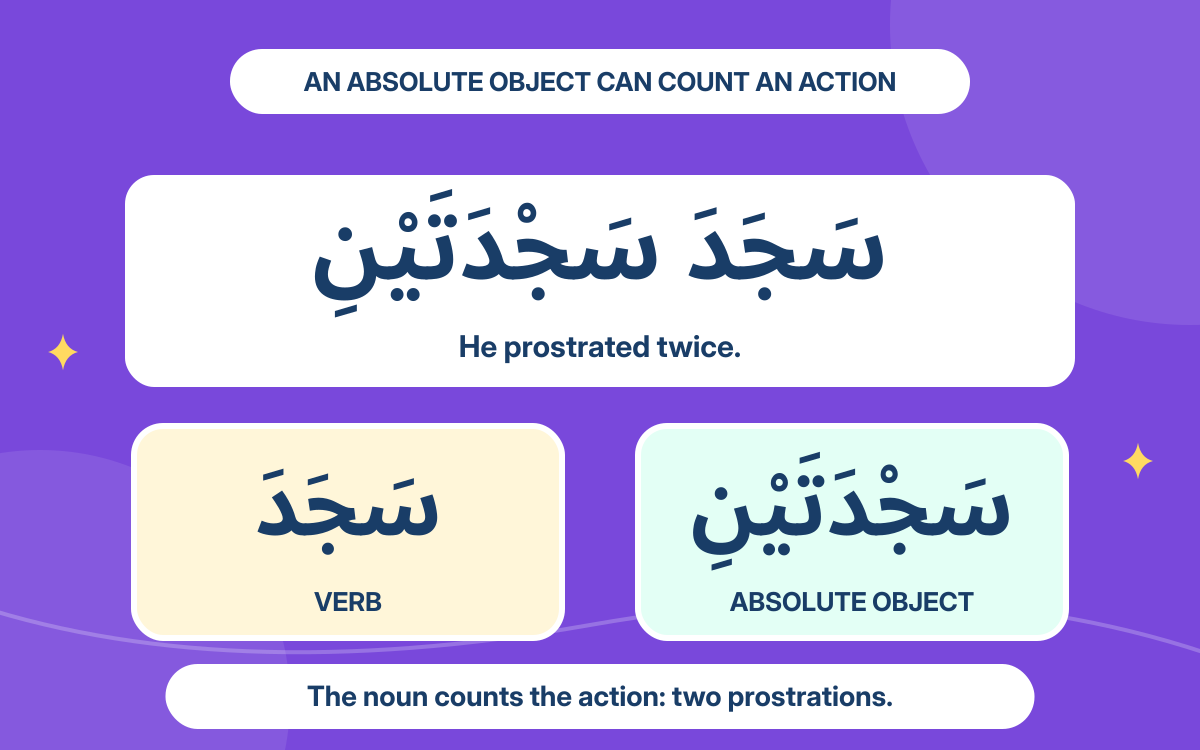
This fuller construction makes the analysis visible. Ashkuruka supplies I, the thanking action and you. Shukran names the same action as an absolute object. The familiar short expression leaves the thanking verb understood.
You do not need to say the full grammatical expansion every time you thank someone. Its purpose here is to explain why a noun alone can function as an expression. Compare the absolute object.
03Add a matching description
شُكْرًا جَزِيلًا لَكِ عَلَى الْمُسَاعَدَةِ
shukran jazilan laki ala almusaadati
Thank you very much for the help. — to one woman
Jazilan describes the thanks as abundant. It follows shukran in the accusative and indefinite form. In natural English, the whole expression is thank you very much; there is no need to translate it as an awkward repeated noun.
Laki addresses one woman. Shukran jazilan stays the same. To a male or mixed group, use lakum. Keep the noun phrase and the listener pronoun as two separate choices.
04Recognize another action noun standing for a verb
صَبْرًا يَا صَدِيقِي
sabran ya sadiqi
Be patient, my friend.
Sabran names patience, yet this expression asks the listener to be patient. Traditional analysis supplies an understood verb such as isbir, be patient. The action noun carries the instruction in the short form.
This does not make sabran a normal imperative verb or make shukran a past verb. A noun can stand for a fuller expression. The intended action comes from the established formula and its situation.
05Avoid treating every an ending as the same construction
أُرِيدُ كِتَابًا
uridu kitaban
I want a book.
Kitaban also ends in an, but it names the thing wanted. It is a direct object, not an action noun replacing a thanking or patience verb. The shared ending tells you the case, not the entire grammatical role.
Read tanwin alongside action nouns. Some conversational expressions keep a familiar an pronunciation even where other formal case endings are not spoken. Use these exact phrases for practice rather than removing the ending automatically.
What to remember
- Shukran is an accusative action noun with an understood thanking verb.
- Jazilan matches shukran; laka, laki and lakum identify the listener.
- An ending alone does not identify an absolute object.
Your reference shelf
Open a guide whenever you need it.
Expand your thank-you expressionThe thanking noun stays stable while the listener changes
| Arabic | Reading aid | Meaning |
|---|---|---|
| شُكْرًا | shukran | Thank you |
| شُكْرًا لَكَ | shukran laka | Thank you — to one man |
| شُكْرًا لَكِ | shukran laki | Thank you — to one woman |
| شُكْرًا لَكُمْ | shukran lakum | Thank you — to a male or mixed group |
| شُكْرًا جَزِيلًا | shukran jazilan | Thank you very much |
| شُكْرًا عَلَى النَّصِيحَةِ | shukran ala annasihati | Thank you for the advice |
Same ending, different grammatical jobsAsk whether the noun names an action or a thing
| Expression | Word | Analysis |
|---|---|---|
| شُكْرًا لَكَ | شُكْرًا | Action noun with an understood thanking verb |
| أَشْكُرُكَ شُكْرًا | شُكْرًا | Absolute object with an expressed verb |
| شُكْرًا جَزِيلًا | جَزِيلًا | Adjective matching the action noun |
| صَبْرًا يَا صَدِيقِي | صَبْرًا | Action noun standing for a patience instruction |
| أُرِيدُ كِتَابًا | كِتَابًا | Direct object: the thing wanted |
Sources & further learning
References for the language explanations and learning guidance.