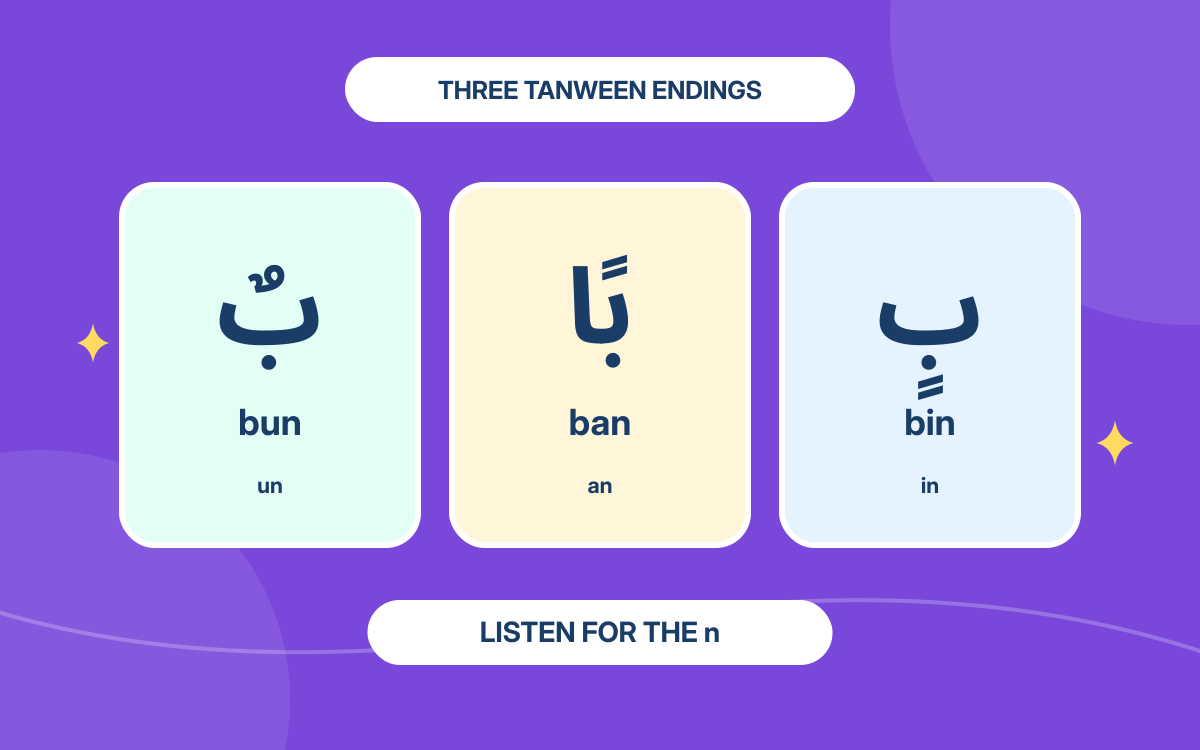
Tanween adds a final n sound in a full grammatical reading, using special vowel marks rather than the letter nun. Its three basic readings are un, an and in. Learn to recognise the ending first, then connect it with grammar. It often accompanies indefinite nouns, but it does not always mean “a.”
01Hear n without writing nun
كِتَابٌ
kitabun
A book — full-form reading
The final mark on ba gives un: kitabun. The n is heard in this practice reading, but no ن is added to the word. The ordinary word for book remains kitab.
We deliberately retain the ending here because it is the feature you are learning.
02Compare the three endings
kitabun
Dammah tanween — un
kitaban
Fathah tanween — an
kitabin
Kasrah tanween — in
The same noun now appears in three grammatical forms. These endings are not interchangeable decoration: the noun’s job in a sentence helps determine which one belongs there.
Notice the supporting alif in kitaban. Many words add this alif with fathah tanween, but not every word does. For example, مَدْرَسَةً madrasatan, a school, keeps taa marbuta at the end without an extra alif.
03Read a complete example
هَذَا كِتَابٌ
hadha kitabun
This is a book.
فِي كِتَابٍ
fi kitabin
In a book
The first example uses kitabun as the information given about this. In the second, the preposition fi puts kitab in the genitive case, giving kitabin for this regular indefinite noun.
You do not need to master every case rule now. Notice that un and in are meaningful choices. Keep each ending with its noun when building the phrase; tanween is not a separate word that you can move elsewhere.
04Tanween is not an automatic “a”
مُحَمَّدٌ
muhammadun
Muhammad — a specific person’s name
This proper name can have tanween even though it is definite. Translate it as Muhammad, not a Muhammad simply because you see the ending. A useful beginner clue is not a universal definition.
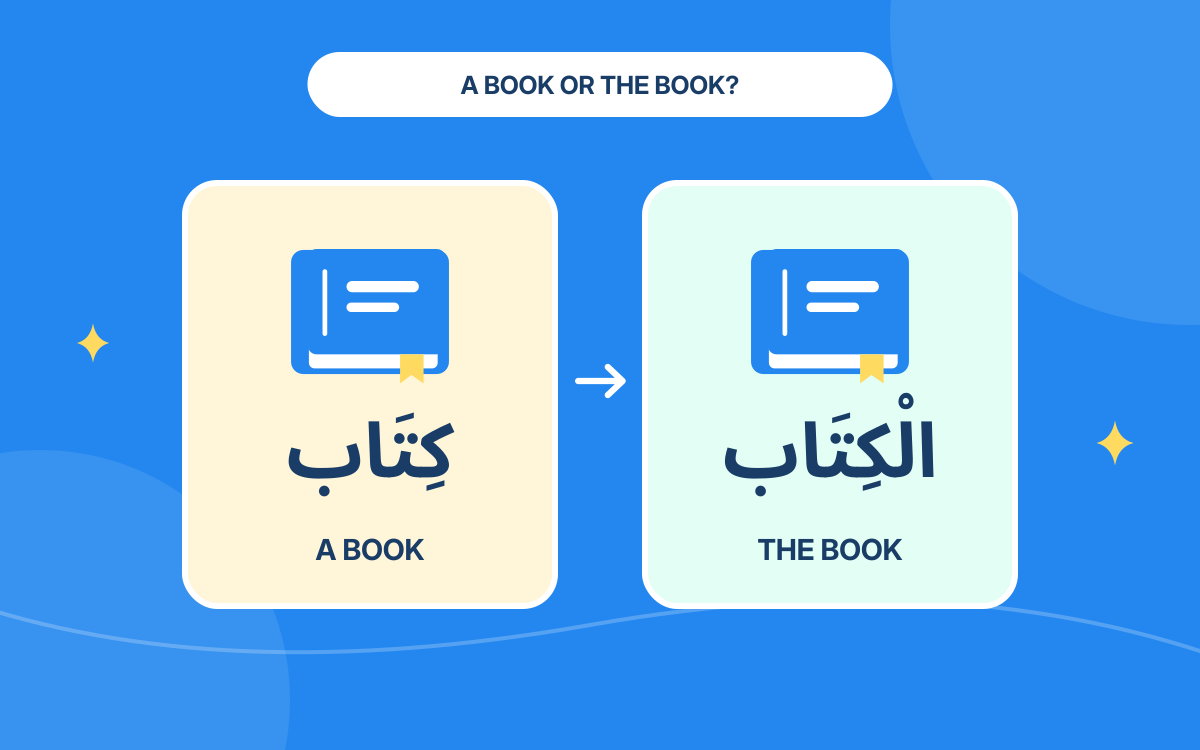
The article al removes tanween from ordinary nouns: الْكِتَابُ alkitabu means the book. Compare its single final dammah with kitabun. Other constructions and noun classes also affect tanween, so adding it to every Arabic noun would be incorrect.
05Full reading and pausing can differ
Our exercises use full-form readings so you can hear the endings. At a pause, kitabun and kitabin normally become kitab. Kitaban normally becomes kitaba, with a long final a. The written word need not change.
Words ending in taa marbuta behave differently: madrasatun, madrasatan and madrasatin normally pause as madrasah, rather than keeping t plus tanween.
- Read the mark: un, an or in.
- Check the context: the ending has a grammatical reason.
- Know the task: these quizzes ask for the full reading unless they explicitly say pause.
What to remember
- Tanween gives un, an or in without writing a final nun.
- It often appears on indefinite nouns, but definite names such as Muhammad can take it too.
- Distinguish full grammatical readings from the forms used at a pause.
Your reference shelf
Open a guide whenever you need it.
Full forms and pause formsCompare book and school in a compact chart
| Arabic | Reading aid | Meaning or use |
|---|---|---|
| كِتَابٌ | kitabun | At a pause: kitab |
| كِتَابًا | kitaban | At a pause: kitaba, with a long final a |
| كِتَابٍ | kitabin | At a pause: kitab |
| مَدْرَسَةٌ | madrasatun | At a pause: madrasah |
| مَدْرَسَةً | madrasatan | At a pause: madrasah |
| مَدْرَسَةٍ | madrasatin | At a pause: madrasah |
Why does the ending change? For many ordinary singular nouns, un, an and in correspond to nominative, accusative and genitive case. Different noun types have other patterns; this chart is not a rule for every noun.
Does fathah tanween always need another alif? No. Taa marbuta is one exception. Certain hamza spellings and other final-letter patterns also affect the writing. Learn a word’s standard spelling rather than adding alif mechanically.
Does every indefinite noun have tanween? No. Some noun classes, often called diptotes, do not. Tanween is a useful sign to recognise, not the sole test of definiteness.
Sources & further learning
References for the language explanations and learning guidance.