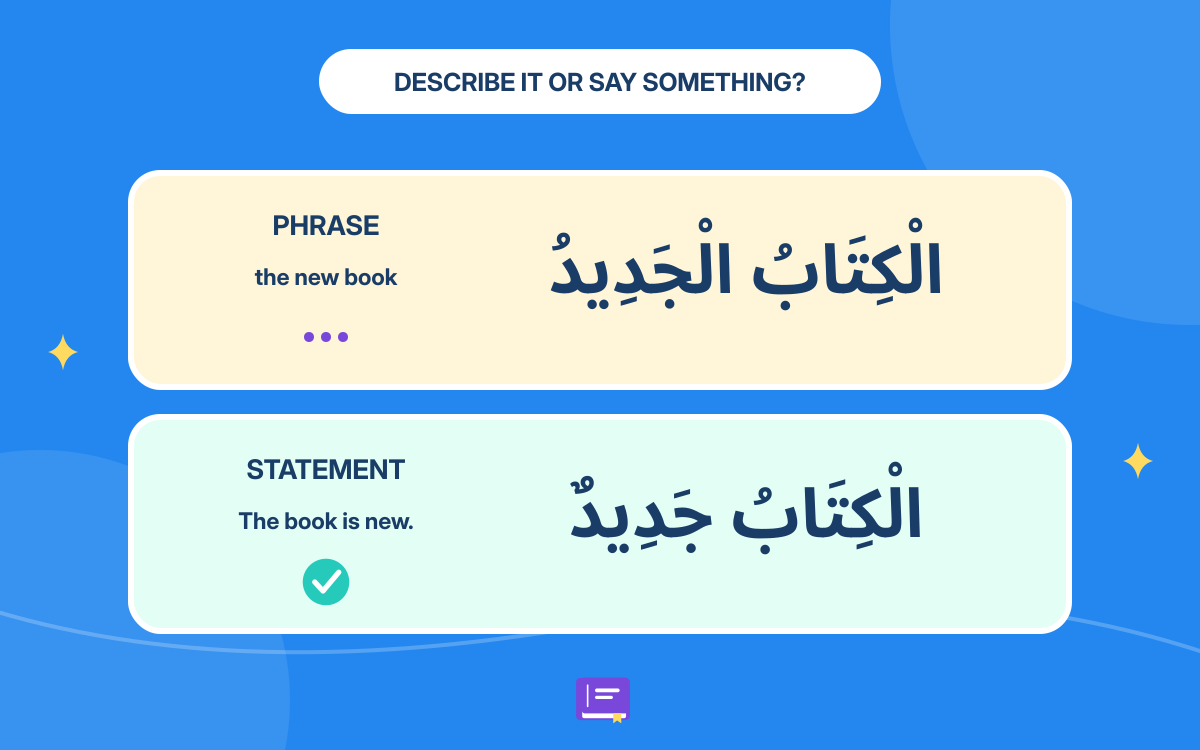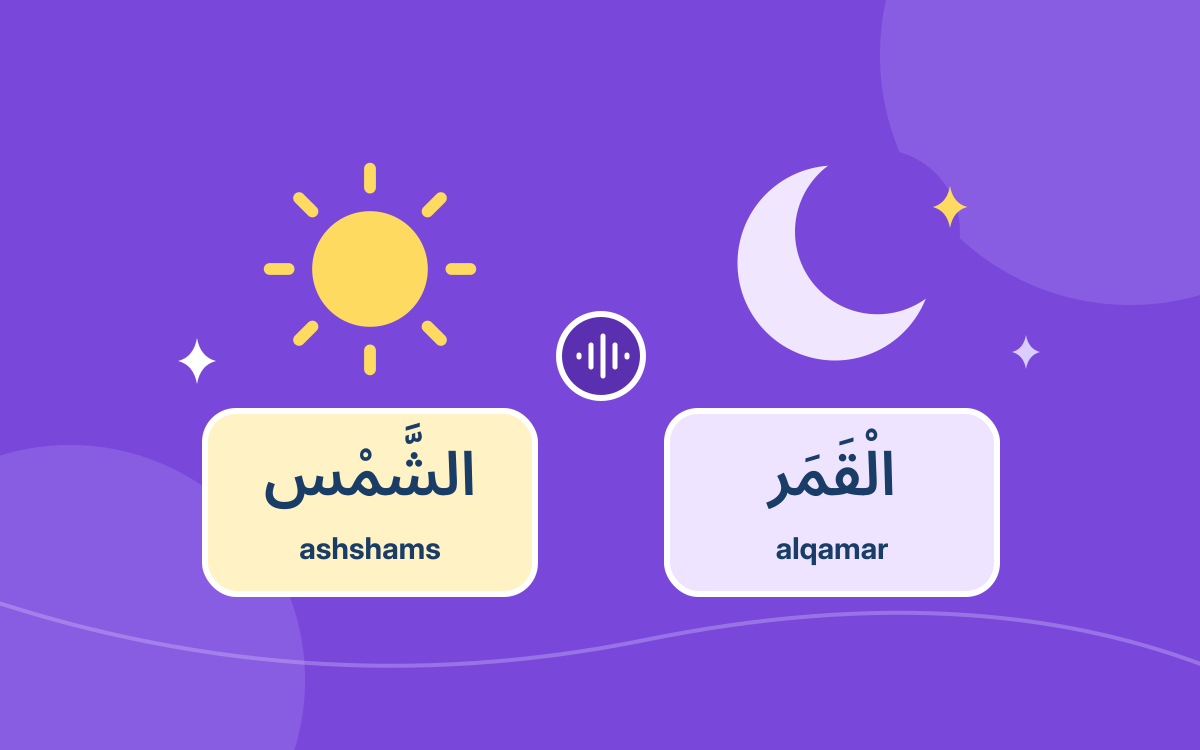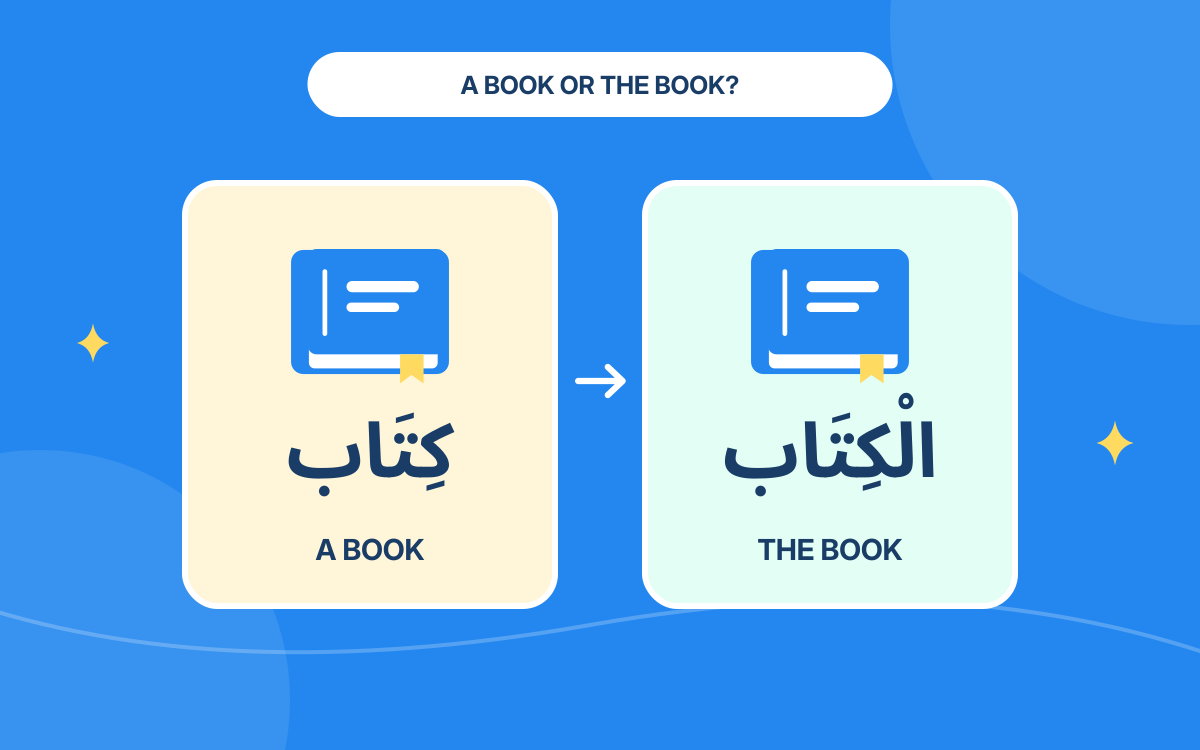
Arabic can distinguish a book from the book without a separate word for “a.” The common noun kitab can be indefinite; adding ال makes alkitab, “the book.” Learn that useful contrast, then see why a name can be definite even without ال.
01Start with one useful contrast
kitab
A book
alkitab
The book
Imagine asking for any suitable book, then pointing to the particular book already discussed. The first is indefinite; the second is definite. Arabic attaches ال to the noun, with no space. There is no separate indefinite article matching English a or an.
02Notice what happens to tanween
kitabun
A book · nominative form
alkitabu
The book · nominative form
In fully vowelled formal Arabic, an ordinary indefinite noun often has tanween: the final n sound in kitabun. With ال, this noun has a single case vowel instead: alkitabu. Do not combine ال and tanween on the same noun.
Both examples here are nominative so you can compare definiteness without changing grammatical case. Other roles produce other endings. The n sound is written with a doubled vowel sign, not an extra letter ن.
03Use the meaning to choose the form
أُرِيدُ كِتَابًا
uridu kitaban
I want a book.
أُرِيدُ الْكِتَابَ
uridu lkitaba
I want the book.
Uridu means “I want.” In these requests the book is the direct object, so the endings are an and a. The contrast is still a book versus the book; the ending changes because of the noun’s job.
If any book will do, the first request fits. If you mean the book both speakers already know, use the second. In connected reading, the initial vowel of ال drops after uridu, giving uridu lkitaba.
04Definite does not always mean “has ال”
Muhammadun
Muhammad · a definite name
kitabi
My book · definite through possession
A personal name identifies someone, so Muhammad is definite even without ال. This name can also take tanween. Therefore, tanween does not prove that every word is indefinite.
Kitabi is definite because the attached i means “my.” Do not add ال to this possessive form. Other structures can also make nouns definite; we will study them separately. Start by asking what the expression refers to, then inspect its form.
05Keep meaning separate from pronunciation
The opening cards used the common pause forms kitab and alkitab. The later examples show full grammatical endings because they help you see the contrast. At a pause, final short case vowels and un or in endings are normally not heard. An has its own pause rules; see the reference.
An unvowelled text may show only كتاب or الكتاب. Missing vowel marks do not erase definiteness or grammatical case. Read the phrase in context.
- Check whether the noun is general or identifiable in the situation.
- Attach ال when using this definite-article pattern.
- Keep names and possessive forms in mind before judging by endings alone.
Arabic and English article choices do not match in every expression. This guide practises a small, dependable starting contrast.
What to remember
- Arabic has no separate word corresponding to the indefinite article a or an.
- Attach ال for the definite-article pattern: kitab becomes alkitab.
- Tanween is a useful clue for ordinary nouns, but definite names such as Muhammad can also take it.
Your reference shelf
Open a guide whenever you need it.
Three cases, one definiteness contrastCompare regular book forms and review the pronunciation notes
| Case | A book | The book |
|---|---|---|
| Nominative | كِتَابٌ kitabun | الْكِتَابُ alkitabu |
| Accusative | كِتَابًا kitaban | الْكِتَابَ alkitaba |
| Genitive | كِتَابٍ kitabin | الْكِتَابِ alkitabi |
What happens at a pause?
Kitabun and kitabin are normally read as kitab when stopping. The final short vowel of alkitabu, alkitaba or alkitabi is also dropped. Indefinite accusative kitaban normally has a long final a at a formal pause; nouns ending in taa marbuta follow a different pause pattern. Our full-form examples display the endings for learning.
Does no tanween always mean definite?
No. Some indefinite nouns do not take tanween, and the first noun in an idafa construction has no tanween whether that whole expression is definite or indefinite. Read the structure and meaning, not just one mark.
Sources & further learning
References for the language explanations and learning guidance.