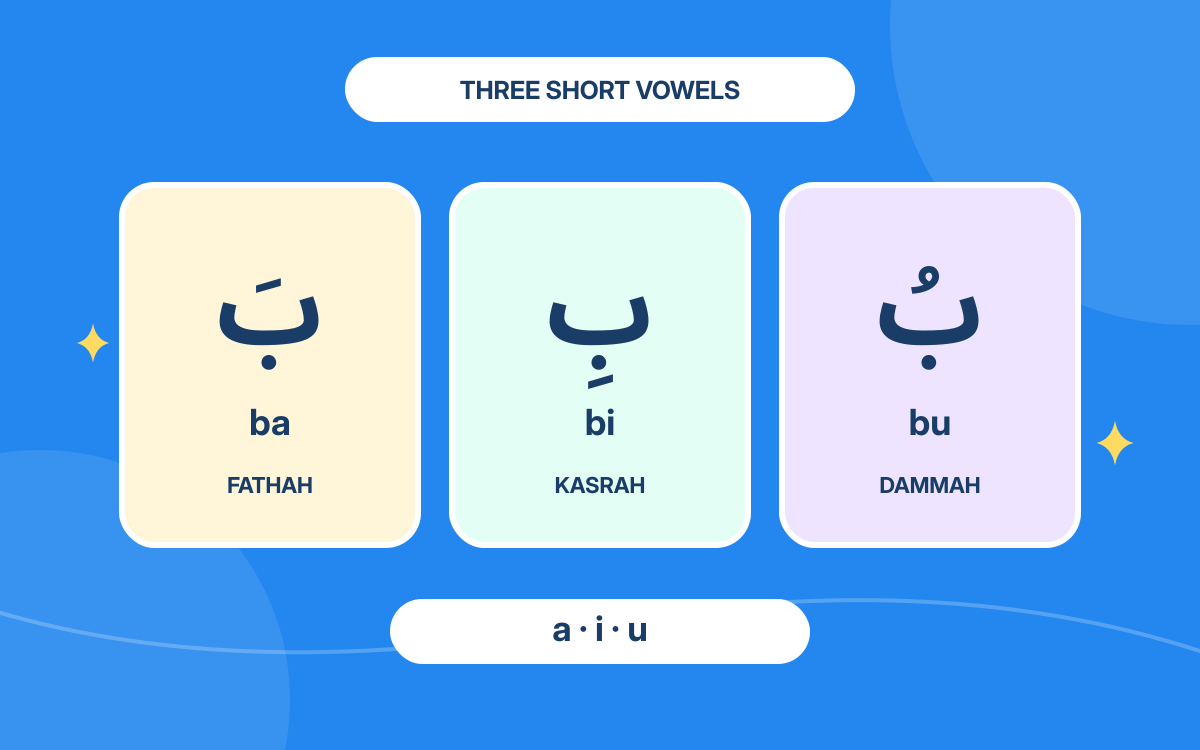
Arabic’s three short vowel marks are fathah, kasrah and dammah. They tell you to say a, i or u after a consonant. Keep the letter the same and change only its mark: ba, bi, bu. This small change can make a different word or grammatical form.
01Read ba, bi and bu
ba
Fathah — a short a
bi
Kasrah — a short i
bu
Dammah — a short u
Fathah is a small stroke above the letter; kasrah is below it. Dammah is the small curled mark above. The dot beneath ba belongs to the letter itself. It is separate from the vowel mark.
02Transfer the pattern to another letter
ta
Ta with fathah
ti
Ta with kasrah
tu
Ta with dammah
The rule stays the same when you move from ba to ta. Read the consonant first, then its vowel: t plus a becomes ta. Do not insert a second vowel before the consonant.
These cards are reading practice, not complete vocabulary words. You are learning to connect a visible mark with a short sound. Try changing only one mark while keeping the consonant steady: ta, ti, tu.
03Follow the vowels through a word
كَتَبَ
kataba
He wrote.
Read this Arabic word from right to left. Kaf has fathah, ta has fathah and ba has fathah. The three short sound units are ka, ta and ba; together they give kataba.
كُتِبَ
kutiba
It was written.
The same consonant letters can carry a different vowel pattern. Here ku, ti and ba give kutiba. This introduces a useful reading contrast; you do not need to learn the full passive-verb system yet. Check each mark before assuming that familiar letters make the same word.
04Keep short and long sounds distinct
ba
Short a
ba
Long a
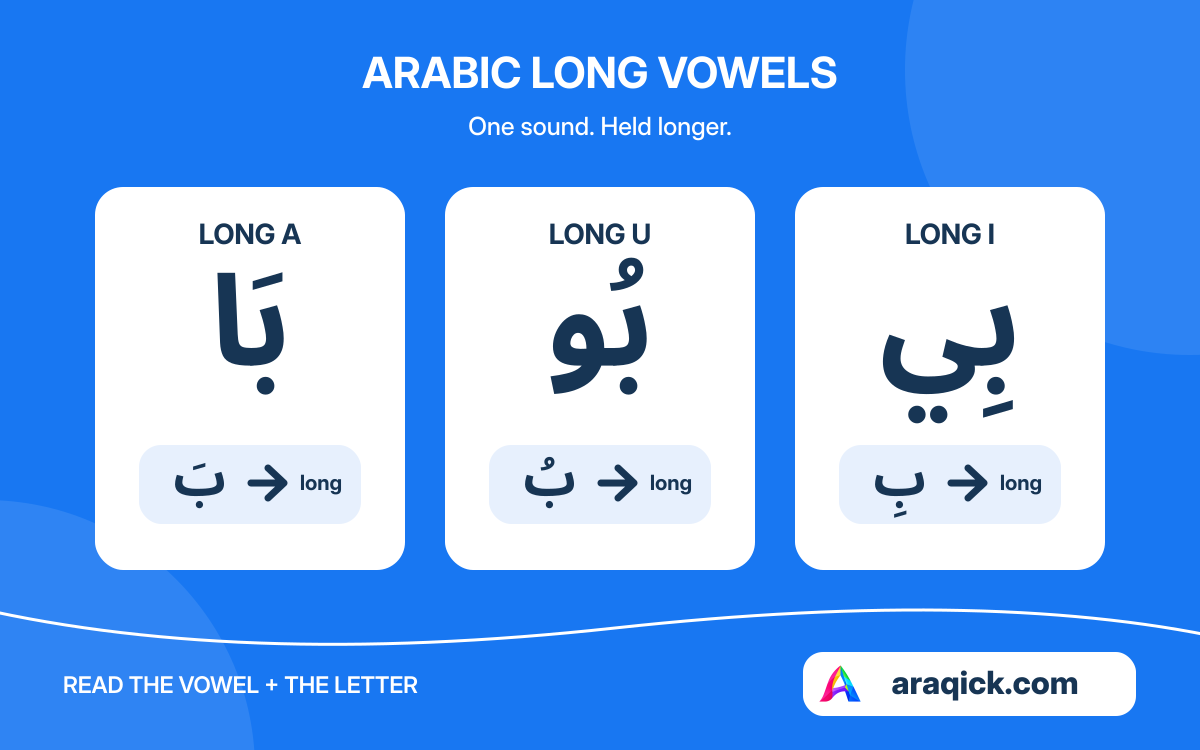
Fathah gives a short a. In the second card, the following alif writes a long a. Similarly, بِ has short i while بِي has long i; بُ has short u while بُو has long u.
Our plain reading aids do not mark vowel length, so use the short and long labels beside these cards. A longer vowel is not a louder vowel. Waw and ya also have consonant uses, so their presence must be read in context.
05Missing marks still need a reading
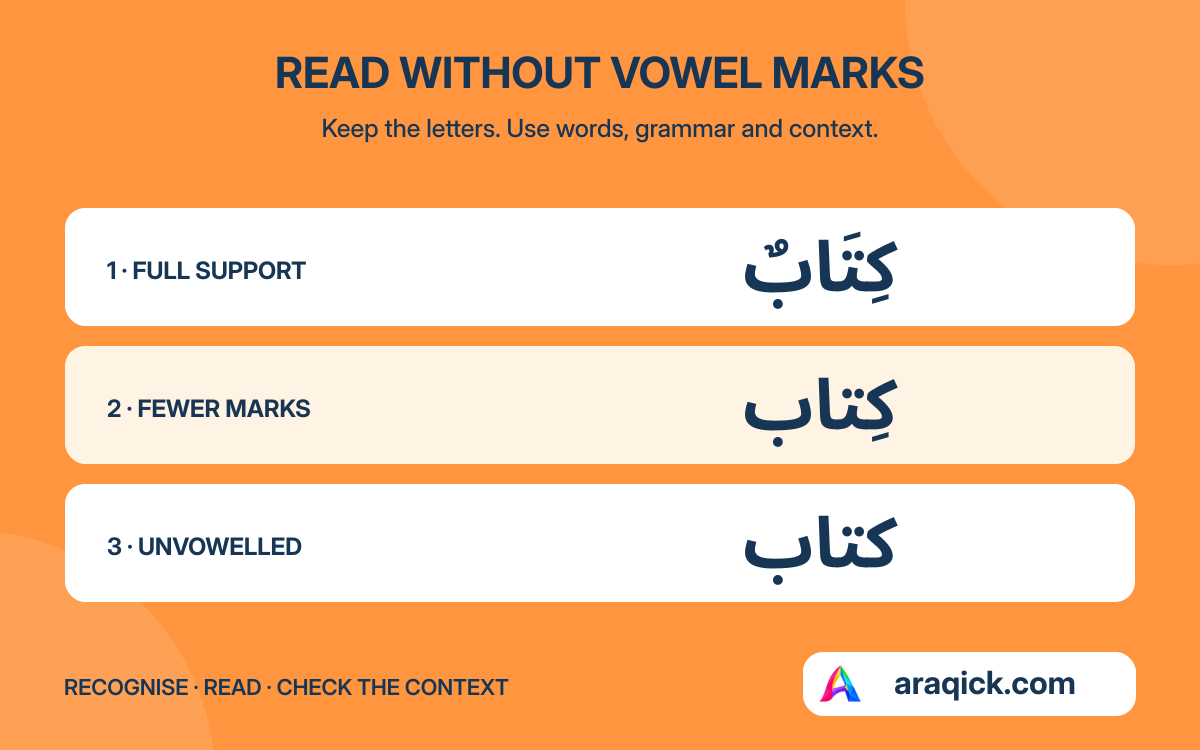
Many ordinary Arabic texts omit short vowel marks. The vowels remain part of spoken words; experienced readers supply them from vocabulary and context. A missing mark does not mean you should pronounce no vowel.
- Find the consonant: use its shape and dots.
- Look for the mark: above or below.
- Read the pattern: combine the sounds in order.
Our quizzes provide the marks needed to choose one clear answer. Do not guess a unique reading from unmarked letters alone. The vowels a, i and u also matter in later grammar lessons, but this guide concentrates on reading the written marks.
What to remember
- Fathah gives short a, kasrah short i and dammah short u.
- A letter’s dots identify the consonant; vowel marks guide its reading.
- Omitted marks and long vowel letters need context, not automatic guesses.
Your reference shelf
Open a guide whenever you need it.
Short and long practice chartCompare short and long a, i and u
| Arabic | Reading aid | Meaning or use |
|---|---|---|
| بَ | ba | Short a, with fathah |
| بِ | bi | Short i, with kasrah |
| بُ | bu | Short u, with dammah |
| بَا | ba | Long a, written with alif |
| بِي | bi | Long i, written with ya |
| بُو | bu | Long u, written with waw |
Why do the reading aids look the same? Our simple spelling does not distinguish vowel length. Follow the short and long labels and the Arabic vowel letters in this chart.
Does a vowel come before its letter? In these forms it follows the consonant in pronunciation, even though its mark sits above or below the letter.
The examples retain all vowels being taught. Their full-form readings should not be shortened by dropping final vowels during these exercises.
Sources & further learning
References for the language explanations and learning guidance.