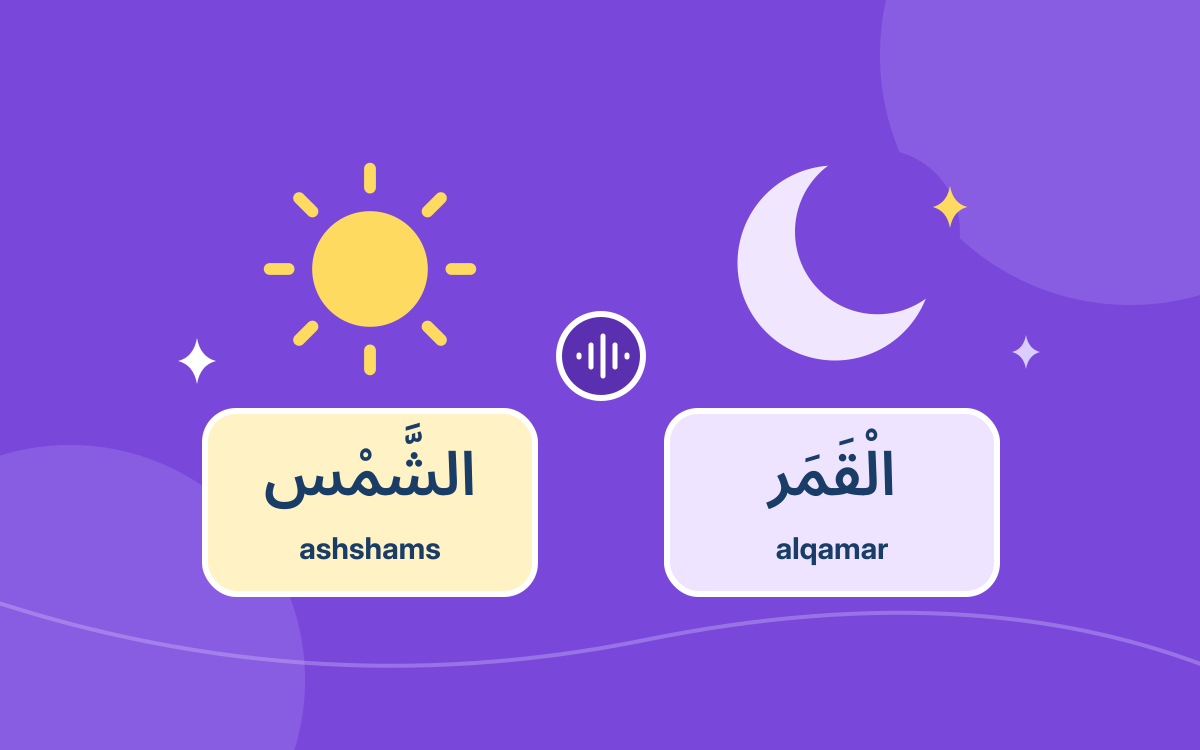
The Arabic article al usually means the. Before a moon letter, pronounce its l. Before a sun letter, join that l into the next consonant and pronounce that consonant doubled. Keep the written al in both cases. The words for moon and sun make the contrast easy to remember.
01Moon letters keep the l
قَمَر
qamar
Moon
الْقَمَر
alqamar
The moon
The first letter of qamar is ق, a moon letter. Adding al gives alqamar: the l remains audible. A moon letter does not turn into a different letter when al is added.
- Find the noun after al.
- Check its first letter.
- With a moon letter, keep the l sound.
02Sun letters double the next consonant
شَمْس
shams
Sun
الشَّمْس
ashshams
The sun
ش is a sun letter. Say ashshams, with a longer sh sound, instead of separately pronouncing l followed by sh.
In شّ, the small mark above the letter is a shadda. It marks a doubled consonant. Think of holding the consonant a little longer, not adding a new vowel between two copies.
The article is still written with alif and lam. The change happens in pronunciation.
03Keep spelling and sound separate
Alif and lam stay in the spelling.
ashshams
The sh sound doubles; there is no separate l sound.
Do not rewrite the Arabic word using the letters of its English reading aid. The spelling carries al even when your voice joins its l to the next consonant.
Many everyday texts omit short vowel marks and shadda. The pronunciation rule still applies. Identify the noun’s first letter rather than relying only on visible marks.
04Try two familiar objects
alkitab
The book
assayyara
The car
- ك is a moon letter. Kitab keeps the l in alkitab.
- س is a sun letter. Sayyara takes a doubled s at the beginning: assayyara.
- The doubled y inside sayyara belongs to the word itself. The article causes the doubled s.
A word’s meaning does not decide its group. Look at its first letter. A word about the sky can have either pattern, just like any other word.
05Use a two-step check
- Set al aside. Find the first letter of the actual noun, such as q in qamar or sh in shams.
- Choose the sound. A moon letter keeps l; a sun letter takes the doubled consonant.
There are fourteen letters in each group. Open the reference below when you meet an unfamiliar starting letter; you do not need to memorise all twenty-eight at once.
The examples here begin at the start of an utterance. In connected speech, the initial vowel of al can disappear after a preceding word; that is a separate joining rule. The plain reading aids show the contrast without pronunciation symbols.
What to remember
- Moon letters keep the l sound in al, as in alqamar and alkitab.
- Sun letters take a doubled consonant, as in ashshams and assayyara.
- Keep the written article and classify the noun’s first letter, not al itself.
Your reference shelf
Open a guide whenever you need it.
All 14 sun lettersDouble the consonant after the article
- ت
- ث
- د
- ذ
- ر
- ز
- س
- ش
- ص
- ض
- ط
- ظ
- ل
- ن
All 14 moon lettersKeep the l sound before these letters
- أ
- ب
- ج
- ح
- خ
- ع
- غ
- ف
- ق
- ك
- م
- ه
- و
- ي
The first entry shows hamza on alif, as in أَرْض, earth. Its definite form الْأَرْض keeps the l sound.
Sources & further learning
References for the language explanations and learning guidance.