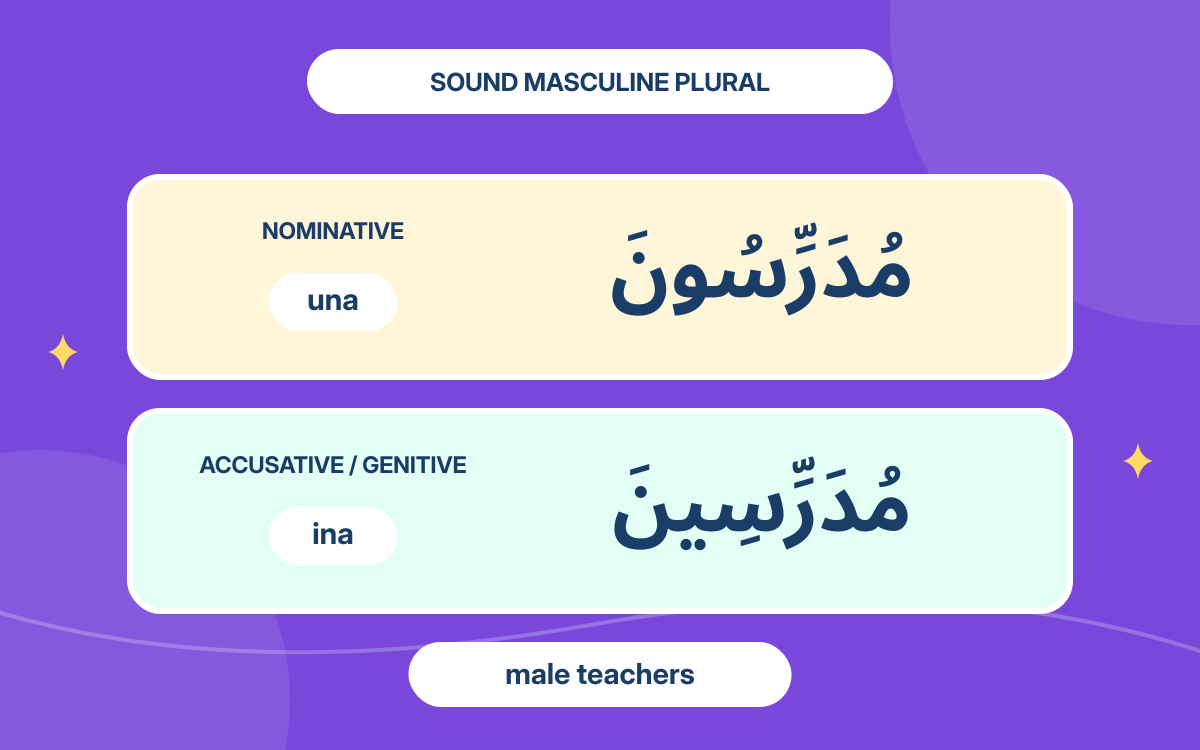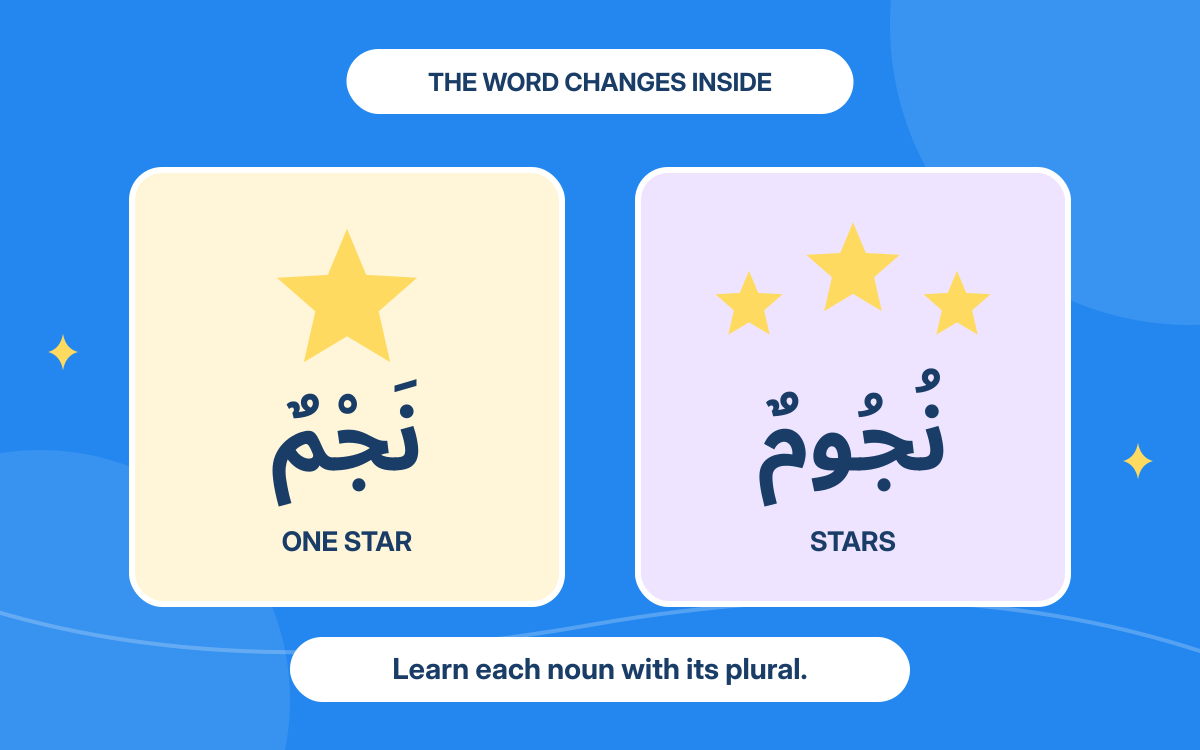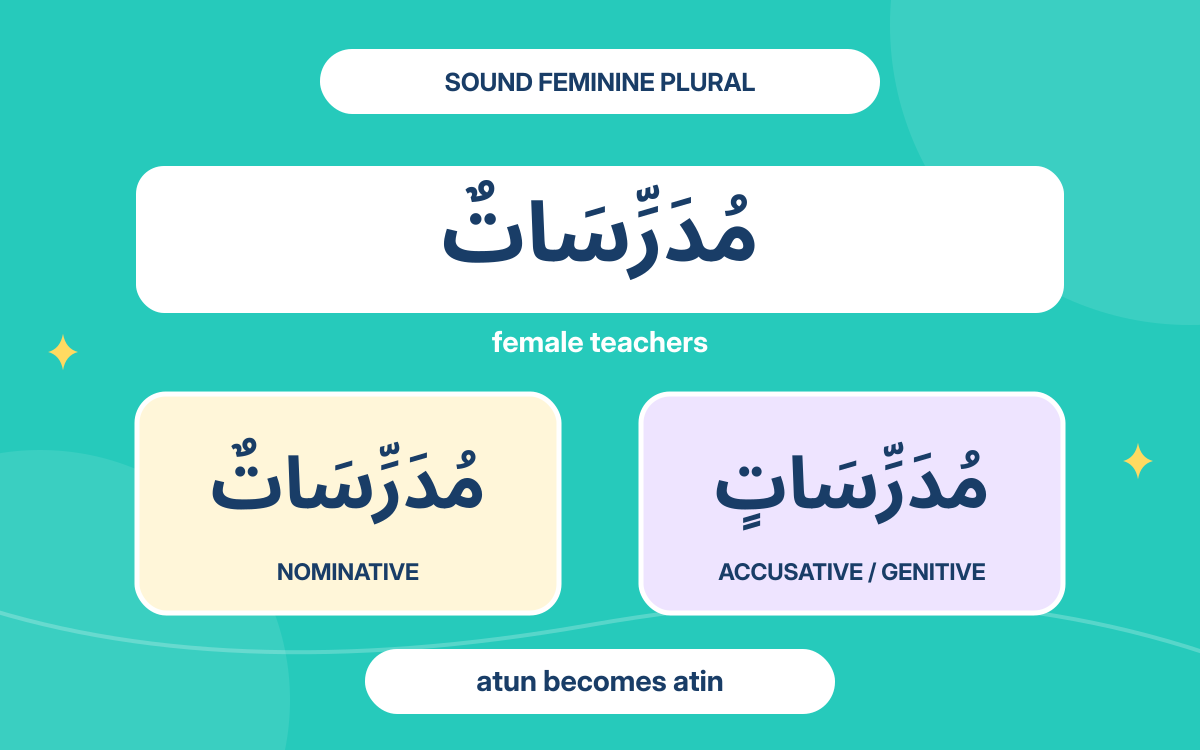
A sound feminine plural has a useful surprise: its direct object form takes kasrah. Mudarrisatun becomes mudarrisatin in both the accusative and genitive. These are plural words for female teachers, so do not confuse the ending with the singular mudarrisatun, whose Arabic spelling is different.
01Replace ة with ات in this pattern
مُدَرِّسَةٌ
mudarrisatun
A female teacher
مُدَرِّسَاتٌ
mudarrisatun
Female teachers: nominative
The plural keeps the recognisable stem and replaces ة with ات. Its a before t is long. Our simple reading aid does not mark vowel length, so the Arabic spelling distinguishes these two readings. This is one plural pattern, not a rule for every feminine noun.
02Use dammah for the nominative
الْمُدَرِّسَاتُ فِي الْفَصْلِ
almudarrisatu fi lfasli
The female teachers are in the classroom.
Almudarrisatu is the subject of this nominal sentence, so it is nominative. The final ت takes dammah. Without ال, the ordinary indefinite form is مُدَرِّسَاتٌ, ending in atun with tanween.
Adding ال removes tanween but keeps the case vowel: atun becomes atu. The plural ات remains in the spelling. Keep number, definiteness and case as three separate checks.
03Give the direct object kasrah
قَابَلْتُ مُدَرِّسَاتٍ
qabaltu mudarrisatin
I met female teachers.
The teachers are the people I met, so mudarrisatin is a direct object in the accusative case. Its ending is atin, with kasrah and tanween, rather than atan.
Kasrah therefore does not always mean genitive. In this plural pattern, it marks the accusative as well. Compare the singular object مُدَرِّسَةً (mudarrisatan), “a female teacher”: that regular singular form does take fathah. The plural has its own case rule.
04Use the same ending after a preposition
سَلَّمْتُ عَلَى مُدَرِّسَاتٍ
sallamtu ala mudarrisatin
I greeted female teachers.
Ala is a preposition. It makes the following noun genitive, giving mudarrisatin again. The visible form matches the accusative example, but the reason is different.
قَابَلْتُ الْمُدَرِّسَاتِ
qabaltu lmudarrisati
I met the female teachers.
The definite object still takes kasrah. Because it has ال, there is no tanween: its ending is ati. Adding the article does not change the accusative rule to fathah.
05Separate plural form from meaning
غَسَلْتُ سَيَّارَاتٍ
ghasaltu sayyaratin
I washed cars.
Sayyaratun, “a car,” has the plural sayyaratun, with a long a before t: سَيَّارَةٌ becomes سَيَّارَاتٌ. As a direct object, the plural becomes sayyaratin. This pattern also describes things; it does not mean every referent is a female person.
Do not replace ة mechanically in every new word. A common plural of مَدْرَسَةٌ (madrasatun), “school,” is مَدَارِسُ (madarisu). Learn the usual plural first. Then identify its pattern and apply the appropriate case ending.
These readings retain formal endings. When pausing, final short case vowels and tanween are normally omitted for these ات plurals.
What to remember
- Regular sound feminine plurals use ات, often replacing a singular ة.
- Their nominative takes dammah; their accusative and genitive take kasrah.
- The plural pattern can describe people or things, and not every feminine noun normally uses it.
Your reference shelf
Open a guide whenever you need it.
At plurals across the casesCompare indefinite and definite endings
| Case | Full form | Example role |
|---|---|---|
| Nominative | مُدَرِّسَاتٌ | Subject or simple noun predicate |
| Accusative | مُدَرِّسَاتٍ | Direct object |
| Genitive | مُدَرِّسَاتٍ | After a preposition |
With ال, the corresponding forms are الْمُدَرِّسَاتُ for the nominative and الْمُدَرِّسَاتِ for the accusative and genitive. The case vowel remains, while tanween disappears.
The pattern is called جَمْعُ الْمُؤَنَّثِ السَّالِمِ. It is a grammatical formation category, not a statement about biological sex. Nouns for objects can use it, and some nouns have more than one accepted plural. A dictionary helps you choose the usual form.
Our examples start with regular nouns ending in ة. Other nouns can form plurals with ات too; their stem or spelling may need additional rules. Recognise the plural first rather than assuming any word that ends in the letters ات follows this pattern.
Sources & further learning
References for the language explanations and learning guidance.