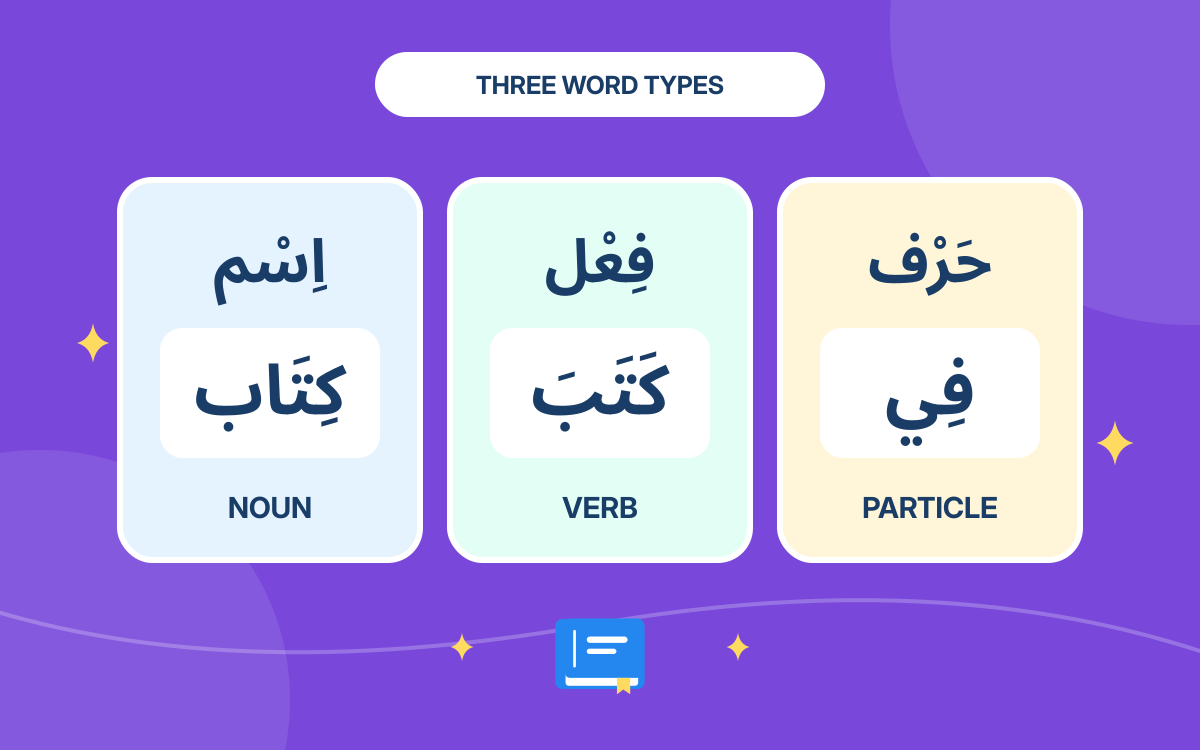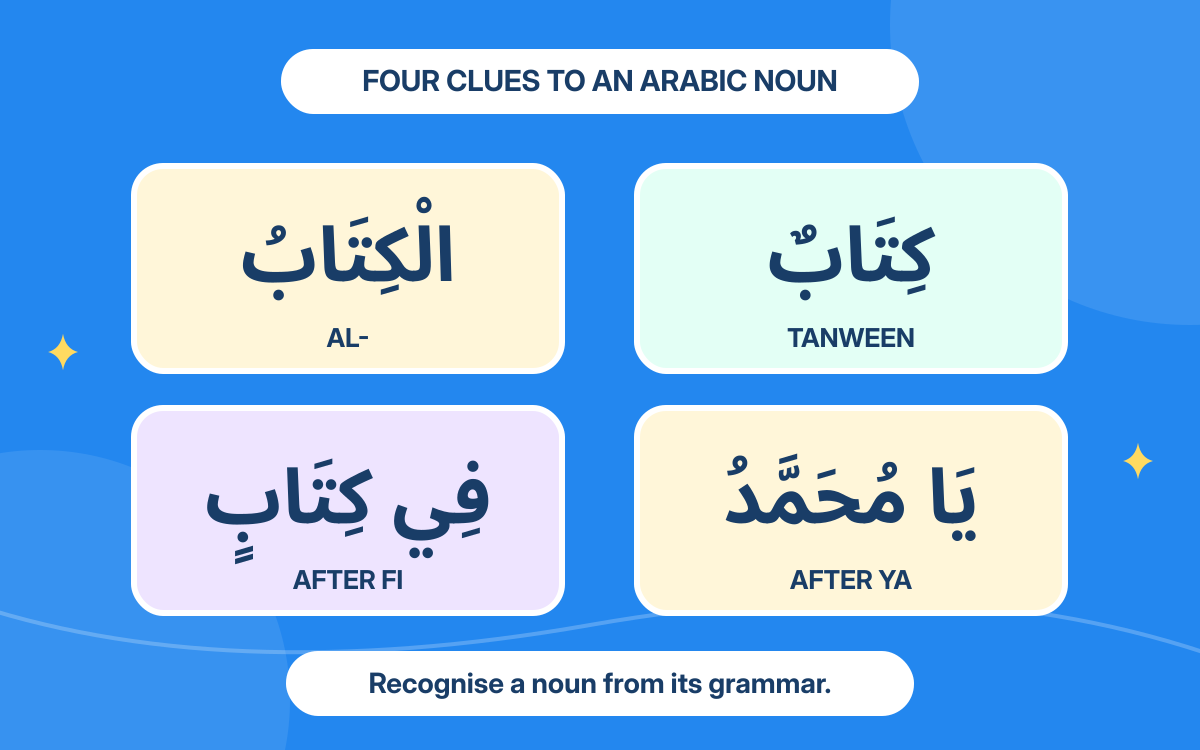
How can you recognise an ism when a word is unfamiliar? Look at what it accepts in a correct Arabic construction. The definite article, tanween, genitive case and direct address provide useful evidence. These are positive clues, not four boxes every noun must tick.
01Look for the definite article
Acceptance of the definite article ال is a sign of an ism. Kitab can become alkitab, “the book.” The article attaches to the word; it is not a separate word meaning “a.”
الْكِتَابُ الْجَدِيدُ
alkitabu ljadidu
The new book
Both book and new belong to the broad Arabic ism family. That family includes adjectives and pronouns as well as ordinary nouns. Here the article helps identify both words.
02Notice tanween
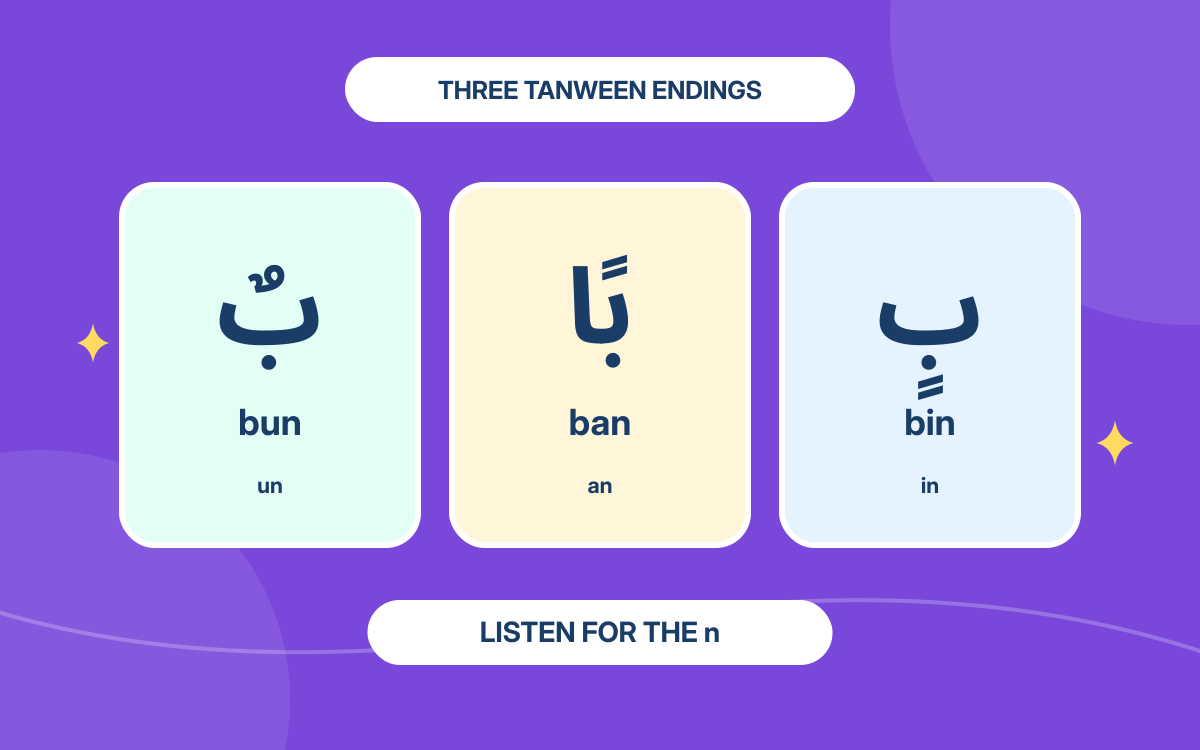
Tanween is the extra n sound marked by doubled short-vowel signs. In our ordinary examples, its presence identifies a member of the ism family.
كِتَابٌ
kitabun
A book
مُحَمَّدٌ
Muhammadun
Muhammad
The name Muhammad can take tanween even though it identifies a particular person. Tanween is evidence of word class here; it does not always mean “a.” A verb such as كَتَبَ (kataba, he wrote) does not acquire tanween.
03Find genitive case in a structure
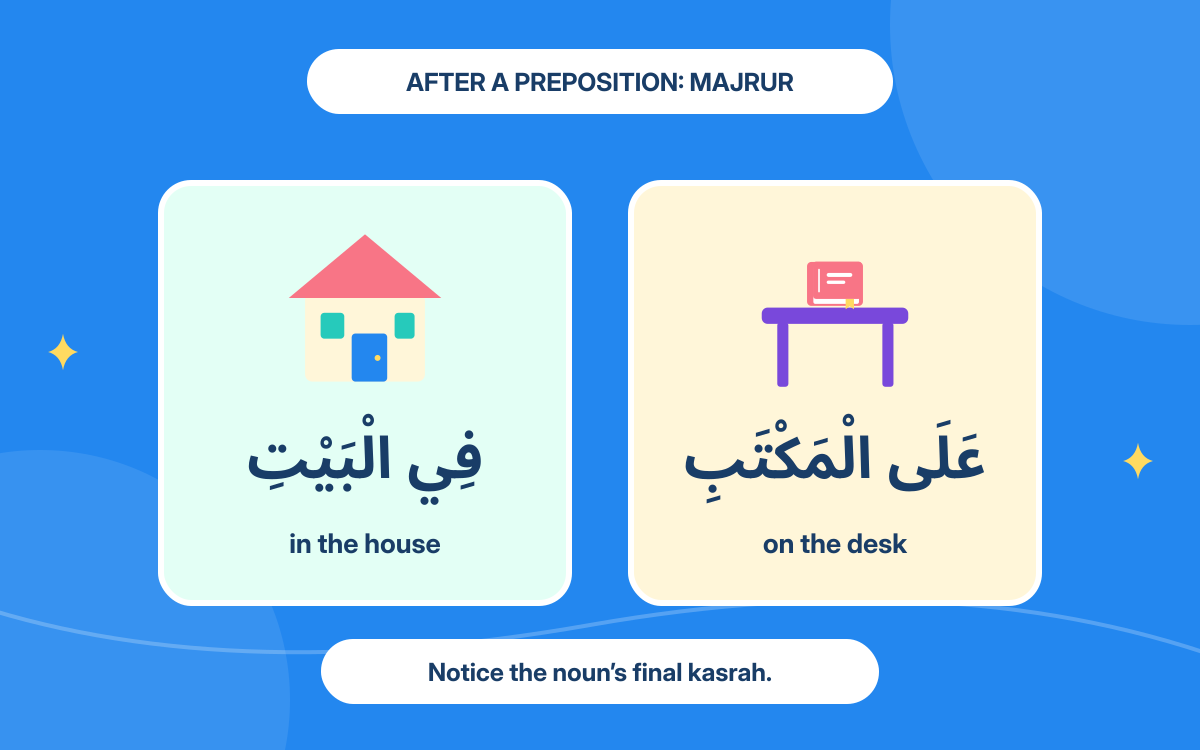
A word governed by a preposition is in a genitive position. A noun may also be genitive as the second part of an idafa.
فِي الْبَيْتِ
fi lbayti
In the house
بَابُ الْبَيْتِ
babu lbayti
The door of the house
Albayti is genitive in both examples. Fi is the particle; the house is the ism. Look at the grammatical relationship, not just an isolated kasrah: a kasrah somewhere in a word is not by itself proof that the word is a noun.
04Recognise the person being addressed
A noun used as the addressee in a vocative construction gives another positive sign. Ya calls someone’s attention.
يَا مُحَمَّدُ
ya Muhammadu
Muhammad!
Muhammadu is the name being called, so it is an ism. Ya is the calling particle. This specific name has a single final u, without tanween, in this construction. Other vocative patterns have other endings; this guide tests recognition, not the full vocative system.
05Use a sign as evidence, not a checklist
You do not need all four signs together. Alkitabu has the article and no tanween. Muhammadu in the call has no article and no tanween, yet it is still a noun.
هَذَا كِتَابٌ
hadha kitabun
This is a book.
Hadha also belongs to the ism family: it is a demonstrative. It does not take the article or tanween. The noun family contains different types with different restrictions. Use a valid sign when available, then read the word’s function and meaning in context.
What to remember
- The definite article, tanween, genitive position and direct address can identify an ism.
- The Arabic ism family includes ordinary nouns, adjectives and pronouns.
- A positive sign is useful evidence; absence of a particular sign does not disqualify every noun.
Your reference shelf
Open a guide whenever you need it.
Four signs at a glanceReview what each clue shows and what it does not prove
| Sign | Example | What to notice |
|---|---|---|
| Definite article | الْكِتَابُ | The word accepts al as the article. |
| Tanween | كِتَابٌ | The ending has an extra n sound. |
| Genitive position | فِي الْبَيْتِ | The house is governed by fi. |
| Direct address | يَا مُحَمَّدُ | Muhammad is the person called. |
A word can have more than one clue: the house in fi lbayti has both the article and genitive case. Do not add the article and tanween together to this ordinary noun. Signs identify word class, while separate rules determine which forms can combine.
A fixed-form demonstrative can occupy a genitive position without showing a new final vowel. Identifying an ism and identifying a visible case ending are different tasks.
Sources & further learning
References for the language explanations and learning guidance.