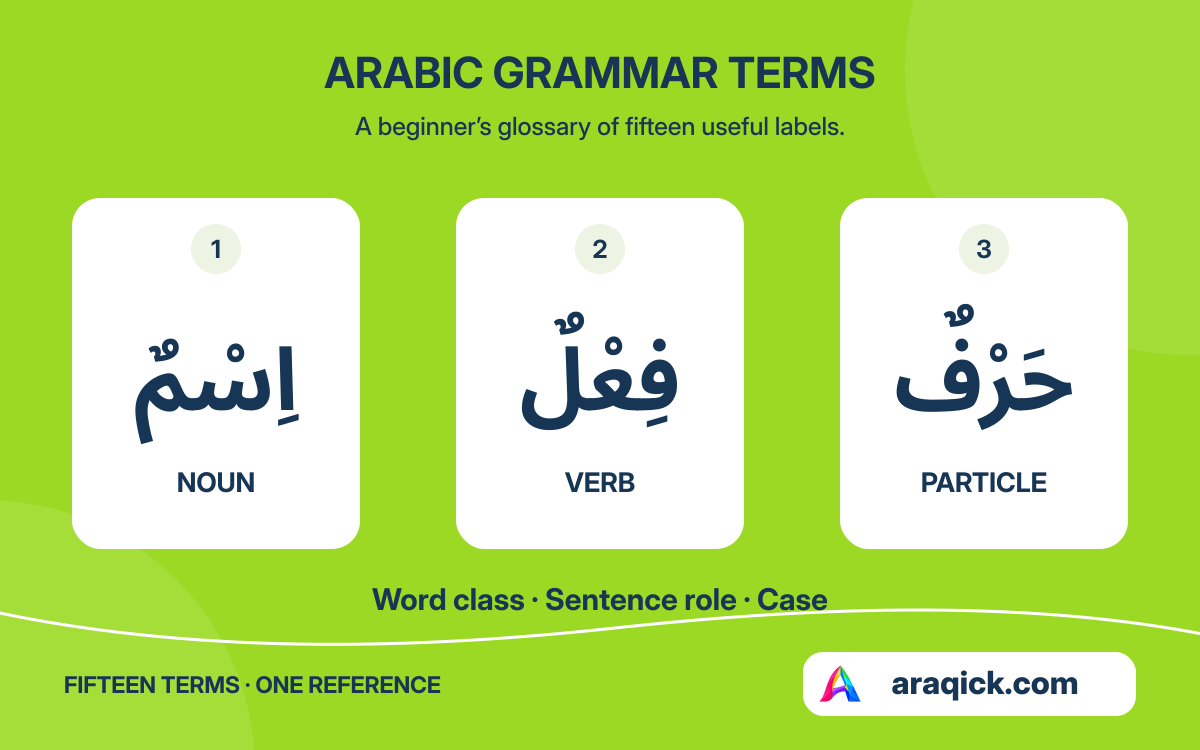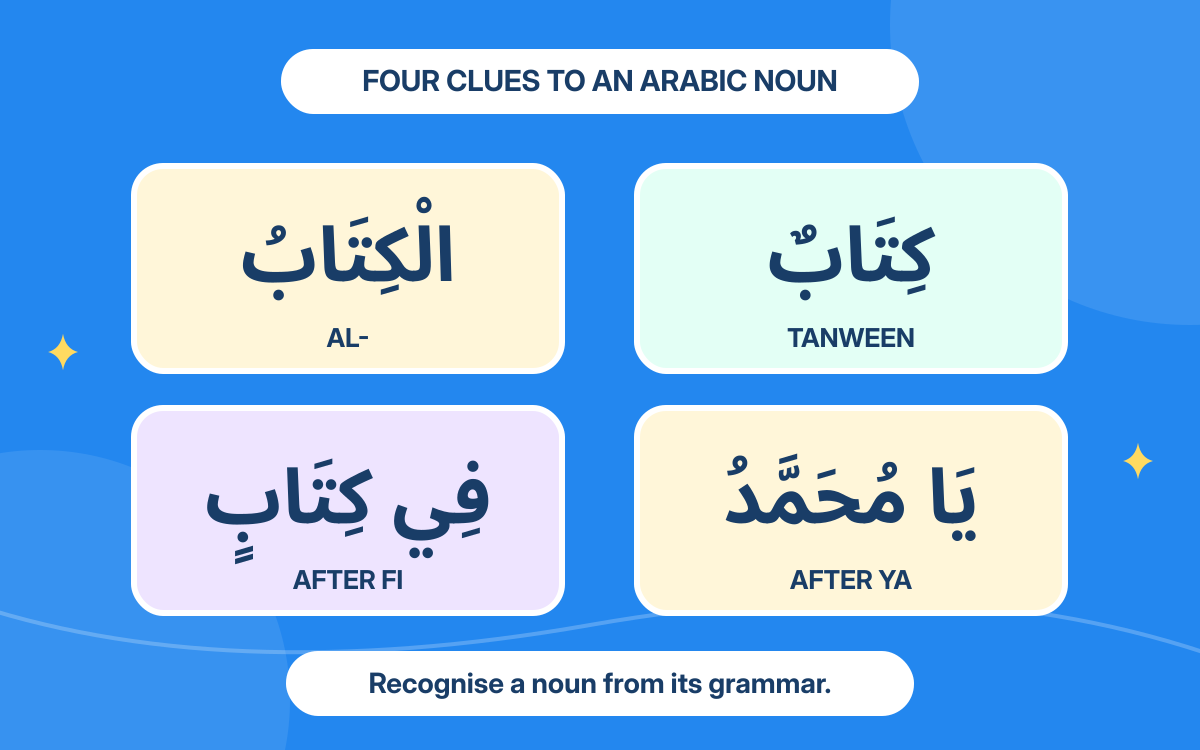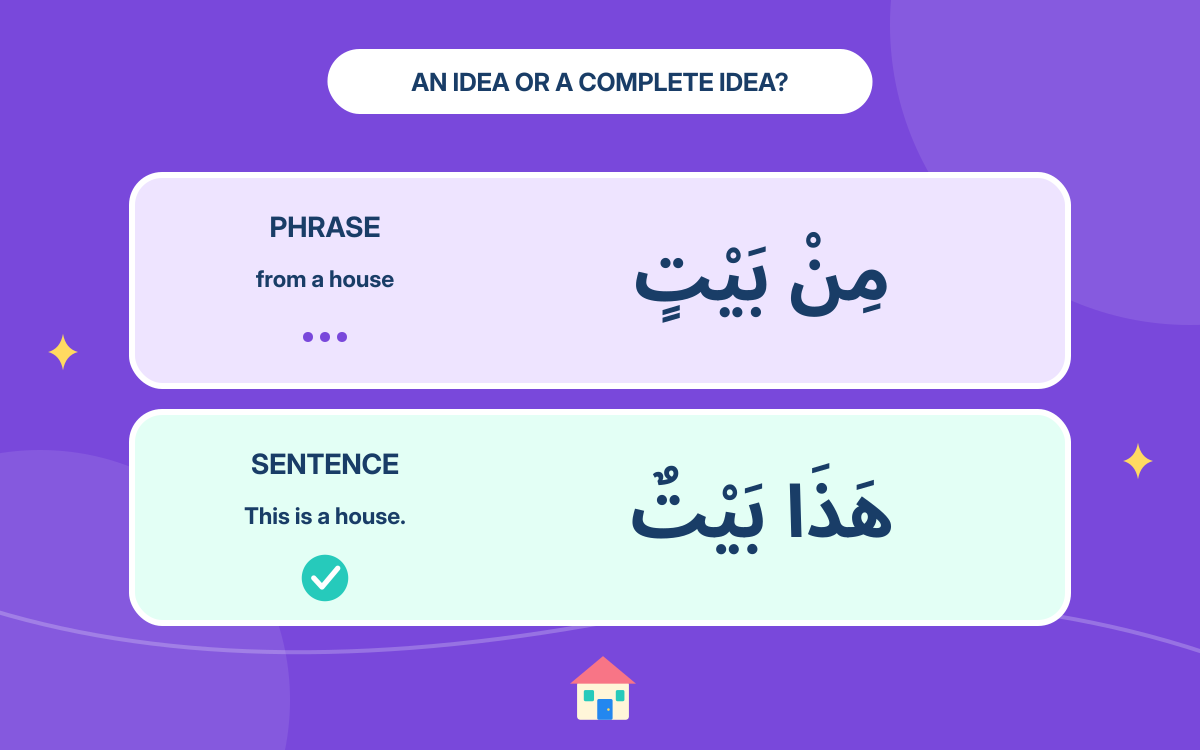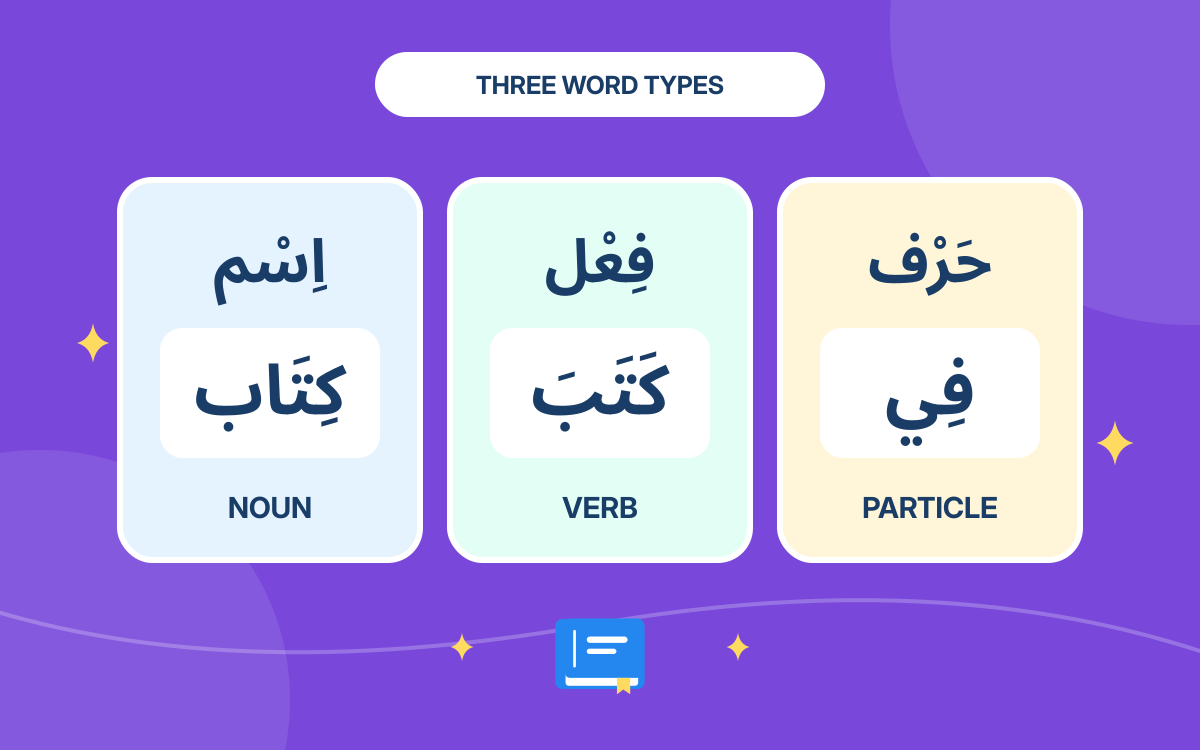
Traditional Arabic grammar groups words into three broad classes: ism, fil and harf. Start with one object, one action and one linking word: a book, he wrote and in. Recognising these classes makes later rules about endings and sentences easier to follow.
01Meet the three classes
kitabun
A book — noun (ism)
kataba
He wrote — verb (fil)
fi
In — particle (harf)
Kitabun names something. Kataba reports an action in the past. Fi expresses a relationship when used with other words. These are grammatical classes, not three types of sentence.
02An ism is a broad family
An ism can name a person, place, object or idea. In traditional Arabic classification, this family also includes adjectives, pronouns and demonstratives.
khalidun
Khalid — a personal name
kabirun
Big — an adjective
ana
I — a pronoun
That is why translating ism only as an English naming word can be misleading. Big describes something, and I refers to the speaker; both still belong to the Arabic ism family. Ask how Arabic classifies the word rather than copying every English label.
03A verb presents an action or state
kataba
He wrote
yaktubu
He writes / is writing
A fil connects an action or state with a verbal form, such as past or present. Here, the same writing action appears in two different forms. Kataba presents it as completed; yaktubu can describe a present or habitual action.
Verb does not mean only visible movement. Knowing, wanting and feeling can also be expressed by verbs. Learn the meaning and form together. The final a in kataba and final u in yaktubu belong to the full forms shown here.
04A particle links or changes meaning
فِي بَيْتٍ
fi baytin
In a house
A harf, or particle, performs a grammatical job in a larger expression. Fi connects the idea of being inside with a place. Another example is هَلْ hal, which introduces a yes or no question.
In this phrase, fi is a particle and baytin is a noun. A short word is not automatically a particle: ana is short too, but it is a pronoun in the ism family. Harf can also mean an alphabet letter in a different context; here it means particle.
05Read a small sentence
كَتَبَ خَالِدٌ
kataba khalidun
Khalid wrote.
- Kataba: a verb giving the action.
- Khalidun: a noun naming the person.
- Fi baytin: a particle followed by a noun, if you add a location.
A complete sentence does not need all three word classes. Our two-word sentence works without a particle. Classification helps you see which words can take noun rules and which belong to the verb system.
For this grammar series, reading aids retain endings such as un and in when shown in the Arabic. These are full-form practice readings; everyday speech and pausing can sound different.
What to remember
- Ism includes naming words, adjectives, pronouns and demonstratives.
- Fil covers verbs; harf covers particles with grammatical jobs.
- Identify a word from its form and use, not just its length or English label.
Your reference shelf
Open a guide whenever you need it.
Word-class referenceCompare eight familiar examples
| Arabic | Reading aid | Meaning or use |
|---|---|---|
| كِتَابٌ | kitabun | Ism: book |
| خَالِدٌ | khalidun | Ism: Khalid |
| كَبِيرٌ | kabirun | Ism: big |
| أَنَا | ana | Ism: I |
| هَذَا | hadha | Ism: this |
| كَتَبَ | kataba | Fil: he wrote |
| فِي | fi | Harf: in |
| هَلْ | hal | Harf: yes or no question marker |
Can a word about an action be a noun? Yes. The name of an activity, such as writing, can be a verbal noun. Meaning alone does not settle the class.
Does every noun take tanween? No. Pronouns such as ana do not. Later lessons introduce the signs and exceptions gradually.
Sources & further learning
References for the language explanations and learning guidance.