Some Arabic verbs can take a direct object: someone carries a bag or opens a drawer. Other verbs describe an action without a direct object, such as sleeping. Learn the difference through complete sentences, keeping an object separate from a place or destination introduced by a preposition.
01Find what the action directly affects
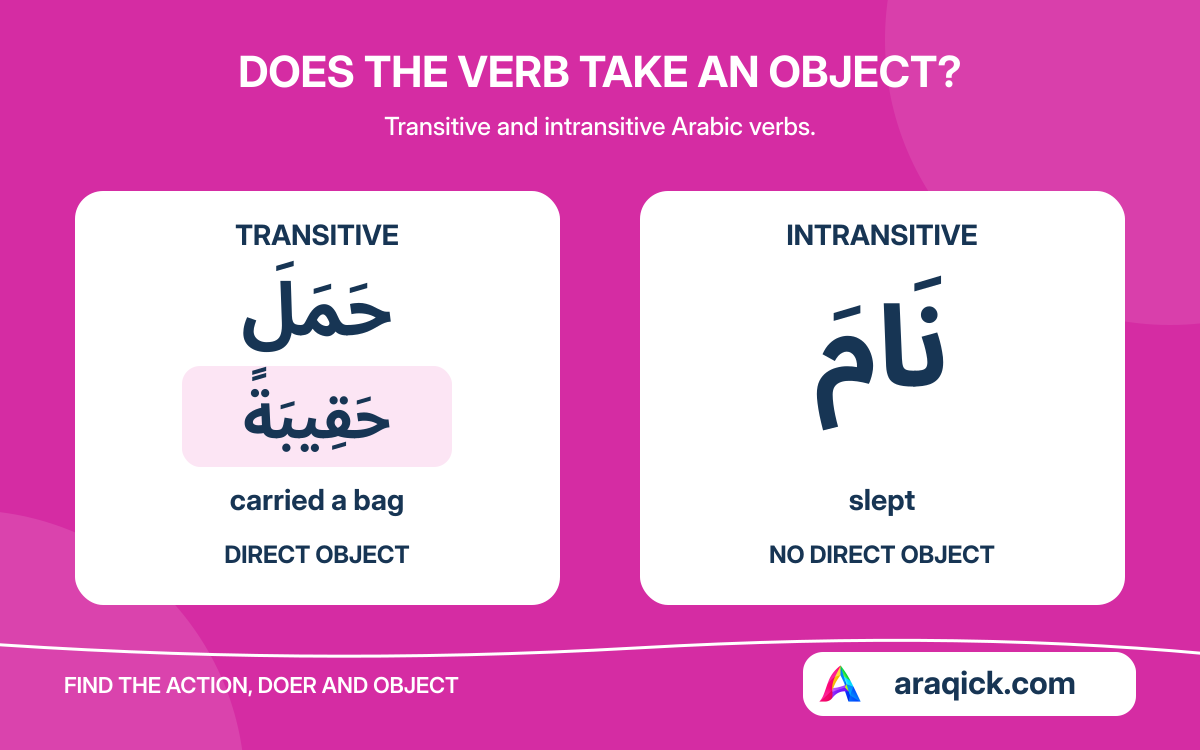
حَمَلَ سَعِيدٌ حَقِيبَةً
hamala saidun haqibatan
Said carried a bag.
Hamala, carried, is transitive in this use: مُتَعَدٍّ. Said is the doer. Haqibatan names the thing carried and is the direct object, مَفْعُولٌ بِهِ.
With these regular nouns, the doer has a nominative ending and the direct object has an accusative ending. Ask who carried and what was carried before choosing the grammatical labels.
02Recognise an action without a direct object
نَامَ سَعِيدٌ
nama saidun
Said slept.
Nama describes sleeping. It does not take a direct object in this ordinary use. Such a verb is intransitive, لَازِمٌ. Said is still the doer, and the sentence is complete.
Do not invent an object just because the sentence has only two words. Sentence length does not decide whether a verb is transitive.
03Keep a place phrase separate
جَلَسَ سَعِيدٌ عَلَى كُرْسِيٍّ
jalasa saidun ala kursiyyin
Said sat on a chair.
The chair follows ala, on, so kursiyyin is genitive after a preposition. It is not a direct object of jalasa. This sitting pattern remains intransitive even though more information follows the verb.
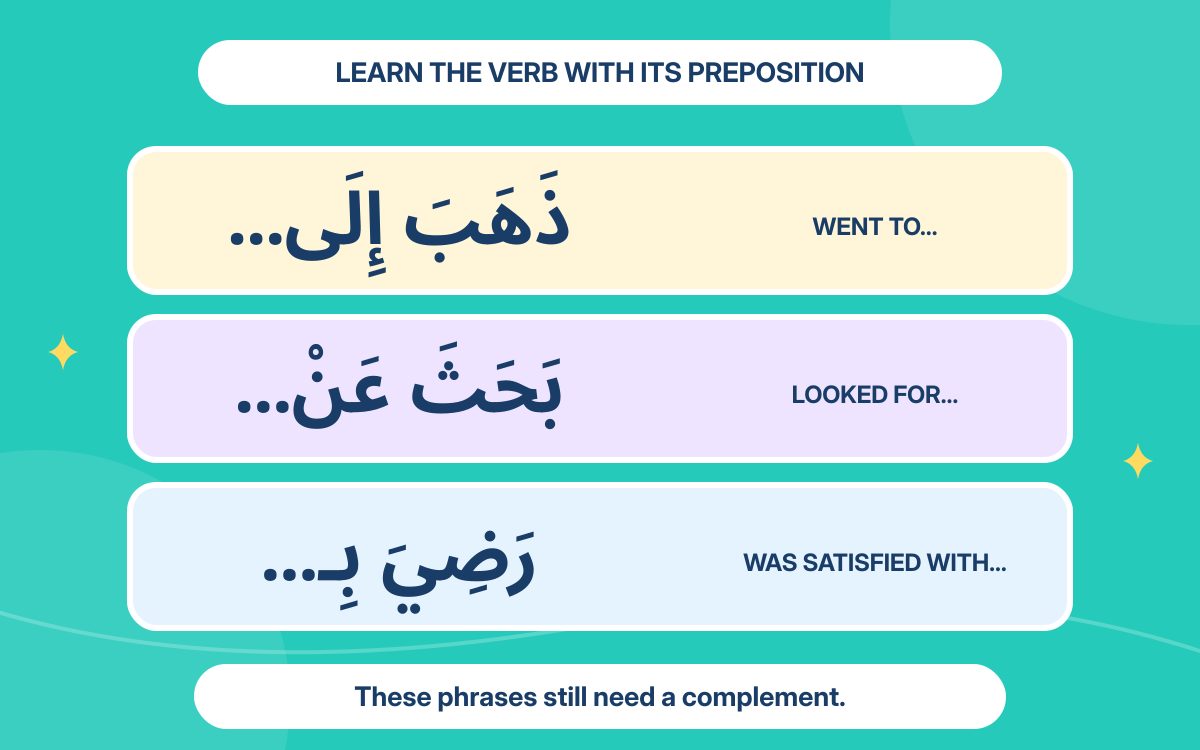
Likewise, ذَهَبَ إِلَى الْمَكْتَبَةِ means he went to the library. The destination is introduced by ila. Review verbs with prepositions for more complete patterns.
04Check the verb’s use, not only the visible words
قَرَأْتُ الرِّسَالَةَ
qaratu arrisalata
I read the letter.
Reading can take a direct object, as the letter shows. In a suitable context, قَرَأْتُ can stand alone as I read, with the object understood or left unspecified. That does not automatically make the verb intransitive.
Learn a verb together with its meaning and usual complements. One verb can have different uses; an English translation alone is not a safe rule for every Arabic construction.
05Recognise an attached object too
حَمَلْتُهَا
hamaltuha
I carried it. — referring to a feminine noun such as bag
Tu identifies I as the carrier. Ha identifies the thing carried. A direct object can be an attached pronoun instead of a separate noun; it still fills the object position.
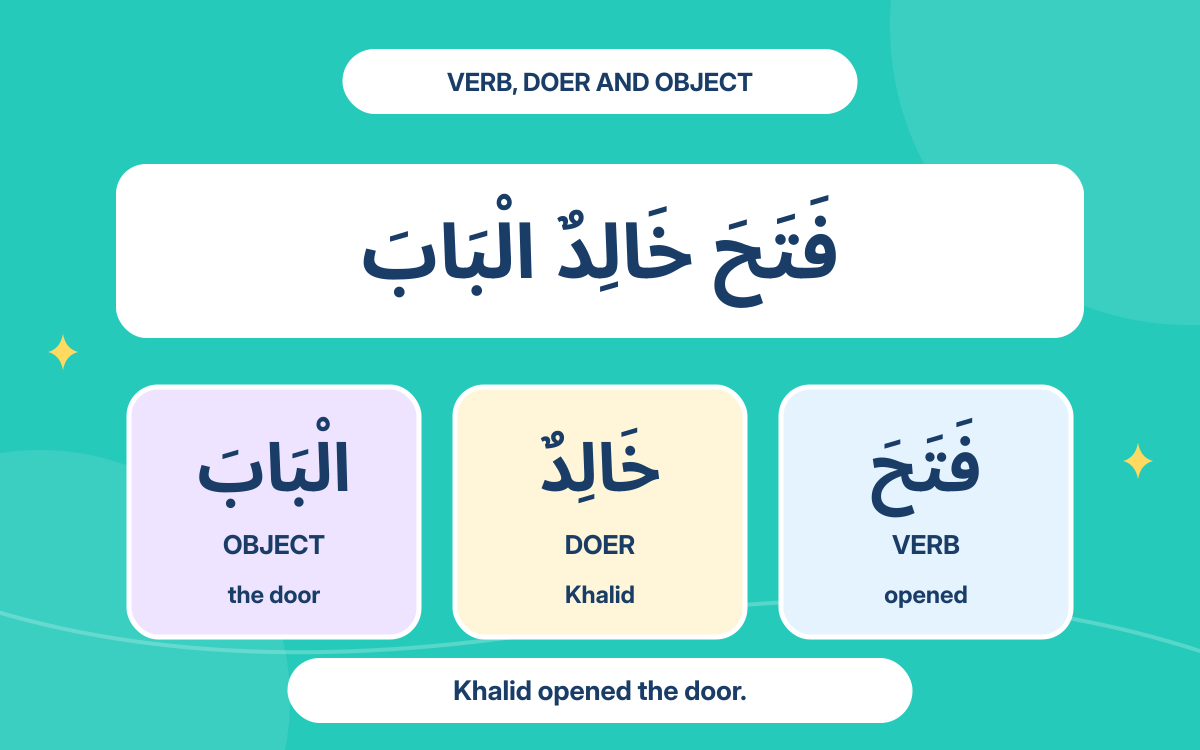
Use this routine: identify the action, find its doer, check for a direct object, then separate any prepositional phrases. The verb, doer and object guide introduces those roles. Our plain readings simplify sounds and vowel length.
What to remember
- A transitive use can take a direct object; an intransitive use does not.
- A noun after a preposition is not automatically the verb’s direct object.
- An object may be understood or represented by an attached pronoun.
Your reference shelf
Open a guide whenever you need it.
Direct object or extra information?Compare the roles, not the number of words
| Arabic | Analysis | Verb use here |
|---|---|---|
| حَمَلَ سَعِيدٌ حَقِيبَةً | Said: doer; bag: direct object | Transitive |
| نَامَ سَعِيدٌ | Said: doer; no direct object | Intransitive |
| جَلَسَ عَلَى كُرْسِيٍّ | On a chair: prepositional phrase | Intransitive |
| حَمَلْتُهَا | Tu: I, the doer; ha: feminine object | Transitive |
These lessons use one-object transitive verbs. Arabic also has verbs that can take two or more objects in particular constructions. The introductory test is whether the intended use takes a direct object, not whether every affected thing in English must become an Arabic object.
Sources & further learning
References for the language explanations and learning guidance.