The word ma can ask a question, deny an action, or introduce “that which.” In “I will buy what you want,” what identifies the thing to buy. It does not ask a question. Read ma with its surrounding sentence to find its job.
01Read what as that which
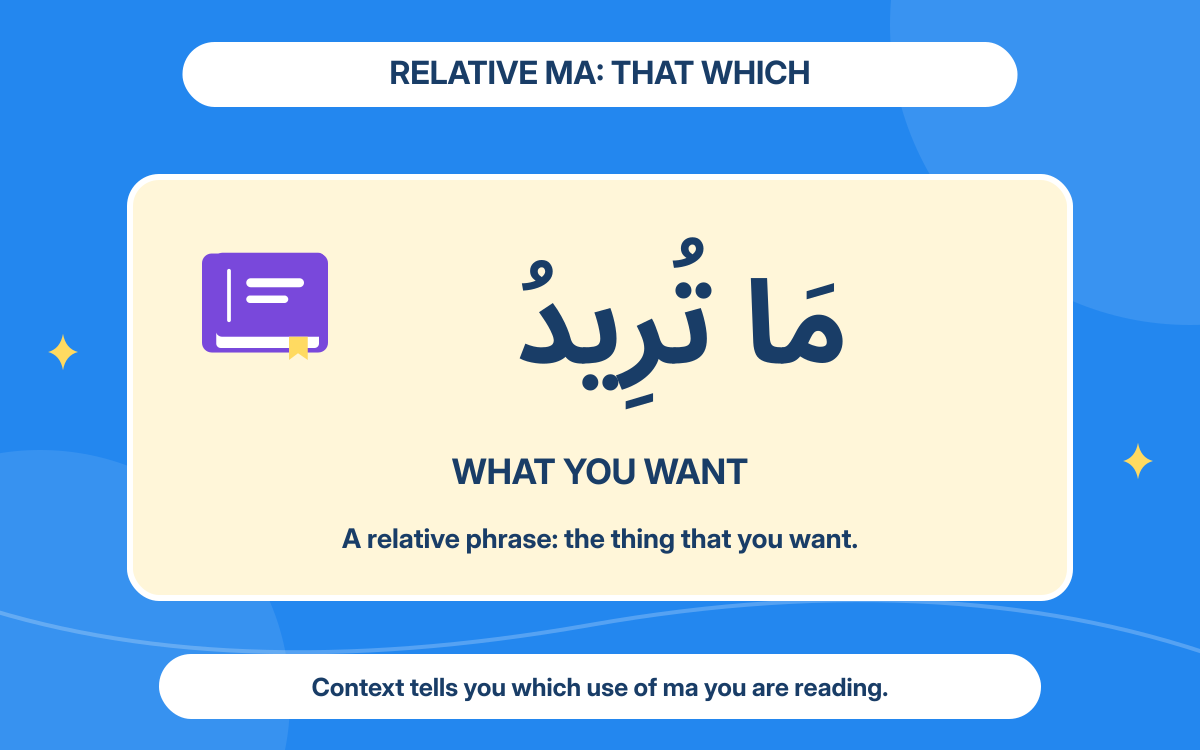
Relative ma, مَا, means “what” or “that which.” It commonly refers to things or content. Unlike the earlier alladhi pattern, it can include the thing being referred to without a separate noun before it.
سَأَشْتَرِي مَا تُرِيدُ
saashtari ma turidu
I will buy what you want. — addressing one man
Ma turidu identifies the thing I will buy. Replace English what with “that which”: the meaning still works. The sentence makes a statement, not a request for information.
02Find the object link
The clause after relative ma describes its referent. An object pronoun can make the link explicit.
سَأَشْتَرِي مَا تُرِيدُهُ
saashtari ma turiduhu
I will buy what you want. — literally, what you want it
Hu points back to what is wanted; it does not identify the listener. Arabic allows this object link to be understood in the shorter ma turidu example. This does not mean every pronoun in every relative clause can be omitted.
03Recognise a direct question
Question ma asks for information. Its function comes from the complete question, not merely from the letters ma.
مَا هَذَا؟
ma hadha
What is this?
Here the speaker asks someone to identify this. There is no main statement such as “I will buy” containing a relative phrase. English uses what for both constructions, so the English word alone cannot classify Arabic ma.
04Recognise a denial
Negative ma before a past verb can deny that action. Compare the complete sentences.
مَا فَهِمْتُ الدَّرْسَ
ma fahimtu ddarsa
I did not understand the lesson.
فَهِمْتُ مَا قُلْتَهُ
fahimtu ma qultahu
I understood what you said. — addressing one man
The first ma negates understood. The second introduces the content understood. Neither placement alone nor the spelling replaces checking the meaning and sentence structure.
05Keep the statement and its content together
A relative phrase can identify words or information, not just a physical item.
سَنَكْتُبُ مَا قَالُوا
sanaktubu ma qalu
We will record what they said.
Sanaktubu gives the main action; ma qalu identifies its content. The object link inside qalu is understood here. Ma stays the same in form rather than receiving a new visible case ending.
What to remember
- Relative ma introduces that which and commonly refers to things or content without a separate noun before it.
- The following clause needs a link to its referent; the object link can be understood in the examples practised here.
- Read the complete sentence to distinguish relative ma, question ma and negative ma.
Your reference shelf
Open a guide whenever you need it.
Compare three common uses of maReview complete sentences and the returning object
| Use | Arabic | Meaning |
|---|---|---|
| Relative | سَأَشْتَرِي مَا تُرِيدُهُ | I will buy what you want. |
| Question | مَا هَذَا؟ | What is this? |
| Negative | مَا فَهِمْتُ الدَّرْسَ | I did not understand the lesson. |
The relative clause is صِلَةُ الْمَوْصُولِ. Its returning pronoun is الْعَائِدُ. In turiduhu, hu is explicit; in turidu, its object role is understood. Relative ma is invariable and can occupy different noun positions in a sentence. Our main practice uses it in an object phrase. These are three common uses, not an exhaustive list of every Arabic ma construction.
Sources & further learning
References for the language explanations and learning guidance.