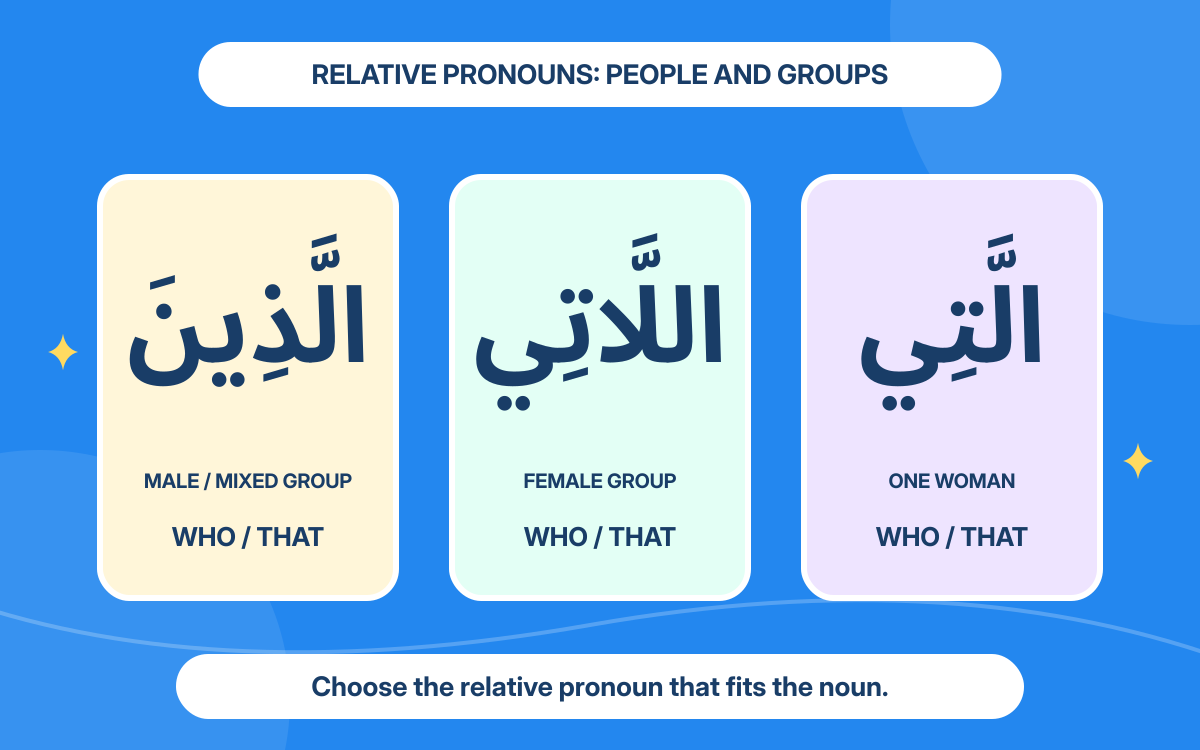
“The student” identifies a person. “The student who passed” adds information that helps us recognise that person. Arabic uses a relative pronoun to connect the noun with this description. Start with two forms for definite singular nouns: alladhi and allati.
01Use alladhi for a masculine singular noun
الطَّالِبُ الَّذِي نَجَحَ
attalibu lladhi najaha
The male student who passed
The noun الطَّالِبُ is masculine and definite. الَّذِي connects it to نَجَحَ, “passed.” The relative pronoun alone does not finish the description: “the student who” leaves us waiting. Read the noun, connector and following description together.
02Use allati for a feminine singular noun
الطَّالِبَةُ الَّتِي نَجَحَتْ
attalibatu llati najahat
The female student who passed
The feminine noun takes الَّتِي. The verb also changes: najahat means “she passed,” whereas najaha means “he passed.” Match the relative pronoun to the noun it refers to, not to the nearest English word in the translation.
Both examples begin with a definite noun. We are learning this definite singular pattern; duals, plurals and indefinite descriptions need their own checks.
03The same forms can mean which or that
الْكِتَابُ الَّذِي هُوَ فِي الْحَقِيبَةِ
alkitabu lladhi huwa fi lhaqibati
The book that is in the bag
Kitab is masculine, so it takes alladhi even though it is an object. English naturally uses “which” or “that” here. For a person, “who” is often the natural choice. Arabic chooses these forms by grammatical gender, not by a person versus thing distinction.
The word huwa points back to the book. The description tells us where that book is.
04Find the link back to the noun
The words following a relative pronoun are its relative clause, called صِلَةُ الْمَوْصُولِ. In our book example, the pronoun huwa supplies an explicit link back to kitab. In the student examples, the verb contains an understood subject: “he” in najaha and “she” in najahat.
You do not have to add huwa after every alladhi. The description must refer back to the noun in a grammatically complete way. “The student who passed” already has that connection, although the whole phrase still needs a main statement if we want a complete sentence.
05Finish the main statement
الطَّالِبُ الَّذِي نَجَحَ حَاضِرٌ
attalibu lladhi najaha hadirun
The male student who passed is present
Here “who passed” identifies the student; hadirun tells us that he is present. First find the noun, then its relative description, then the main information. This prevents a longer subject from hiding the sentence’s structure.
Our readings show connected formal pronunciation. After a preceding vowel, alladhi and allati lose their initial joining vowel, giving lladhi and llati. The doubled l remains audible.
What to remember
- Use alladhi with a definite masculine singular noun and allati with a definite feminine singular noun.
- The following relative clause needs a link back to the noun; that link can be an understood subject.
- A relative description can sit inside a longer subject before the main predicate.
Your reference shelf
Open a guide whenever you need it.
Definite descriptions at a glanceCompare gender, reference and the complete sentence
The noun being identified is often called the antecedent. In this article, it is always definite and singular. The relative pronoun is اِسْمٌ مَوْصُولٌ; the description after it is صِلَةُ الْمَوْصُولِ.
| Noun | Relative pronoun | Natural English |
|---|---|---|
| A definite masculine singular noun | الَّذِي | Who, which or that |
| A definite feminine singular noun | الَّتِي | Who, which or that |
These two relative pronouns have fixed forms even when the antecedent occupies a different case. Descriptions following indefinite nouns normally omit this relative pronoun: طَالِبٌ نَجَحَ can mean “a student who passed.” Keep that different construction separate from the definite pattern practised here.
The simple relative clauses here make the antecedent the subject. If it is an object inside the relative clause, Arabic may require an attached returning pronoun; that pattern is outside this introduction.
Sources & further learning
References for the language explanations and learning guidance.