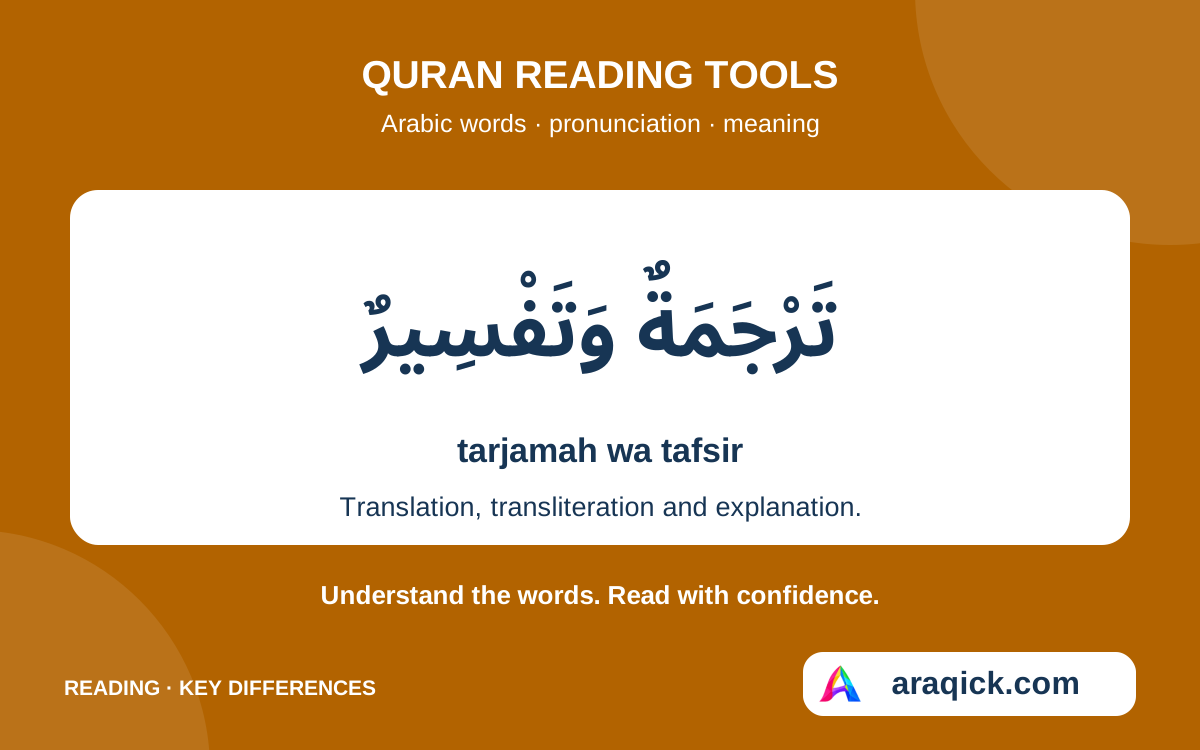
A Quran translation conveys meanings in another language. A transliteration represents Arabic with another writing system, usually Latin letters. Tafsir explains the text, drawing on interpretation and relevant evidence. These tools answer different questions: what does it mean, how is it written for reading support, and how is it explained?
01Translation conveys meaning in another language
A translation uses the words and sentence patterns of another language to convey an understanding of the Arabic. It may reorder phrases so the result reads naturally. It cannot preserve every feature of the original form at once. Compare named translations when a wording difference raises a useful question.
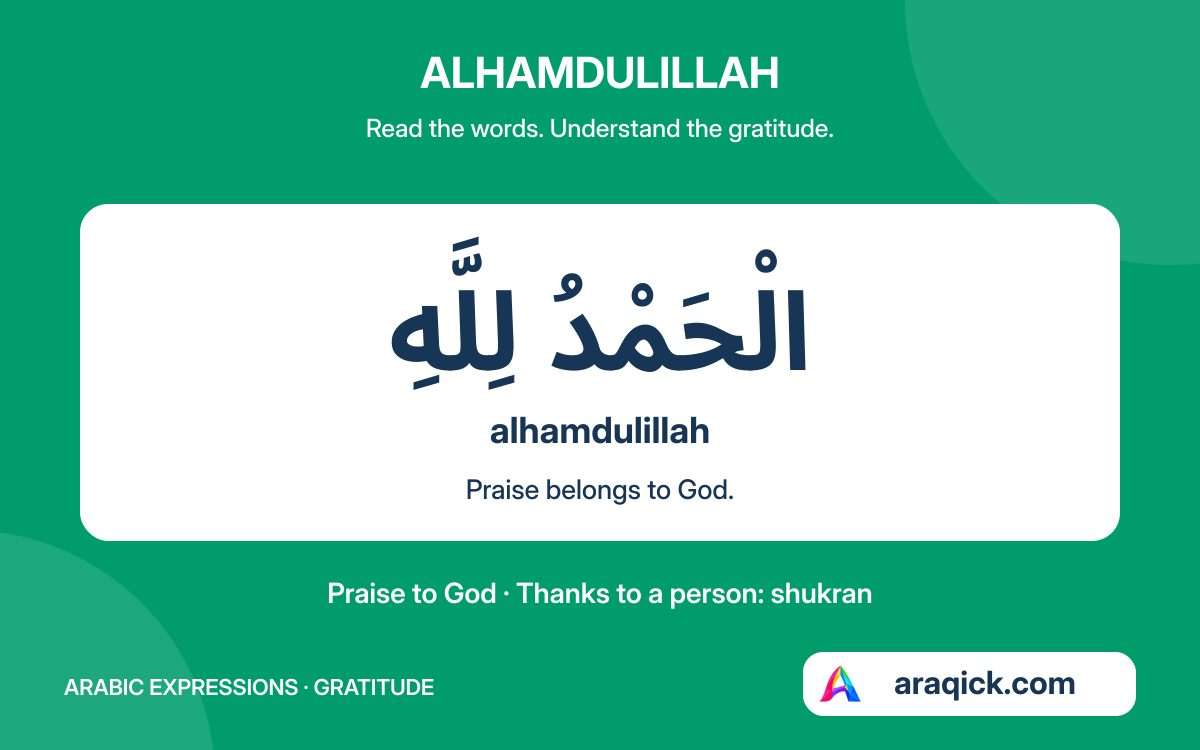
The Arabic الْحَمْدُ لِلَّهِ can be rendered “Praise belongs to Allah.” That English line communicates a meaning; it does not tell a new reader exactly how to pronounce the Arabic. For a closer look at the familiar expression, see our alhamdulillah guide.
02Transliteration changes the writing system
A Latin-letter aid such as alhamdu lillah represents the Arabic expression rather than translating it. Different systems may use different letters, doubled vowels or special marks. A plain spelling is convenient for early recognition but leaves some sound distinctions unclear. Always check which conventions a resource follows.
الْحَمْدُ لِلَّهِ
alhamdu lillah
A plain-letter reading aid, not an English translation.
Use the aid alongside Arabic and audio, then gradually read from the Arabic itself. Our alphabet guide helps connect letters and sounds. Transliteration alone cannot demonstrate all recitation details or check the reader’s pronunciation.
03Tafsir explains more than individual word meanings
Tafsir is commentary or explanation of the Quran. Depending on the work, it discusses language, surrounding verses, transmitted reports, historical context and interpretive questions. A commentary has an author and a method; its explanation should be attributed rather than presented as an anonymous extension of the verse.
On Quran 1:2, for example, a tafsir may discuss what praise means and how the verse relates to God’s lordship. That is a different task from converting Arabic letters to Latin letters. An English version of a tafsir is a translation of commentary, which remains distinct from a translation of the Quranic passage itself.
04Where does a word-by-word gloss fit?
A word-by-word display places a short meaning beside a word or grammatical piece. It helps you recognise vocabulary and attached elements. It is especially useful when you return to a passage you have already studied. However, combining the displayed English fragments mechanically may produce an awkward or misleading sentence.
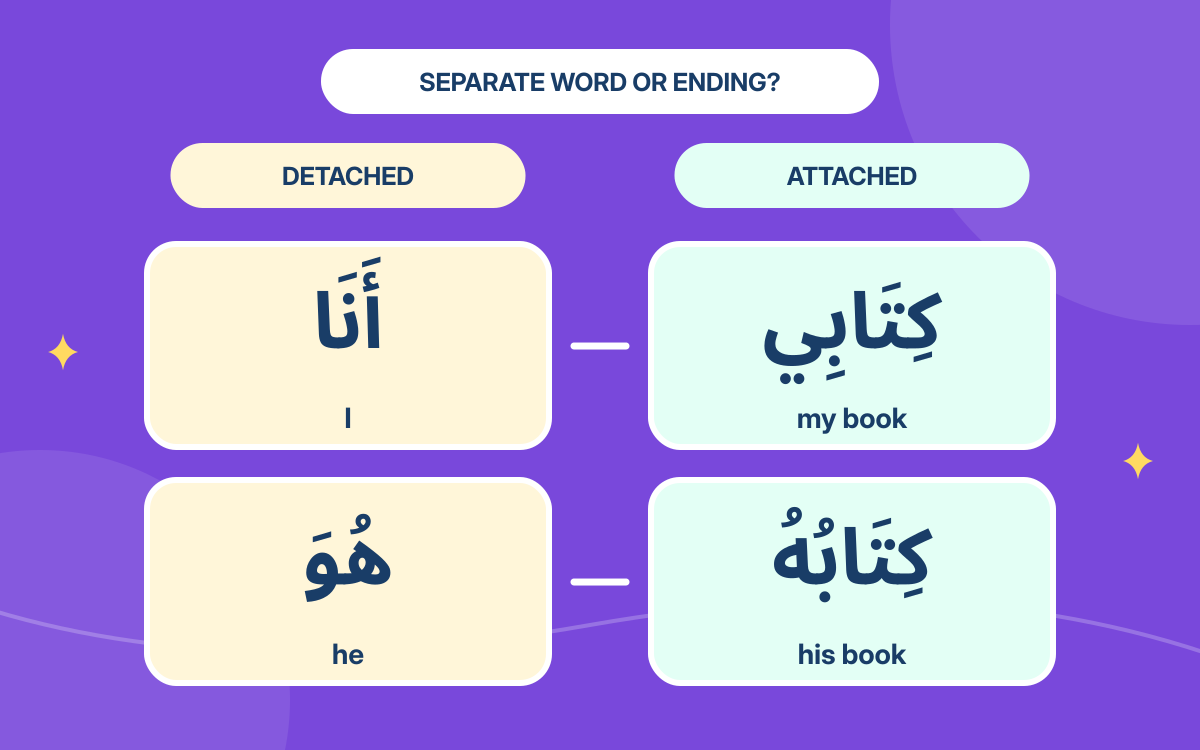
An Arabic written word can contain a prefix and a noun, or a verb and a pronoun. Our attached pronouns lesson shows why these small pieces matter. Use glosses to investigate the parts, then check a complete translation and an explanation to understand their relationship.
05Use the tools together in a clear sequence
Start with one short passage and keep its Arabic visible. Listen to the passage, follow the text and use transliteration only where needed. Read a named translation for the overall meaning. Examine a few words, then consult an accessible tafsir for the questions that remain. Finish by returning to the Arabic.
Label notes clearly: Arabic text, reading aid, translated meaning or commentary. This prevents a commentator’s explanation from being copied as though it were part of the verse. Keep the chapter and verse reference with the note so that you can recover its original context later.
06Choose a resource by the question you have
Ask “How can I follow these letters?” when you need reading support. Ask “What does the passage mean in English?” when you need a translation. Ask “Why is this expression understood in this way?” when you need explanation. A resource offering all three still requires you to distinguish their functions.
If translations differ, read their notes and check the relevant commentary instead of deciding solely by which English wording sounds easiest. For an unfamiliar sound, seek audio and feedback. For a difficult interpretive question, consult qualified guidance. Matching the tool to the question makes each study step more useful.
What to remember
- Translation conveys meaning; transliteration represents Arabic in another script.
- Tafsir explains the text and should be attributed to its author or source.
- Word glosses, complete translations, audio and commentary support different parts of study.
Your reference shelf
Open a guide whenever you need it.
Three tools at a glanceChoose the function needed for your question.
| Tool | Main purpose | What it does not do alone |
|---|---|---|
| Translation | Convey meaning in another language | Teach exact Arabic pronunciation |
| Transliteration | Represent Arabic with another script | Translate the meaning |
| Tafsir | Explain the text and its context | Become part of the Quranic verse |
| Word-by-word gloss | Identify short meanings for individual pieces | Replace connected reading |
One phrase, different kinds of supportThe Arabic phrase occurs at the start of Quran 1:2.
| Kind | Example | Function |
|---|---|---|
| Arabic | الْحَمْدُ لِلَّهِ | The wording being studied |
| Plain reading aid | alhamdu lillah | Latin letters help follow the Arabic |
| English meaning | Praise belongs to Allah | An English rendering of the phrase |
| Commentary question | What does praise include here? | A question for explanation and study |
Sources & further learning
References for the language explanations and learning guidance.