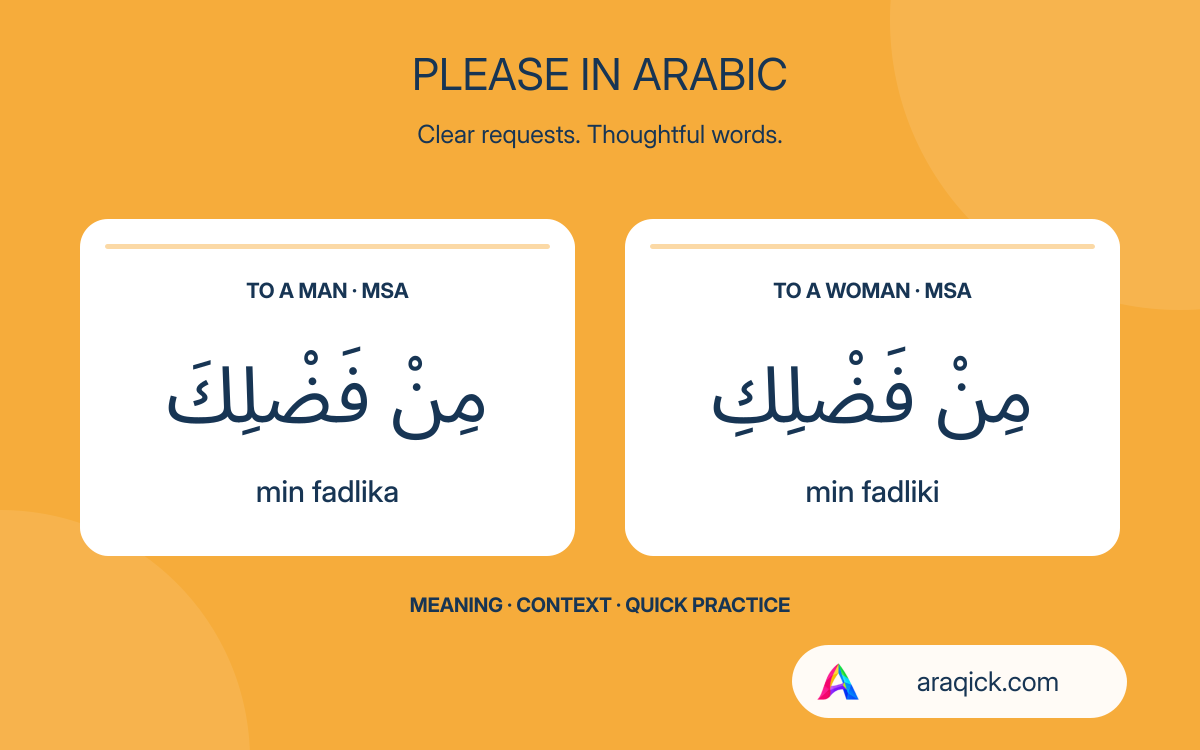
A useful Arabic expression for “please” is مِنْ فَضْلِكَ to a man, or مِنْ فَضْلِكِ to a woman. Standard readings are min fadlika and min fadliki; spoken forms include min fadlak and min fadlik. لو سمحت (law samaht) is another common request formula. Choose the listener form and keep the rest of your sentence in the same variety.
01Min fadlak or min fadlik?
The final ka or ki belongs to “you.” It refers to the person you ask, not to the object you want. Asking a man for coffee and asking him for a book use the same masculine listener form.
MSA · addressing one woman
مِنْ فَضْلِكِ
min fadliki
Please.
Common Egyptian readings are min fadlak to a man and min fadlik to a woman. These spoken forms differ from the fully inflected MSA readings; keep the variety label with the form.
02Make a small standard request
MSA · addressing one man
مَاءً، مِنْ فَضْلِكَ
maa-an, min fadlika
Water, please.
A noun followed by please can be a complete practical request in a suitable setting. Use context: pointing at a menu or naming the item usually makes the request clear.
A polite formula supports a respectful tone. It does not turn an unclear or unreasonable demand into a good request.
03Recognise law samaht
Egyptian Arabic · asking a male driver to stop
هنا، لو سمحت.
hena, law samaht
Here, please.
Law samaht literally invokes the other person’s permission; its everyday function is often please or excuse me. In Egyptian Arabic, law samahti addresses a woman. Standard Arabic uses لَوْ سَمَحْتَ (law samahta) and لَوْ سَمَحْتِ (law samahti).
Similar spellings can have different connected pronunciations. Keep the label beside the example.
04Put please before or after the request
A request formula can open the exchange when you need someone’s attention, or follow the request when the context is already clear.
MSA · addressing one man
مِنْ فَضْلِكَ، أَعِدِ السُّؤَالَ.
min fadlika, aidi ssual
Please repeat the question.
The imperative أَعِدْ means repeat. In connected reading before the next word, a short linking vowel appears. Learners can practise the whole classroom request rather than assembling isolated dictionary forms.
05Soften a request with a question
MSA · addressing one man
هَلْ يُمْكِنُكَ مُسَاعَدَتِي؟
hal yumkinuka musaadati
Can you help me?
To one woman, use يُمْكِنُكِ (yumkinuki). You can add min fadlika or min fadliki when appropriate. A question about ability or possibility often functions as a request for action.
This standard pattern differs from conversational Egyptian mumkin requests. Learn the complete pattern before comparing varieties.
06Give the other person room to answer
After asking, pause for the answer. A request can receive agreement, a question, or a polite refusal. If you need something else, clarify the request rather than repeating please more loudly.
Modern Standard Arabic
نَعَمْ، بِكُلِّ سُرُورٍ.
naam, bikulli surur
Yes, with pleasure.
When the help has been given, switch to thank you. Please asks for something; thanks recognises what someone has done.
07Practise with one listener and one variety
Choose a simple task: ask for water, request a repeated question, or ask someone to help. Decide whether you are addressing a man or woman. Say the whole request, imagine a response, and finish the exchange with thanks.
Next change only the listener, keeping the requested item unchanged. This isolates the ending you need to practise. Use the varieties guide and classroom expressions for related practice.
What to remember
- Min fadlika and min fadliki choose the listener, not the requested object.
- Law samaht is common in spoken requests; standard and regional readings differ.
- Make a clear request, allow a response, and thank the person after receiving help.
Your reference shelf
Open a guide whenever you need it.
Please: forms and varietiesSpoken spellings vary; use the label and listener information together.
| Arabic | Reading aid | Listener / variety |
|---|---|---|
| مِنْ فَضْلِكَ | min fadlika | One man; MSA |
| مِنْ فَضْلِكِ | min fadliki | One woman; MSA |
| مِنْ فَضْلِكُمْ | min fadlikum | Male or mixed group; MSA |
| من فضلك | min fadlak / min fadlik | Man / woman; common Egyptian readings |
| لَوْ سَمَحْتَ / لَوْ سَمَحْتِ | law samahta / law samahti | Man / woman; MSA |
| لو سمحت / لو سمحتي | law samaht / law samahti | Man / woman; Egyptian |
Requests you can adaptOriginal situations show how courtesy formulas fit complete requests.
| Situation | Example | Note |
|---|---|---|
| At a counter | مَاءً، مِنْ فَضْلِكَ | Water, please; MSA to a man |
| In class | مِنْ فَضْلِكَ، أَعِدِ السُّؤَالَ. | Please repeat the question; MSA to a man |
| Asking for help | هَلْ يُمْكِنُكِ مُسَاعَدَتِي؟ | Can you help me? MSA to a woman |
| In an Egyptian taxi | هنا، لو سمحت. | Here, please; addressing a male driver |
Sources & further learning
References for the language explanations and learning guidance.