Say شُكْرًا (shukran) for “thank you.” Add جَزِيلًا (jazilan) for “very much,” or name the person and the help you received. A straightforward reply is عَفْوًا (afwan), “you’re welcome.” Spoken alternatives vary by region; learn each expression together with its setting and reply.
01Start with shukran
Shukran works as a short, complete thank-you: a colleague finds your notebook, a passenger makes room, or a shopkeeper hands you a purchase. It is widely understood, though local speakers may prefer other expressions in particular situations.
Modern Standard Arabic
شُكْرًا
shukran
Thank you.
English spellings such as shukran and shokran represent different reading conventions or pronunciations. Start from the Arabic word rather than treating these as separate expressions.
02Say thank you very much
Modern Standard Arabic
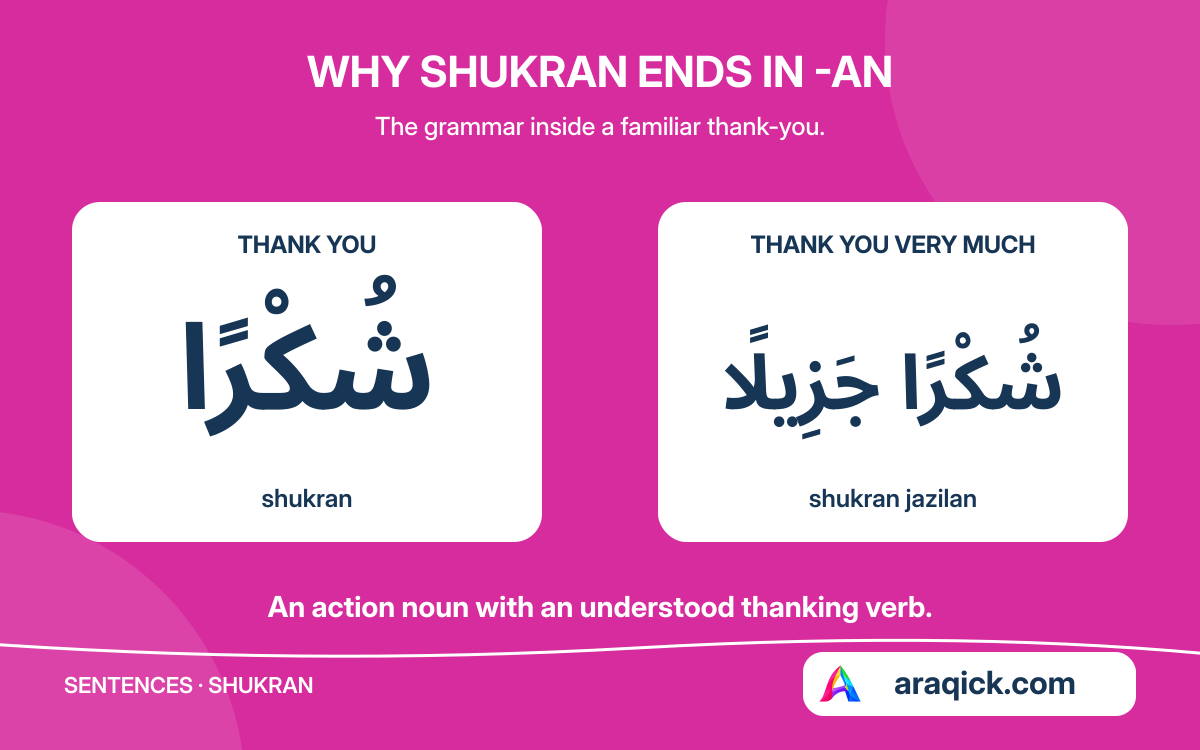
شُكْرًا جَزِيلًا
shukran jazilan
Thank you very much.
This is a useful standard expression when someone has given meaningful help. أَلْف شُكْر (alf shukr), literally “a thousand thanks,” is another warm conversational expression. Neither phrase counts individual acts of thanks; both strengthen your appreciation.
A specific detail can make your message warmer than adding several intensifiers.
03Thank a man, a woman or a group
The plain word shukran stays the same. When you add “to you,” choose the ending for the person receiving your thanks, regardless of your own gender.
MSA · addressing one woman
شُكْرًا لَكِ
shukran laki
Thank you.
Use لَكَ (laka) for one man and لَكُمْ (lakum) for a male or mixed group. A woman thanking her father uses laka; a man thanking his sister uses laki.
04Say what you appreciate
MSA · addressing one man
شُكْرًا عَلَى مُسَاعَدَتِكَ
shukran ala musaadatika
Thank you for your help.
The preposition عَلَى introduces what you are thanking someone for. To one woman, the final form is مُسَاعَدَتِكِ (musaadatiki).
For a written message after a study session, name the explanation, the time, or the help. Keep the sentence tied to what actually happened.
05Recognise regional alternatives
In Egyptian Arabic, متشكر (mitshakkir) is used by a male speaker, and متشكرة (mitshakkira) by a female speaker. Here the form describes the thankful speaker, unlike laka and laki, which identify the listener.
Lebanese Arabic also uses يسلمو (yislamo), especially when someone gives or does something helpful. شكراً كتير (shukran ktir) is a familiar Levantine “thanks a lot.” Keep these labels with the expressions.
06Learn both halves of the exchange
Modern Standard Arabic
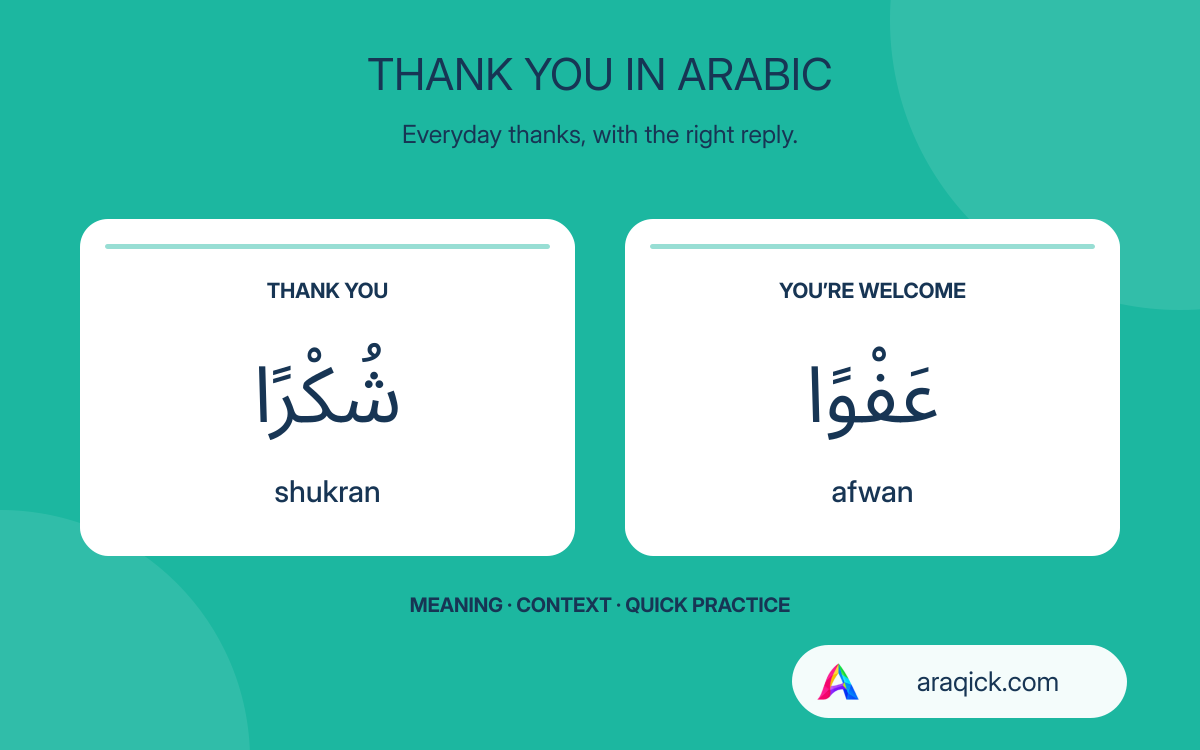
شُكْرًا لَكَ. — عَفْوًا.
shukran laka. — afwan.
Thank you. — You’re welcome.
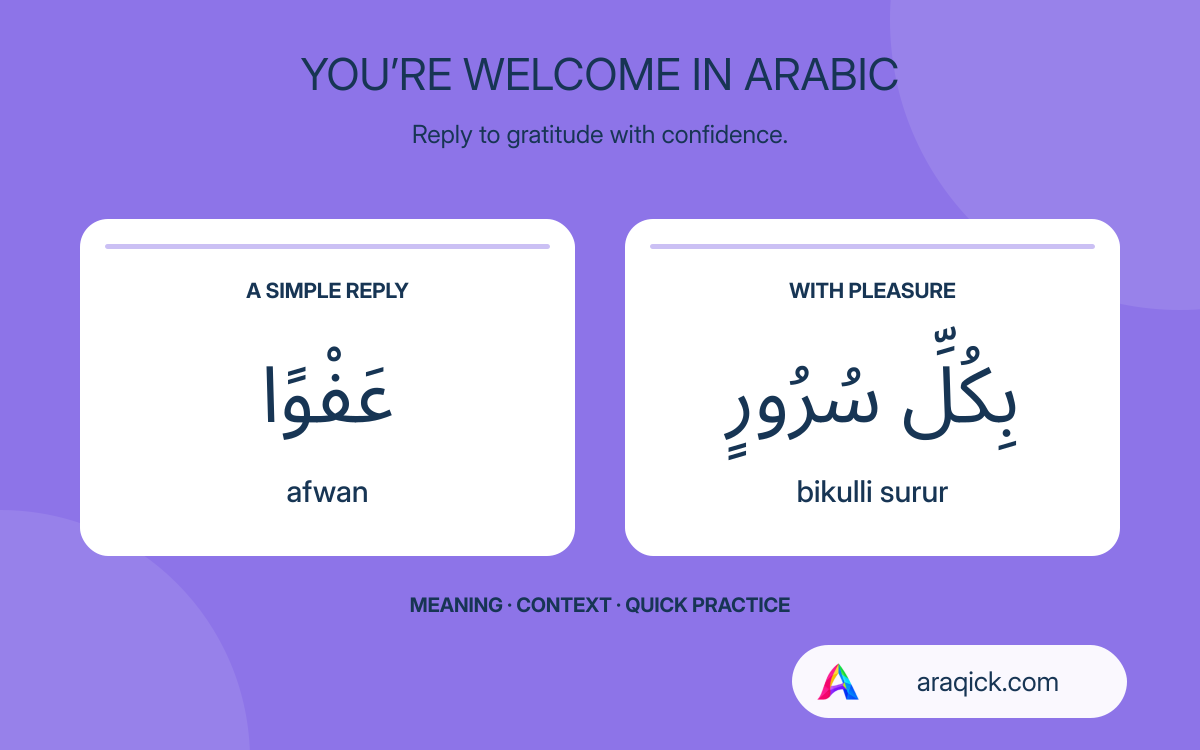
Afwan acknowledges the gratitude. بِكُلِّ سُرُورٍ (bikulli surur), “with pleasure,” is another standard response. In Lebanese speech, you may hear tikram or walaw instead; the right choice depends on the relationship and context.
Our reply guide explains these differences.
07Build a useful thank-you message
Choose one real situation: a friend sent useful notes, a neighbour helped carry a box, or a teacher clarified a sentence. Say thanks, mention that help, and practise the other person’s reply. Then reverse the roles and check the listener ending again.
For the grammar of the ending in shukran, visit why shukran ends in -an. That analysis supports the expression; you can begin using a simple thank-you before mastering the full grammar.
What to remember
- Shukran is a useful starting expression; add a reason to personalise it.
- Laka and laki identify the listener; Egyptian mitshakkir and mitshakkira describe the speaker.
- Learn a thanking phrase together with a suitable reply and dialect label.
Your reference shelf
Open a guide whenever you need it.
Ways to thank someoneMatch the expression to the speaker, listener and variety.
| Arabic | Reading aid | Use |
|---|---|---|
| شُكْرًا | shukran | A concise thank-you |
| شُكْرًا جَزِيلًا | shukran jazilan | Thank you very much; standard |
| أَلْف شُكْر | alf shukr | Many thanks; conversational |
| شُكْرًا لَكَ / لَكِ | shukran laka / laki | Thanks addressed to a man / woman |
| متشكر / متشكرة | mitshakkir / mitshakkira | Egyptian; male / female speaker |
| يسلمو | yislamo | Lebanese; appreciation for help or something given |
Complete the exchangeThese are original scenarios, not a fixed script for every conversation.
| Situation | Thank-you | Possible reply |
|---|---|---|
| A classmate explains a word | شُكْرًا عَلَى الشَّرْحِ | عَفْوًا |
| A person offers significant help | شُكْرًا جَزِيلًا | بِكُلِّ سُرُورٍ |
| A friend helps in Lebanese speech | يسلمو | ولو · walaw, of course |
Sources & further learning
References for the language explanations and learning guidance.