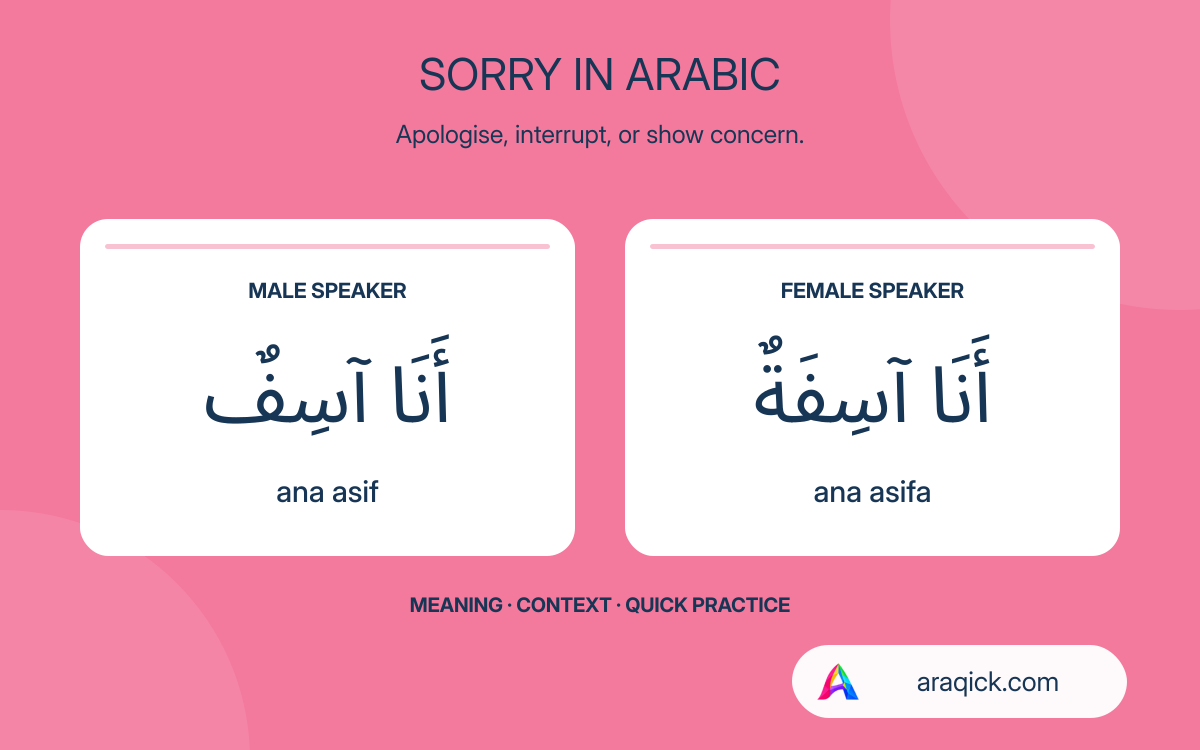
For “I’m sorry,” a male speaker can say أَنَا آسِفٌ (ana asif), and a female speaker أَنَا آسِفَةٌ (ana asifa). For “excuse me,” عُذْرًا (udhran) or عَفْوًا (afwan) may fit. Choose by the situation: admitting a mistake, interrupting politely and expressing sympathy do different jobs.
01Say I’m sorry
MSA · male speaker
أَنَا آسِفٌ عَلَى التَّأْخِيرِ
ana asif ala attakhir
I’m sorry for being late.
Asif describes the speaker. A woman uses أَنَا آسِفَةٌ عَلَى التَّأْخِيرِ (ana asifa ala attakhir). These reading aids use pause-style asif and asifa; connected formal reading may sound the written case endings.
Choose the form for yourself, not for the person hearing the apology.
02Name the mistake and repair it
An apology becomes clearer when you name what went wrong. After sending the wrong file, for example, you can apologise and say that you will send the correct one. Keep the explanation brief and relevant.
Modern Standard Arabic
أَعْتَذِرُ عَنِ الْخَطَأِ
atadhiru ani alkhata
I apologise for the mistake.
Atadhiru is a standard first-person verb. The form works for a male or female speaker; it does not take the feminine adjective ending of asifa.
03Use excuse me for a small interruption
Modern Standard Arabic
عُذْرًا، أَيْنَ الْمَكْتَبُ؟
udhran, ayna almaktab
Excuse me, where is the office?
Udhran and afwan can introduce a polite interruption or request for attention. You are not necessarily admitting a serious fault. If you bump into someone, a brief apology may also be appropriate.
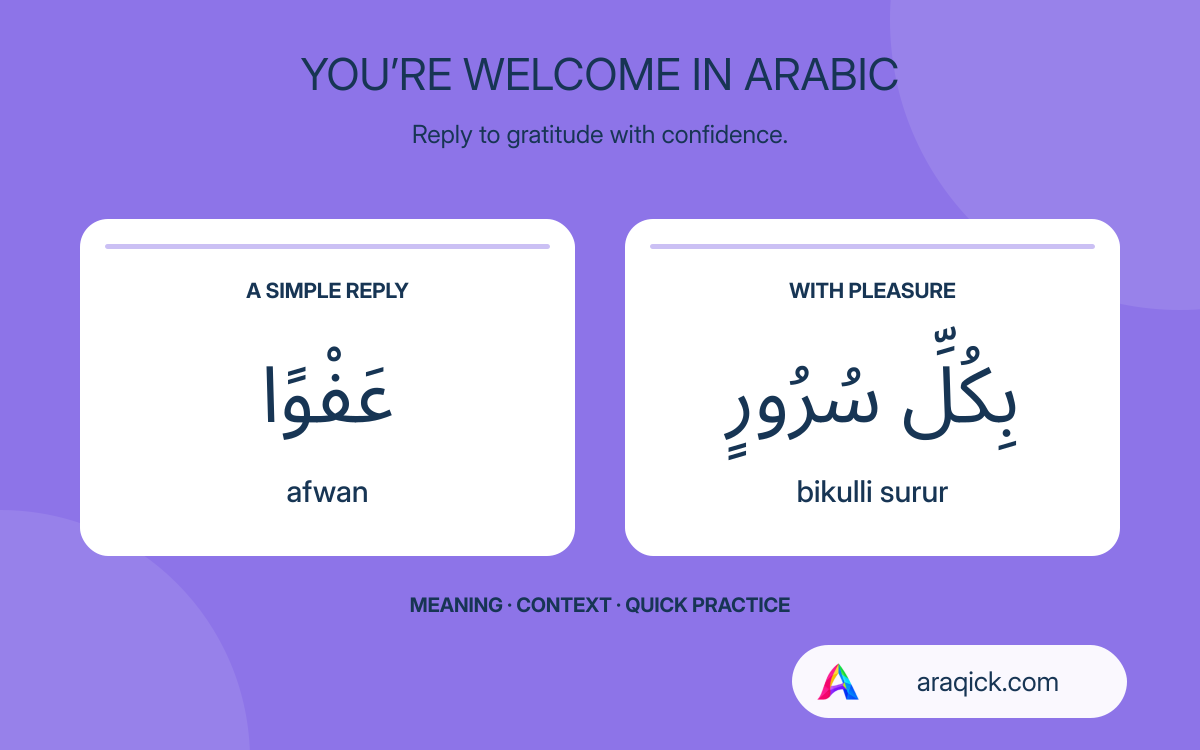
The same afwan can answer thanks, so check the preceding situation. Our afwan guide compares these uses.
04Ask for permission with law samaht
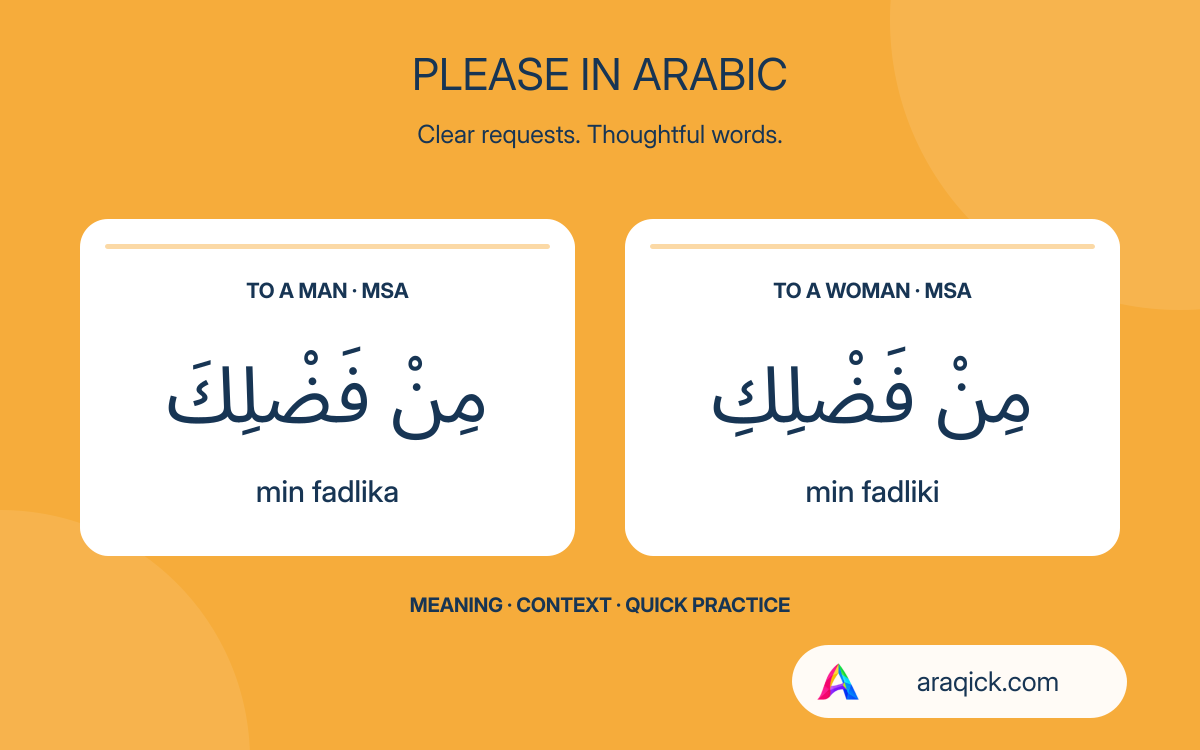
You may hear لو سمحت (law samaht), “please” or “excuse me,” before a request in Egyptian and other spoken varieties. To a woman, Egyptian speech uses law samahti. These forms address the listener.
That contrasts with asif and asifa: those describe the speaker. A man requesting a woman’s attention can therefore use law samahti; a woman apologising to a man still uses asifa.
See please and polite requests for complete examples.
05Separate sympathy from responsibility
English “sorry” can express concern about another person’s bad experience without accepting blame. Arabic can express that concern explicitly instead of relying on a single apology word.
Modern Standard Arabic
يُؤْسِفُنِي سَمَاعُ ذَلِكَ
yusifuni samau dhalik
I’m sorry to hear that.
This standard expression acknowledges unwelcome news. Match the seriousness of the situation; a short response to a missed bus and a condolence after a death call for different wording and care.
06Respond to an apology
Modern Standard Arabic
لَا بَأْسَ
la basa
It’s all right; no harm done.
For a small mistake, this can reassure the speaker. لَا مُشْكِلَةَ (la mushkila), “no problem,” is another standard possibility. Use reassurance when it reflects what you mean.
Afwan is a common reply to thanks, but it is not a universal answer to every apology. A response about the mistake or its repair may be clearer.
07Practise three different situations
Try three short exchanges: you arrived late, you need directions, and a friend tells you disappointing news. First decide whether you are apologising, interrupting, or showing sympathy. Then choose the phrase and any gender form.
Add one practical next step when you caused the problem. “I apologise for the mistake” followed by a clear correction does more communicative work than repeating sorry several times. Review listener endings if the roles become confusing.
What to remember
- Asif and asifa describe the apologising speaker.
- Use a suitable attention-getter for excuse me and explicit concern for sympathy.
- For a real mistake, name it and offer a useful correction.
Your reference shelf
Open a guide whenever you need it.
Apology, interruption or sympathy?Choose the function first; the English word sorry does not identify it by itself.
| Arabic | Reading aid | Function |
|---|---|---|
| أَنَا آسِفٌ / أَنَا آسِفَةٌ | ana asif / ana asifa | I’m sorry; male / female speaker |
| أَعْتَذِرُ عَنِ الْخَطَأِ | atadhiru ani alkhata | I apologise for the mistake; standard |
| عُذْرًا | udhran | Excuse me; sorry |
| عَفْوًا | afwan | Excuse me; pardon, depending on context |
| لو سمحت / لو سمحتي | law samaht / law samahti | Egyptian; please or excuse me to a man / woman |
| يُؤْسِفُنِي سَمَاعُ ذَلِكَ | yusifuni samau dhalik | I’m sorry to hear that; sympathy |
Which person controls the form?Compare speaker descriptions with words addressed to someone else.
| Expression | Controls the form | Example |
|---|---|---|
| Asif / asifa | The speaker | A woman says ana asifa to a man. |
| Law samaht / samahti | The listener | A man says law samahti to a woman in Egyptian Arabic. |
| Atadhiru | Neither in this first-person form | A man or woman can say atadhiru. |
| Udhran / afwan | No listener gender change here | Both can introduce a short interruption. |
Sources & further learning
References for the language explanations and learning guidance.