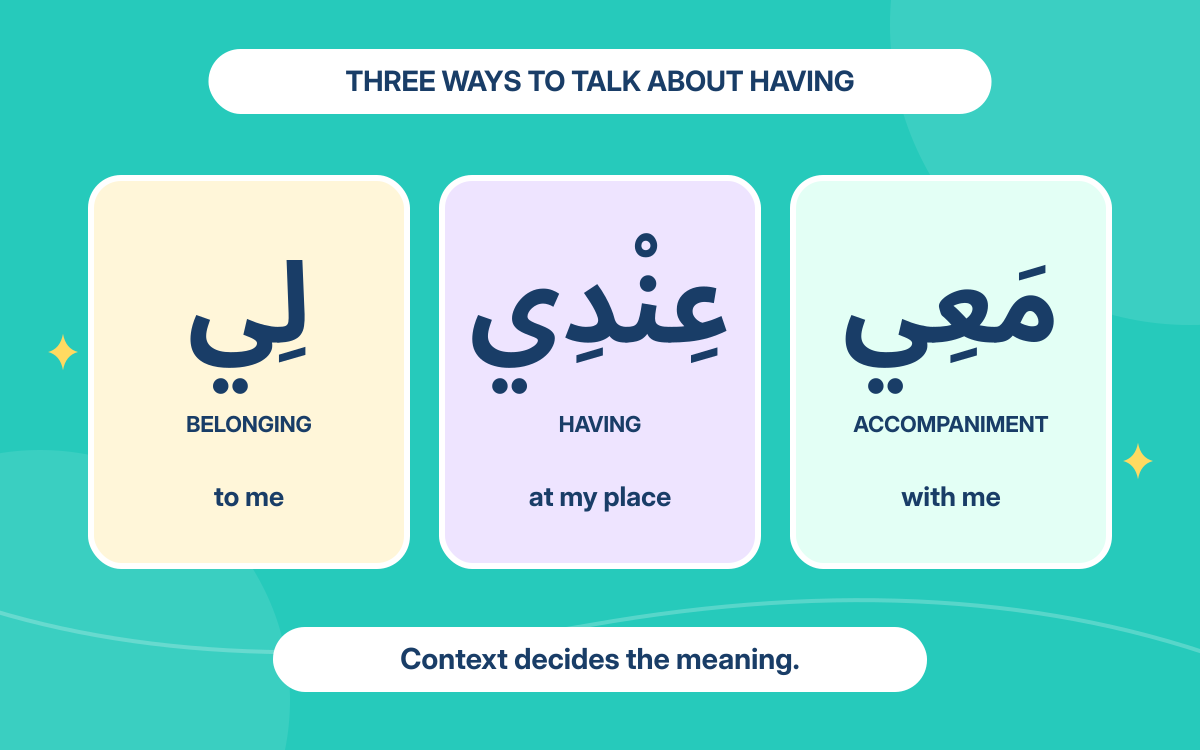
You already know indi for having something and mai for having it with you. Add the separate word ma to make these short possession statements negative. The same approach works with li for belonging or a relationship. Start with the meaning you want to deny, then put ma before the expression.
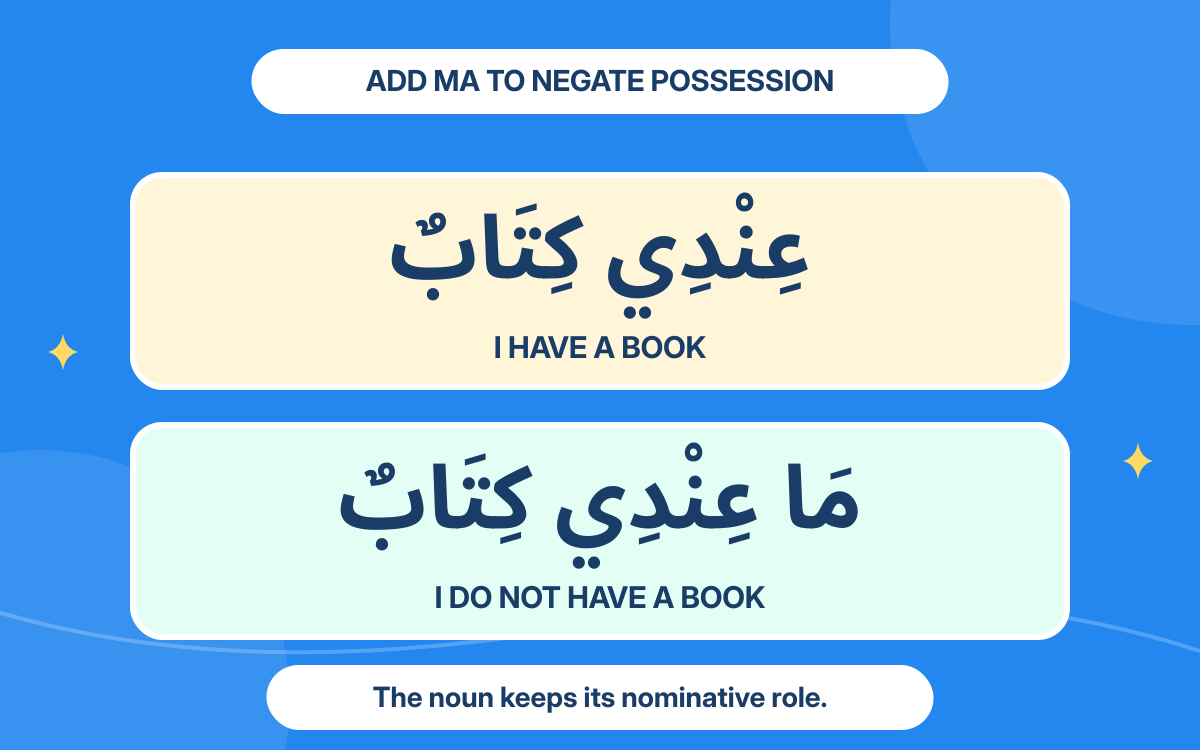
01Add ma before indi
Ma is the negative particle in this pattern. The possession expression already identifies the speaker, so a separate ana is unnecessary.
عِنْدِي كِتَابٌ
indi kitabun
I have a book.
مَا عِنْدِي كِتَابٌ
ma indi kitabun
I do not have a book.
The added ma changes the positive statement into a negative one. Indi can describe possession or availability; it does not require the book to be in your hand. This is a present possession statement, not a past action.
02Deny having something with you
Use ma mai when the focus is whether an item accompanies you now. Someone may own pens at home and still have none available in their bag.
مَا مَعِي قَلَمٌ
ma mai qalamun
I do not have a pen with me.
This does not claim that you own no pens anywhere. It denies the with-me relationship in the conversation. Compare the positive مَعِي قَلَمٌ, mai qalamun, “I have a pen with me.” Adding ma leaves the object and the speaker unchanged.
03Use li for belonging or a relationship
Li can express belonging with things, or a relationship with family members. Ma makes either statement negative; it does not turn a family relationship into ownership.
مَا لِي أَخٌ
ma li akhun
I do not have a brother.
مَا لِي سَيَّارَةٌ
ma li sayyaratun
I own no car. (In a conversation about ownership.)
Choose from context. Ma indi may emphasise what you have available, ma mai what is with you, and ma li what belongs to you or a stated relationship. Their uses can overlap; these examples show useful differences of emphasis.
04Keep the following noun nominative here
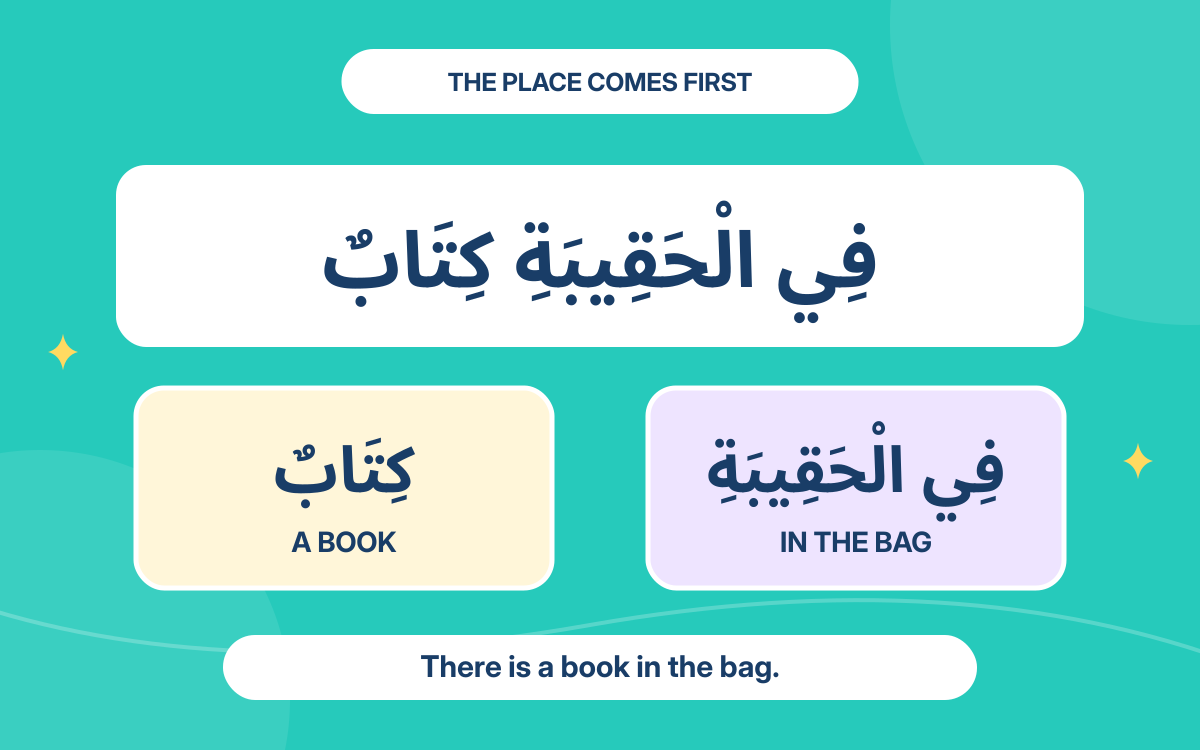
In the simple pattern taught here, the thing named after the possession expression remains nominative. It is a separate sentence part, not a noun added directly to indi in an idafa.
مَا عِنْدِي سَيَّارَةٌ
ma indi sayyaratun
I do not have a car.
Sayyaratun keeps its nominative tanween, just as kitabun and qalamun do above. Adding ma does not make it genitive or turn it into a verb’s direct object. Use this ending for these models rather than assuming every noun anywhere after a negative word follows one universal rule.
05Distinguish ma from mai
The two words in ma mai have different jobs. Ma supplies negation; mai supplies accompaniment and the speaker.
مَا مَعِي كِتَابٌ
ma mai kitabun
I do not have a book with me.
In Arabic, مَا has alif, while مَعِي contains ayn and the attached speaker ya. They are separate written words. Removing ma gives a positive sentence; removing mai loses the with-me meaning. Ma can also mean what in other contexts, so learn it inside the complete statement. The plain reading aid leaves ayn and vowel length unmarked; keep the Arabic beside it.
What to remember
- Put the separate negative ma before indi, mai or li in these short possession statements.
- Ma indi denies having or availability; ma mai denies accompaniment; ma li can deny belonging or a relationship.
- The following noun remains nominative in the models taught here, and ma is different from mai.
Your reference shelf
Open a guide whenever you need it.
Three meanings you can denyReview ma indi, ma mai and ma li in context
| Arabic | Plain reading aid | Meaning in this context |
|---|---|---|
| مَا عِنْدِي كِتَابٌ | ma indi kitabun | I do not have a book. |
| مَا مَعِي قَلَمٌ | ma mai qalamun | I do not have a pen with me. |
| مَا لِي أَخٌ | ma li akhun | I do not have a brother. |
| مَا لِي سَيَّارَةٌ | ma li sayyaratun | I own no car. |
The noun in each displayed model is nominative. Li contains a true preposition plus the speaker suffix; inda and maa are nouns used adverbially in these possession constructions. The speaker suffix belongs inside the expression, while the following noun names what is being discussed.
This guide uses negative ma before the possession expression. It does not teach every kind of ma, every order of a negative nominal sentence, or a general rule for negating verbs. Arabic also uses other negative constructions, including laysa; learn their forms and case relationships separately rather than substituting words mechanically.
Sources & further learning
References for the language explanations and learning guidance.