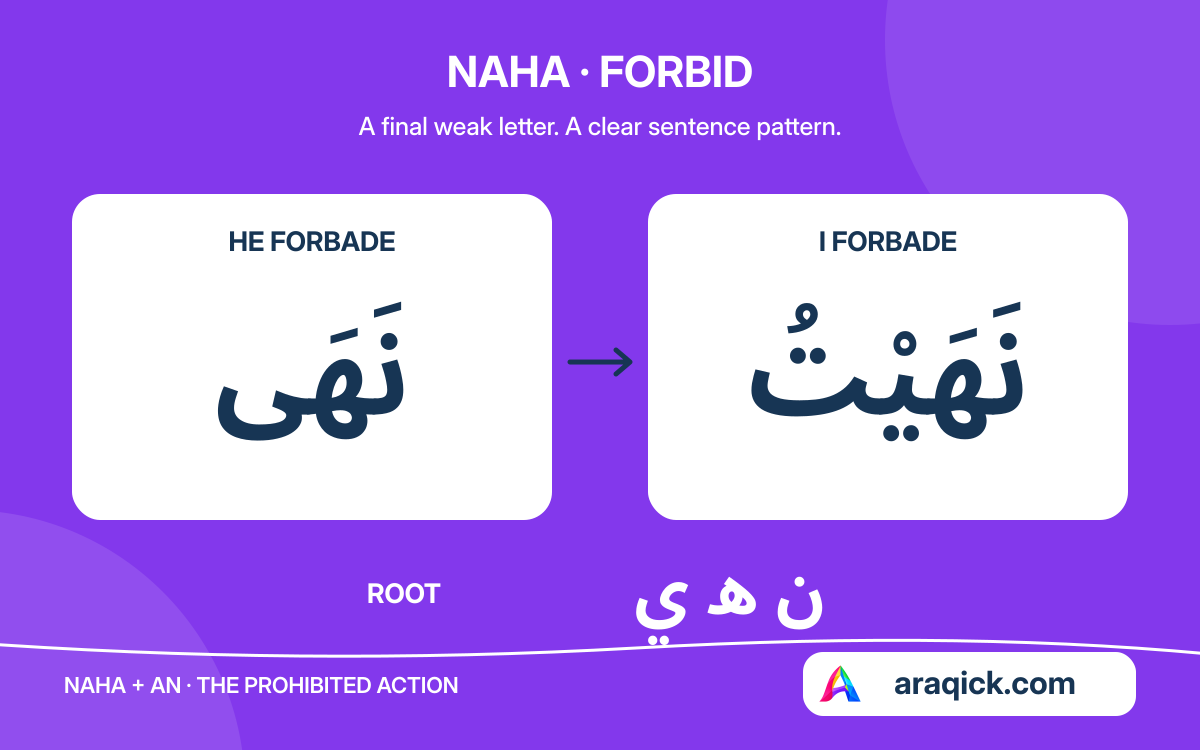
Naha means he forbade or prohibited. Its present form is yanha, and its root is ن ه ي. The final weak letter changes across person forms and moods. Start with a small sentence about a rule, then separate the verb forbid from the grammar used to tell someone not to do something.
01Say which action was forbidden
نَهَى الْمُدِيرُ عَنِ التَّصْوِيرِ هُنَا
naha almudiru ani attaswiri huna
The manager prohibited photography here.
Almudiru is the manager who made the rule. The preposition عَنْ introduces the prohibited activity. Before the definite article in connected speech, its nun takes a helping kasrah: ani.
Attaswiri is genitive after the preposition. Learn the construction naha an together; translating English prohibit word by word can hide the Arabic preposition.
02Let the root ya return before tu
نَهَيْتُهُ عَنِ اللَّعِبِ هُنَا
nahaytuhu ani allabi huna
I forbade him from playing here.
Nahaytu means I forbade. The final long a of naha becomes ay before the I ending tu. The attached hu means him: it identifies the person addressed by the prohibition, not the person giving it.
We forbade is نَهَيْنَا (nahayna), while she forbade is نَهَتْ (nahat). Use the reference chart instead of attaching every suffix to unchanged naha.
03Read the present as yanha
يَنْهَى عَنِ التَّصْوِيرِ
yanha ani attaswiri
He prohibits photography.
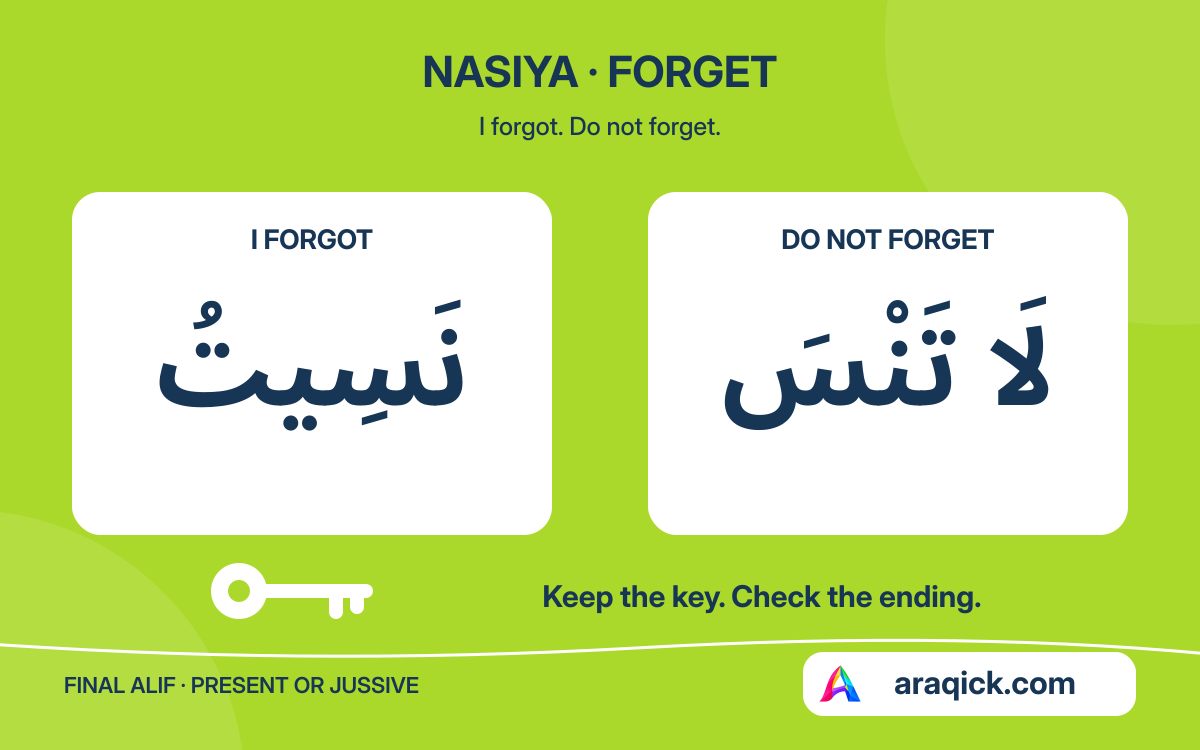
Yanha ends in alif maqsura, ى, pronounced long a. It is not the long i ending of a verb such as yabki. I prohibit is أَنْهَى; we prohibit is نَنْهَى.
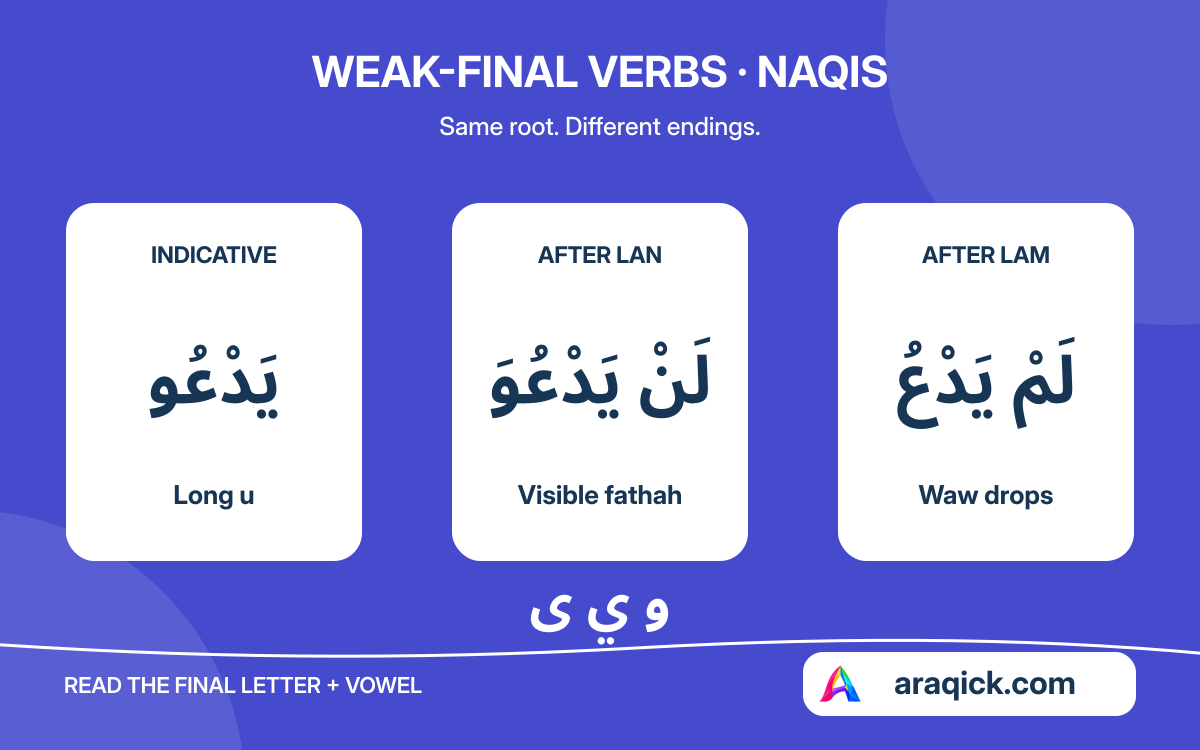
The same visible final alif stays in the singular subjunctive: لَنْ يَنْهَى, he will not prohibit. Its subjunctive fathah is understood rather than written on the alif.
04Drop the final alif after lam
لَمْ يَنْهَ عَنِ التَّصْوِيرِ
lam yanha ani attaswiri
He did not prohibit photography.
Lam requires the jussive. Here yanha loses its final alif maqsura but keeps a short fathah on ha. The simple reading aid writes both endings as a; the vowelled Arabic shows the difference.
Compare weak-final verbs and lam for did not when you need the broader rule. The singular deletion rule is not a recipe for deleting every listener ending.
05Separate forbid from do not
اِنْهَ عَنِ التَّصْوِيرِ
inha ani attaswiri
Prohibit photography. — to one man
Inha is a positive command telling someone to prohibit an activity. It drops the final weak letter, just like the singular jussive. The table gives commands for other listeners.
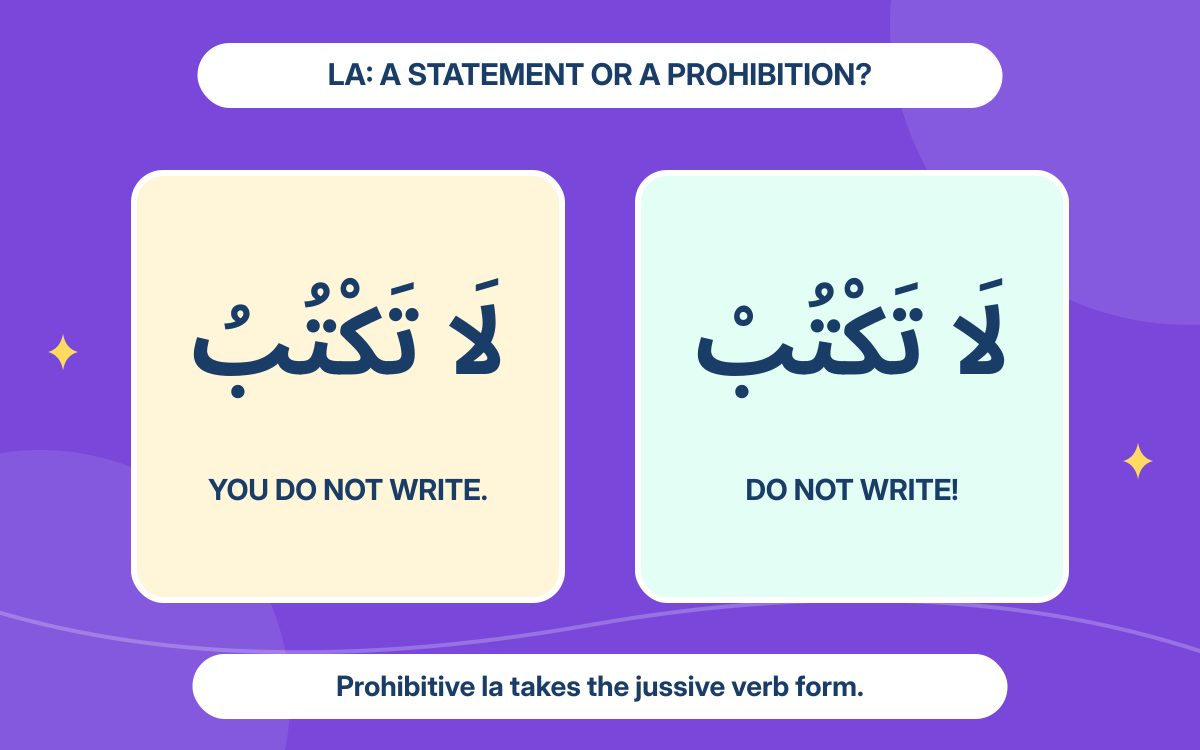
A direct prohibition instead uses la with the action itself: لَا تَكْتُبْ هُنَا, do not write here. Naha names the act of forbidding; prohibitive la directly asks the listener not to act.
What to remember
- Naha an names a prohibited activity; a person can appear as the verb’s object.
- The root ya returns in nahaytu, while the singular jussive drops final alif.
- Inha means prohibit; la plus an action verb gives a direct do-not instruction.
Your reference shelf
Open a guide whenever you need it.
Forbid: past and present formsPast and ordinary indicative present; use the lesson for other moods
| Person | Past | Present |
|---|---|---|
| He | نَهَى | يَنْهَى |
| They: two men | نَهَيَا | يَنْهَيَانِ |
| They: male or mixed group | نَهَوْا | يَنْهَوْنَ |
| She | نَهَتْ | تَنْهَى |
| They: two women | نَهَتَا | تَنْهَيَانِ |
| They: female group | نَهَيْنَ | يَنْهَيْنَ |
| You: one man | نَهَيْتَ | تَنْهَى |
| You: two people | نَهَيْتُمَا | تَنْهَيَانِ |
| You: male or mixed group | نَهَيْتُمْ | تَنْهَوْنَ |
| You: one woman | نَهَيْتِ | تَنْهَيْنَ |
| You: female group | نَهَيْتُنَّ | تَنْهَيْنَ |
| I | نَهَيْتُ | أَنْهَى |
| We | نَهَيْنَا | نَنْهَى |
The dual you form serves two listeners of either gender. Shared spellings depend on context. The present column is indicative; do not use it unchanged after every mood particle.
Commands by listenerMatch the complete command to the listener
| Listener | Command |
|---|---|
| One man | اِنْهَ |
| One woman | اِنْهَيْ |
| Two people | اِنْهَيَا |
| Male or mixed group | اِنْهَوْا |
| Female group | اِنْهَيْنَ |
The one-woman command retains the listener ya; the two-person command retains the dual alif. Do not copy the one-man deletion rule onto every ending. These forms mean prohibit, rather than a general do not.
Sources & further learning
References for the language explanations and learning guidance.