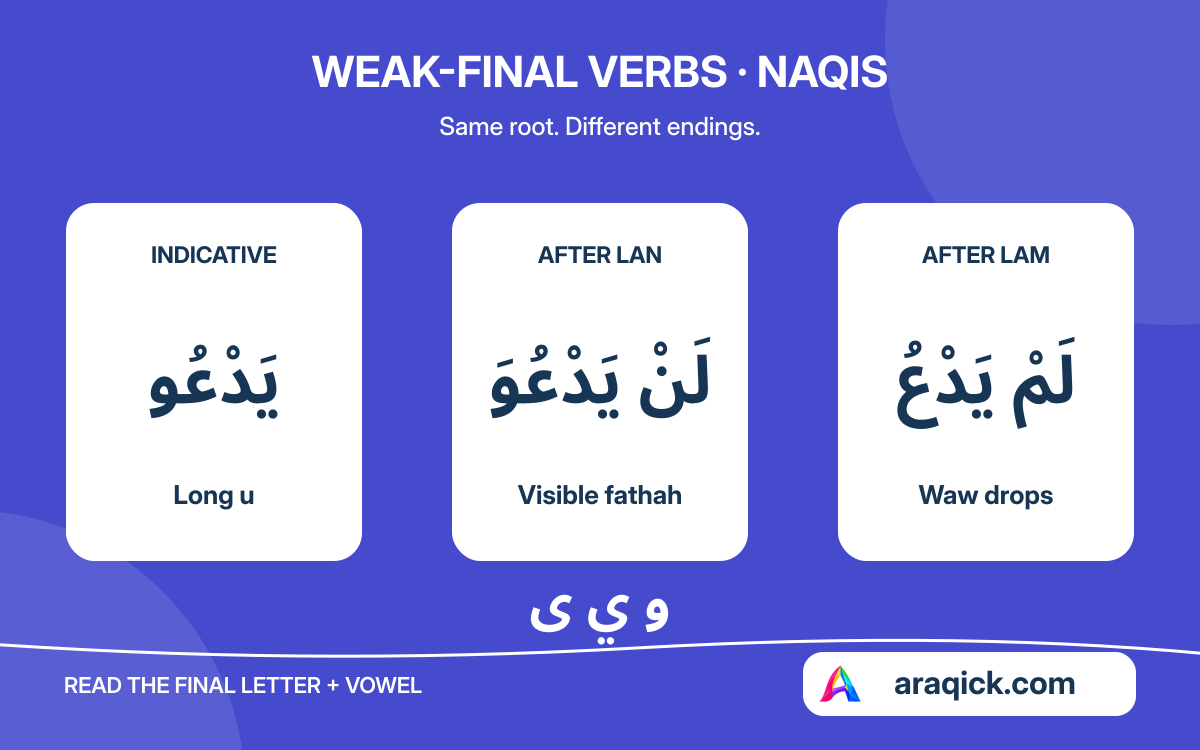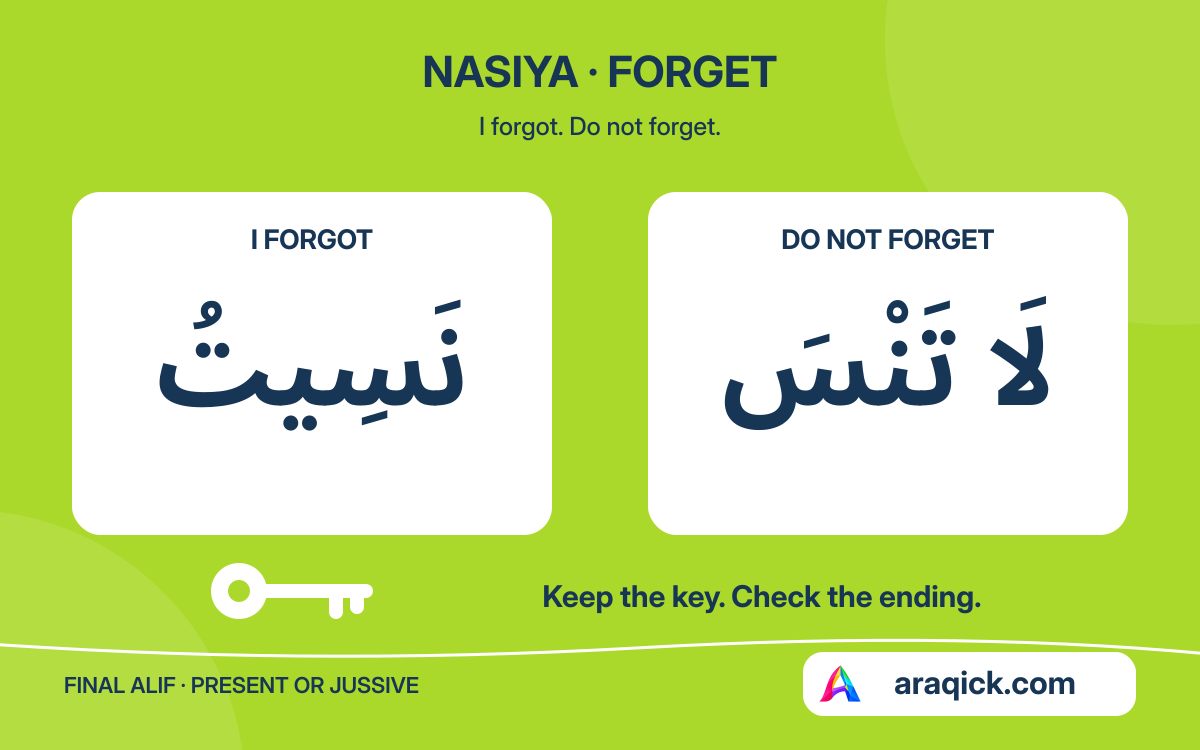
Nasiya means he forgot, nasitu means I forgot, and yansa means he forgets. The verb’s root is ن س ي. Its final weak letter appears differently across these forms, so learn a few complete sentences before extending the pattern. A useful starting point is the everyday reminder do not forget your key.
01Say I forgot a thing
نَسِيتُ مِفْتَاحًا
nasitu miftahan
I forgot a key.
Nasitu is the past I form. Miftahan is what was forgotten and is an accusative direct object. The long i before tu belongs to this past stem.
Compare نَسِيَ (he forgot) and نَسِينَا (we forgot). Do not attach tu directly to unchanged nasiya. These are three related whole forms, not three different verbs.
02Say I forgot to do something
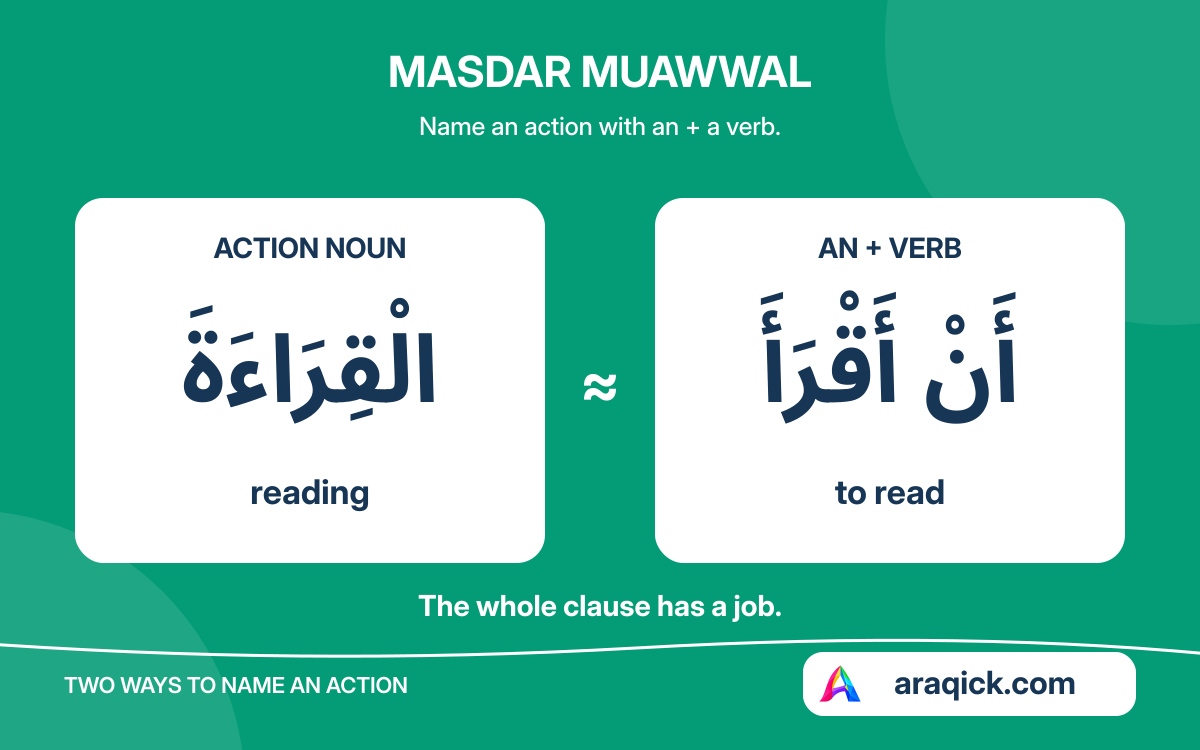
نَسِيتُ أَنْ أُغْلِقَ نَافِذَةً
nasitu an ughliqa nafidhatan
I forgot to close a window.
The an clause names the forgotten action. Ughliqa is subjunctive after an, while nasitu remains the past verb. Nafidhatan is the object of closing, inside that clause.
Compare forgetting a key with forgetting to close a window. A noun fills the object role in the first example; a whole action clause fills it in the second. Review an clauses for this structure.
03Recognise final alif maqsura in yansa
أَنْسَى الْأَسْمَاءَ أَحْيَانًا
ansa alasmaa ahyanan
I sometimes forget names.
Ansa identifies I; yansa identifies he. Their ordinary present forms end in long a, written alif maqsura. The indicative dammah is estimated because this final alif cannot carry that ending visibly.
لَنْ أَنْسَى اسْمَكَ
lan ansa ismaka
I will not forget your name. — to one man
After lan the verb is subjunctive, but the final fathah is also estimated. The visible spelling ansa stays the same. Same spelling does not mean the mood stayed unchanged.
04Remove the final alif in the singular jussive
لَمْ أَنْسَ مِفْتَاحًا
lam ansa miftahan
I did not forget a key.
Lam makes the singular imperfect jussive. Final alif maqsura disappears, leaving short fathah on s. Compare indicative أَنْسَى with jussive أَنْسَ.
The short a remains. Do not replace it with sukun or restore the final alif merely because the simplified reading ansa looks familiar. The Arabic spelling carries the distinction.
05Give a reminder to the intended listener
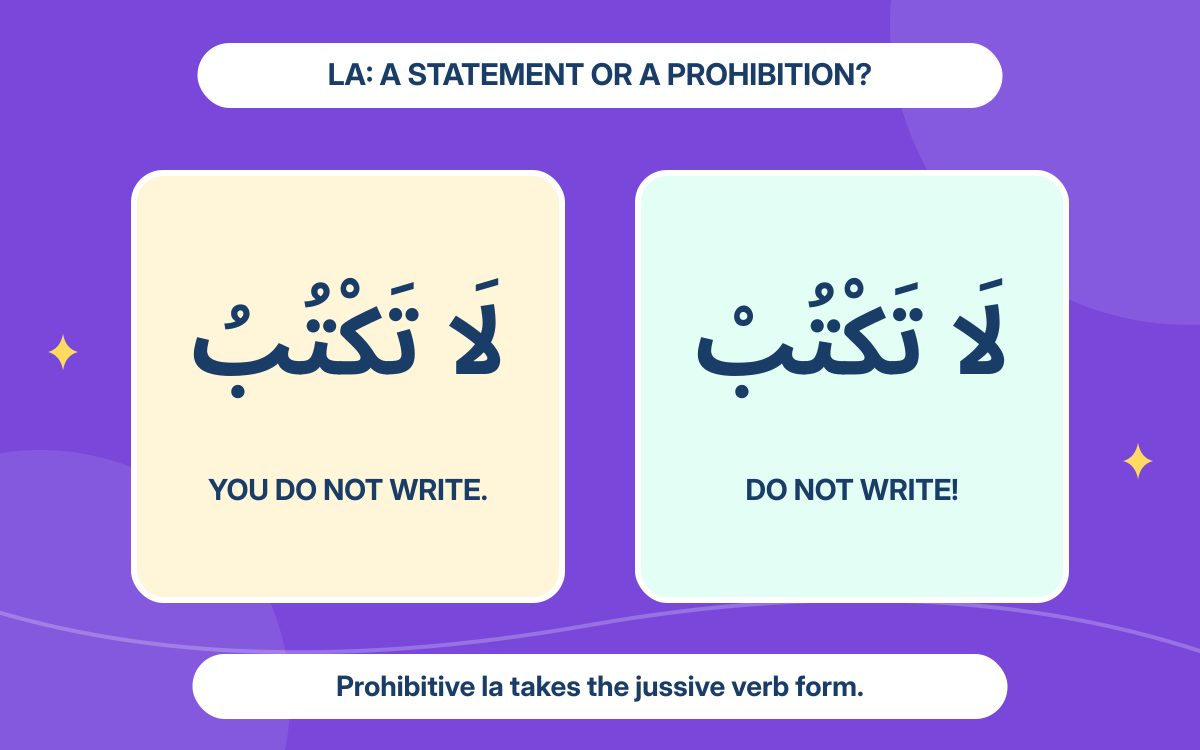
لَا تَنْسَ مِفْتَاحَكَ
la tansa miftahaka
Do not forget your key. — to one man
Prohibitive la uses the same singular weak-letter deletion. To one woman, say لَا تَنْسَيْ مِفْتَاحَكِ. The final listener ya remains in that feminine form, and the possessive ending changes to ki.
The positive masculine command is اِنْسَ (insa, forget). It is different from the prohibition la tansa. Review prohibitive la and weak-final verbs. Plain reading aids simplify vowel length and Arabic sounds; compare the full forms in the reference tables.
What to remember
- Nasitu can take a noun or an an clause naming the forgotten action.
- Yansa keeps its final alif in both indicative and subjunctive forms.
- The singular jussive and command drop the final alif but retain short fathah.
Your reference shelf
Open a guide whenever you need it.
Forget: past and present formsPast and ordinary indicative present; use the lesson for other moods
| Person | Past | Present |
|---|---|---|
| He | نَسِيَ | يَنْسَى |
| They: two men | نَسِيَا | يَنْسَيَانِ |
| They: male or mixed group | نَسُوا | يَنْسَوْنَ |
| She | نَسِيَتْ | تَنْسَى |
| They: two women | نَسِيَتَا | تَنْسَيَانِ |
| They: female group | نَسِينَ | يَنْسَيْنَ |
| You: one man | نَسِيتَ | تَنْسَى |
| You: two people | نَسِيتُمَا | تَنْسَيَانِ |
| You: male or mixed group | نَسِيتُمْ | تَنْسَوْنَ |
| You: one woman | نَسِيتِ | تَنْسَيْنَ |
| You: female group | نَسِيتُنَّ | تَنْسَيْنَ |
| I | نَسِيتُ | أَنْسَى |
| We | نَسِينَا | نَنْسَى |
The dual you form serves two listeners of either gender. Shared spellings depend on context. The present column is indicative; do not use it unchanged after every mood particle.
Forget and do not forgetCheck the listener before choosing a final ya or waw
| Listener | Forget | Do not forget |
|---|---|---|
| One man | اِنْسَ | لَا تَنْسَ |
| One woman | اِنْسَيْ | لَا تَنْسَيْ |
| Two people | اِنْسَيَا | لَا تَنْسَيَا |
| Male or mixed group | اِنْسَوْا | لَا تَنْسَوْا |
| Female group | اِنْسَيْنَ | لَا تَنْسَيْنَ |
The feminine singular indicative and female-group indicative both appear as تَنْسَيْنَ. The singular loses mood nun after a jussive particle; the female group retains subject nun. The retained ya in the feminine singular prohibition is the listener ending, so it must not be deleted by copying the masculine singular rule.
Sources & further learning
References for the language explanations and learning guidance.