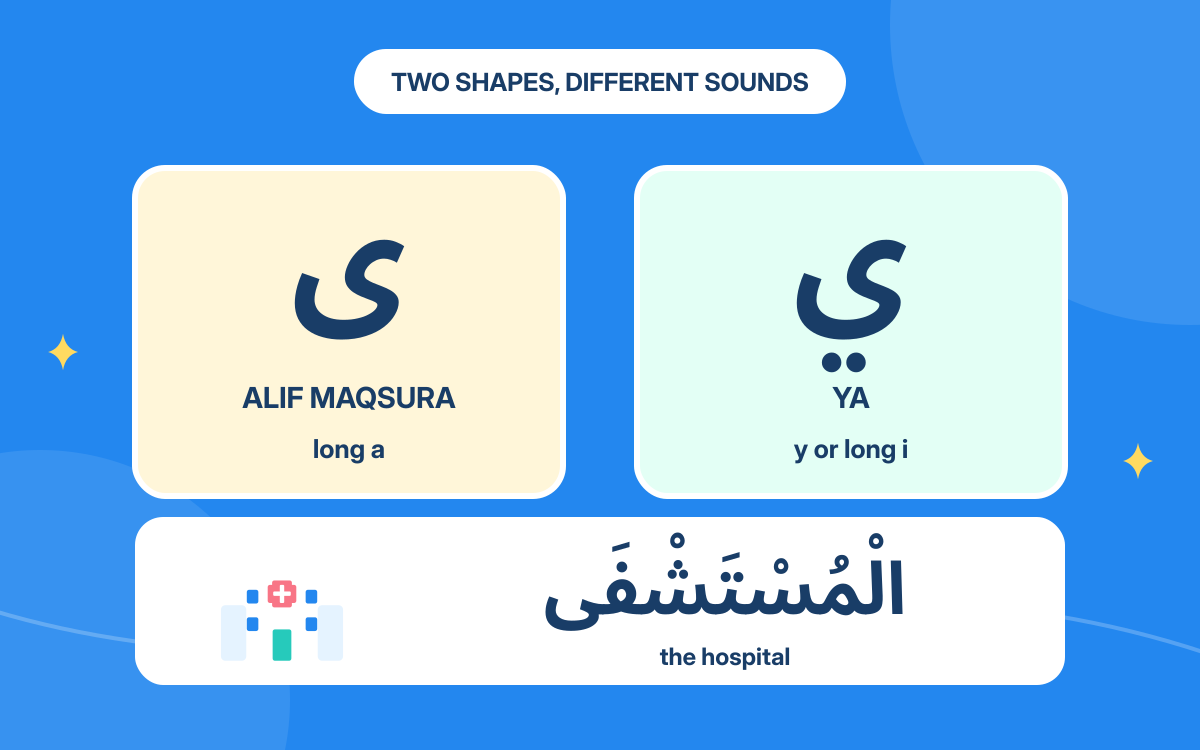
Two final letters can look almost identical: ى and ي. In the spelling used here, the dots distinguish alif maqsura from ya. Their sounds differ too. Once you recognise the letters, a noun such as “the hospital” also explains why a grammatical ending can exist without a visible vowel.
01Compare the final letters
عَلَى
ala
On
فِي
fi
In
Alif maqsura ى represents a long a. Ya ي represents a long i in fi; elsewhere it can represent the consonant y. Do not read ala as ali. The reading aids use one vowel letter even when the Arabic vowel is long.
02Read the hospital with a final long a
الْمُسْتَشْفَى كَبِيرٌ
almustashfa kabirun
The hospital is big.
The final ى in almustashfa is alif maqsura. Fathah appears on the preceding fa, and the word ends in a long a. Do not add a spoken u after that a.
Hospital is grammatically masculine here, so kabirun is masculine. Alif maqsura does not make every noun feminine: some feminine words end with it, but so do masculine nouns and names. Learn gender with the word.
04Find genitive case after fi
هُوَ فِي الْمُسْتَشْفَى
huwa fi lmustashfa
He is in the hospital.
Fi governs a genitive noun. Almustashfa therefore has an estimated kasrah, but you neither write kasrah on its final alif nor change the word to almustashfi. Its final long a stays.
Compare the three roles: the hospital can be the subject, the thing visited, or the place after fi. Nominative, accusative and genitive are different cases even though this definite noun looks the same in all three.
05Check spelling and grammar separately
First identify the written letter and read the word. Then use the surrounding sentence to work out its role. Do not invent a visible ending merely to display that role.
These examples consistently use dotted final ya. Some regional printing traditions omit those dots, so an undotted shape in another text is not always enough by itself to identify alif maqsura. Context and the word’s established spelling matter.
Our hospital examples include the definite article. Indefinite nouns ending in alif maqsura can involve tanween and different connected readings; do not extend the exact pronunciation of this definite form to every example.
What to remember
- In this spelling system, ى is alif maqsura; dotted ي is ya.
- Alif maqsura represents long a, but does not by itself determine a noun’s gender.
- الْمُسْتَشْفَى changes grammatical case without displaying a different final vowel.
Your reference shelf
Open a guide whenever you need it.
One definite noun, three grammatical casesReview the hidden endings and the distinction between a letter and a noun type
| Example | Role | Estimated sign |
|---|---|---|
| الْمُسْتَشْفَى كَبِيرٌ | Nominative subject | Dammah |
| زُرْتُ الْمُسْتَشْفَى | Accusative direct object | Fathah |
| فِي الْمُسْتَشْفَى | Genitive after a preposition | Kasrah |
The noun type is called الِاسْمُ الْمَقْصُورُ. A declined noun ending in a fixed long alif has estimated case signs. The category can include nouns written with final ا as well as ى; the letter shape alone is not the entire definition.
The preposition عَلَى contains alif maqsura, but it is not a maqsur noun: it is a particle. Keep the name of a written letter separate from the grammatical class of a word.
When practising these examples, keep the final long a of the hospital. Changing to a pause does not make that vowel disappear in the way a final short case vowel may disappear.
Sources & further learning
References for the language explanations and learning guidance.