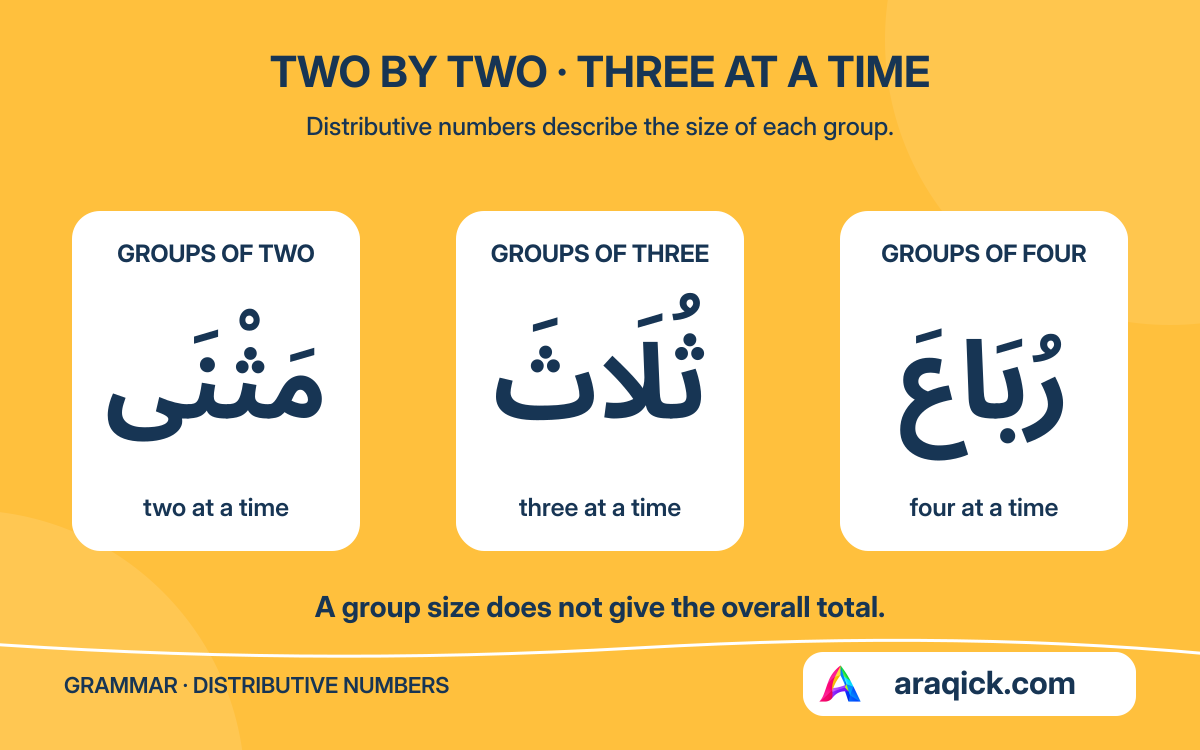
Mathna means two by two or in pairs. It describes how a larger group is arranged, rather than saying that only two people exist. Thulath and ruba extend the same idea to groups of three and four. These distributive words have their own grammar, separate from ordinary counting.
01Describe entry in pairs
دَخَلَ الْمُشَارِكُونَ مَثْنَى
dakhala almusharikuna mathna
The participants entered in pairs.
Mathna tells us how the participants entered: two at a time. It does not tell us the total number of participants. There could be several pairs.
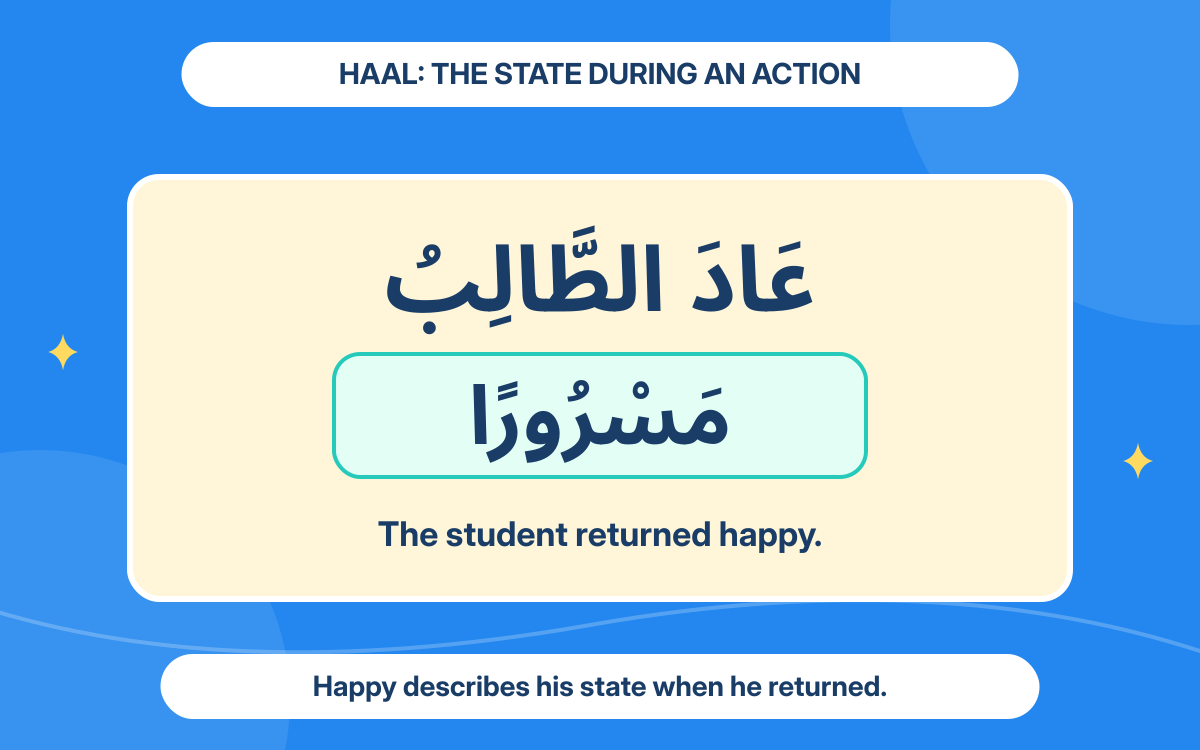
In this sentence mathna is a haal, a circumstance describing the participants during the action. Its accusative ending is estimated because its final alif maqsurah cannot display a short case vowel. See haal for that sentence role.
02Change the group size to three
دَخَلَ الْمُشَارِكُونَ ثُلَاثَ
dakhala almusharikuna thulatha
The participants entered three at a time.
Thulath expresses repeated groups of three. In this haal position it ends in a single fathah: thulatha. It is not the same form as the ordinary number thalathah.
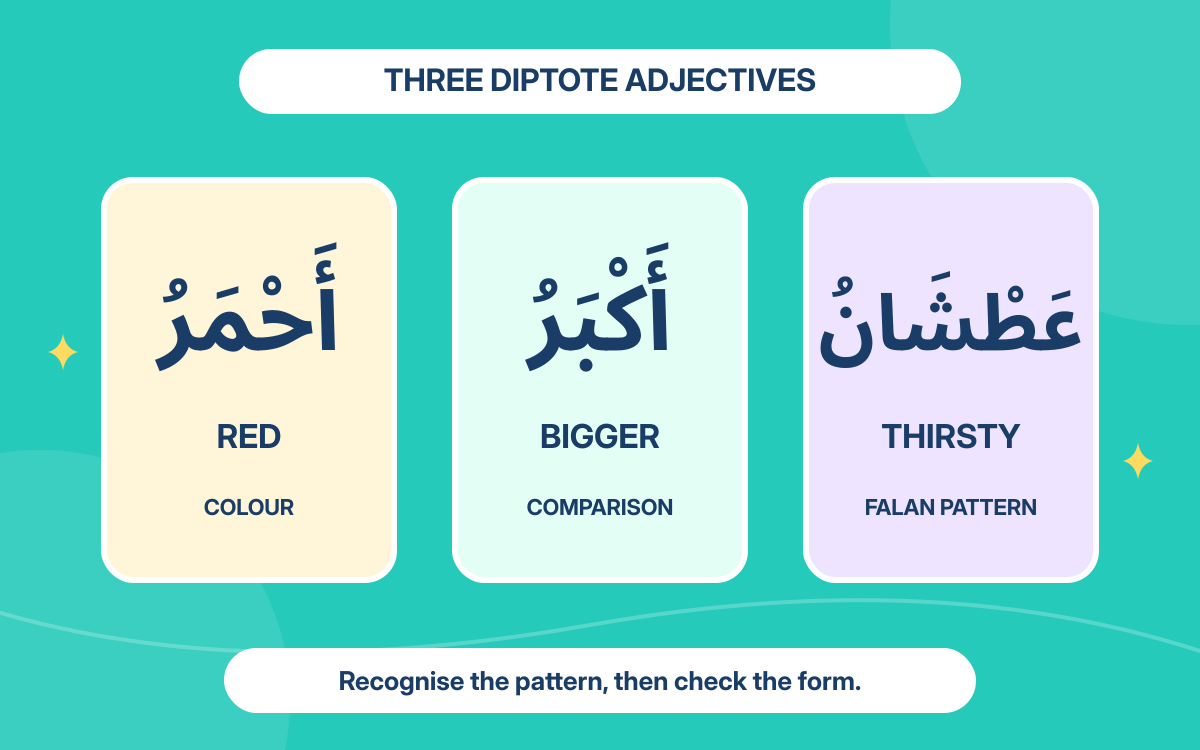
These distributive adjectives are traditionally diptotes because of their adjectival use and modified number meaning. They do not take ordinary case tanwin in the forms taught here. Compare diptote adjectives.
03Use four at a time in a different action
جَلَسَ الْمُشَارِكُونَ رُبَاعَ
jalasa almusharikuna rubaa
The participants sat in groups of four.
Ruba describes the arrangement during sitting. Like thulath, it has a visible accusative fathah in this sentence. The short final vowel belongs to its grammatical role, not to an extra counted noun.
The useful patterns include mathna and the fual-shaped thulath and ruba. Learn these attested forms as a small set. Do not manufacture distributive words for every number merely by changing the vowels of an ordinary numeral.
04Keep the distributive word with a female group
دَخَلَتِ الطَّالِبَاتُ مَثْنَى
dakhalati attalibatu mathna
The female students entered in pairs.
The verb is feminine because the students are female. Mathna remains the same distributive word. Do not replace it with a regular feminine dual noun ending or add ta marbutah to it.
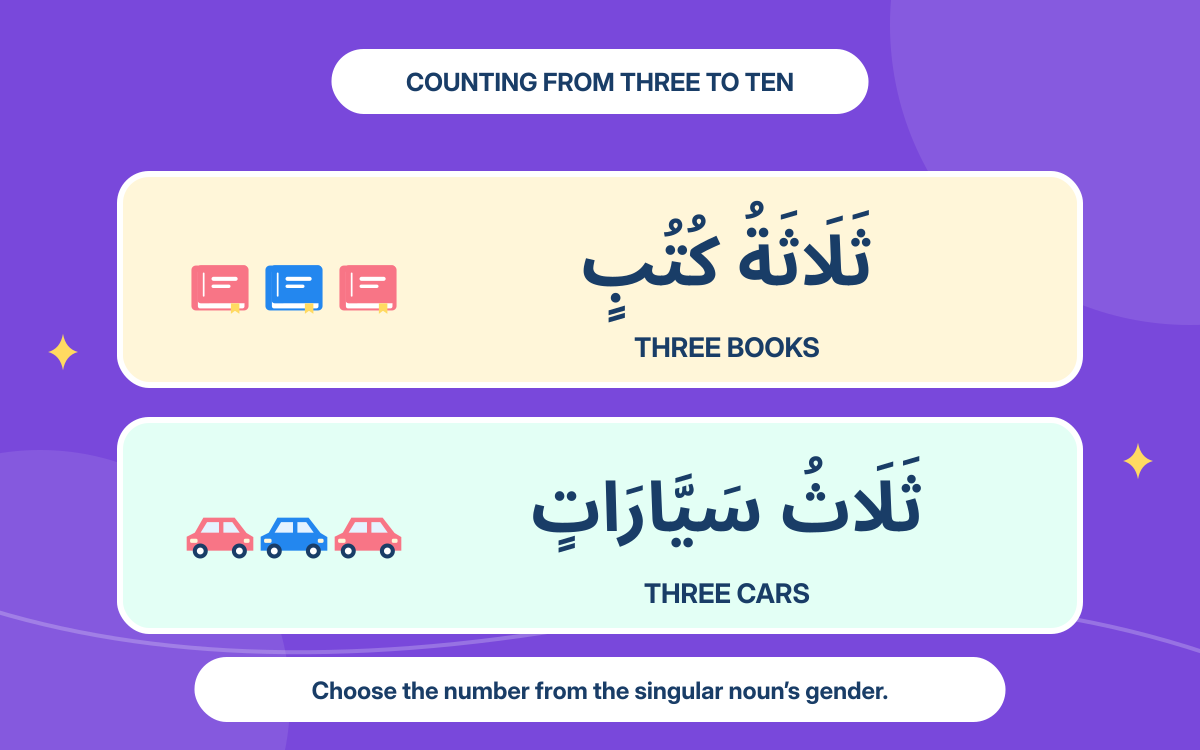
The ordinary three-to-ten counting rule concerns a number paired with a counted noun. Here mathna describes distribution. Keep these constructions separate, even though both answer a question involving numbers.
05Separate exactly two from two at a time
دَخَلَ مُشَارِكَانِ
dakhala musharikani
Two participants entered.
This sentence gives the total number entering: two participants. It does not explicitly describe a larger group entering in repeated pairs. The dual noun musharikani supplies that total.
Contrast it with the first sentence, which says participants entered mathna. Also distinguish three at a time from ثَلَاثَةُ مُشَارِكِينَ, three participants. Review ordinary counting alongside the reference comparison. Plain reading aids simplify vowel length; the Arabic forms show the distinct patterns.
What to remember
- Mathna describes pairs, not a total of exactly two.
- Thulath and ruba describe groups of three and four.
- In these haal examples, the distributive words are accusative and do not take ordinary tanwin.
Your reference shelf
Open a guide whenever you need it.
Three useful distributive formsThe forms below are used in the accusative haal examples
| Group size | Arabic | Reading aid | Meaning |
|---|---|---|---|
| Two | مَثْنَى | mathna | Two by two / in pairs |
| Three | ثُلَاثَ | thulatha | Three at a time |
| Four | رُبَاعَ | rubaa | Four at a time |
Mathna has an estimated accusative ending; thulatha and ruba have visible final fathah. None takes ordinary case tanwin here.
Total number or repeated group size?A number and a distribution answer different questions
| Expression | What it tells you | What it does not specify |
|---|---|---|
| دَخَلَ مُشَارِكَانِ | Two participants in total | Whether they are one pair among a larger procession |
| دَخَلَ الْمُشَارِكُونَ مَثْنَى | Participants arranged in pairs | The overall number of participants |
| دَخَلَ ثَلَاثَةُ مُشَارِكِينَ | Three participants in total | Repeated groups of three |
| دَخَلَ الْمُشَارِكُونَ ثُلَاثَ | Participants arranged three at a time | The overall number of participants |
Sources & further learning
References for the language explanations and learning guidance.