An Arabic sentence can tell you what someone did and what state they were in while doing it. This extra state description is called haal. Start with a student returning happy, then compare the state description with an adjective attached to the student’s noun.
01Ask what state the person was in
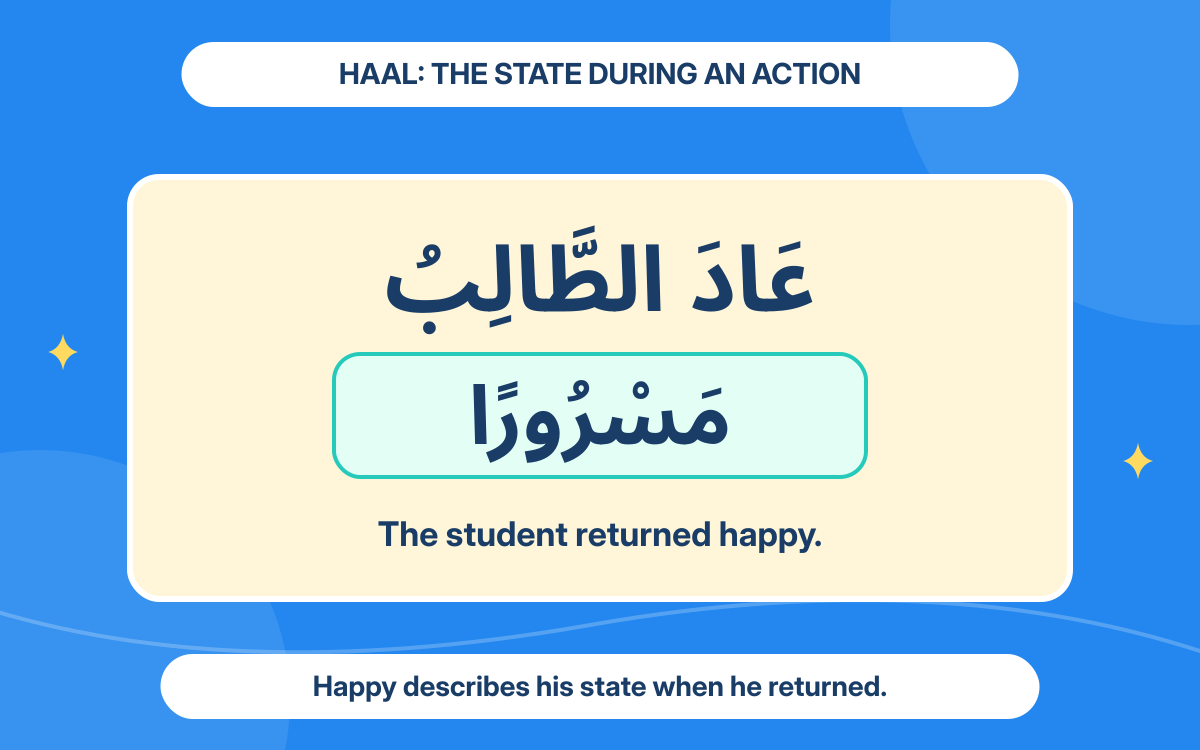
A haal, حَالٌ, describes someone’s state during the action. Ask: how did the student return?
عَادَ الطَّالِبُ مَسْرُورًا
ada ttalibu masruran
The male student returned happy.
Masruran tells us he was happy when he returned. It adds a state description to the complete sentence: the student returned. It does not identify a second person or something he returned.
02Keep the haal indefinite and accusative
In this basic pattern, the haal is an indefinite accusative description. The person it describes is its owner, صَاحِبُ الْحَالِ, and is usually definite.
عَادَ الطَّالِبُ مَسْرُورًا
ada ttalibu masruran
The male student returned happy.
Attalibu is the definite nominative subject. Masruran has no al and ends in accusative an. It does not copy the subject’s nominative ending. These are singular examples; other forms can mark accusative differently.
03Compare the state with an adjective
An adjective within a noun phrase agrees with its noun’s case and definiteness. Compare the same student and description.
عَادَ الطَّالِبُ الْمَسْرُورُ
ada ttalibu lmasruru
The happy male student returned.
عَادَ الطَّالِبُ مَسْرُورًا
ada ttalibu masruran
The male student returned happy.
Almasruru is a definite nominative adjective describing the student in the noun phrase. Masruran is an indefinite accusative haal telling his state during the return. An adjective need not describe a permanent quality; the grammatical construction is what matters here.
04Match the person’s gender
A descriptive haal agrees with the person in gender. For a single female student, use the feminine description.
عَادَتِ الطَّالِبَةُ مَسْرُورَةً
adati ttalibatu masruratan
The female student returned happy.
Masruratan remains indefinite and accusative; ة marks the feminine form. The subject attalibatu is nominative. In connected reading, the verb’s feminine t takes a helping i before the definite article: adati ttalibatu. The vowelled example shows that connected form.
05Distinguish the person’s state from the action noun
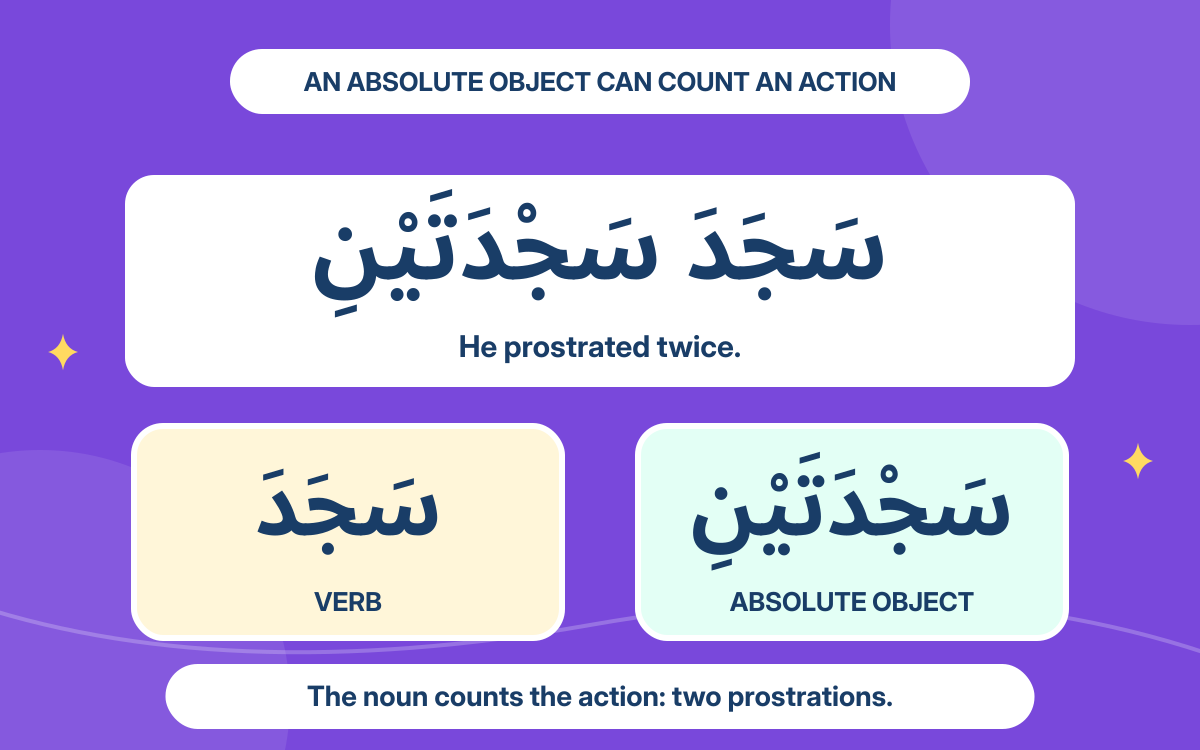
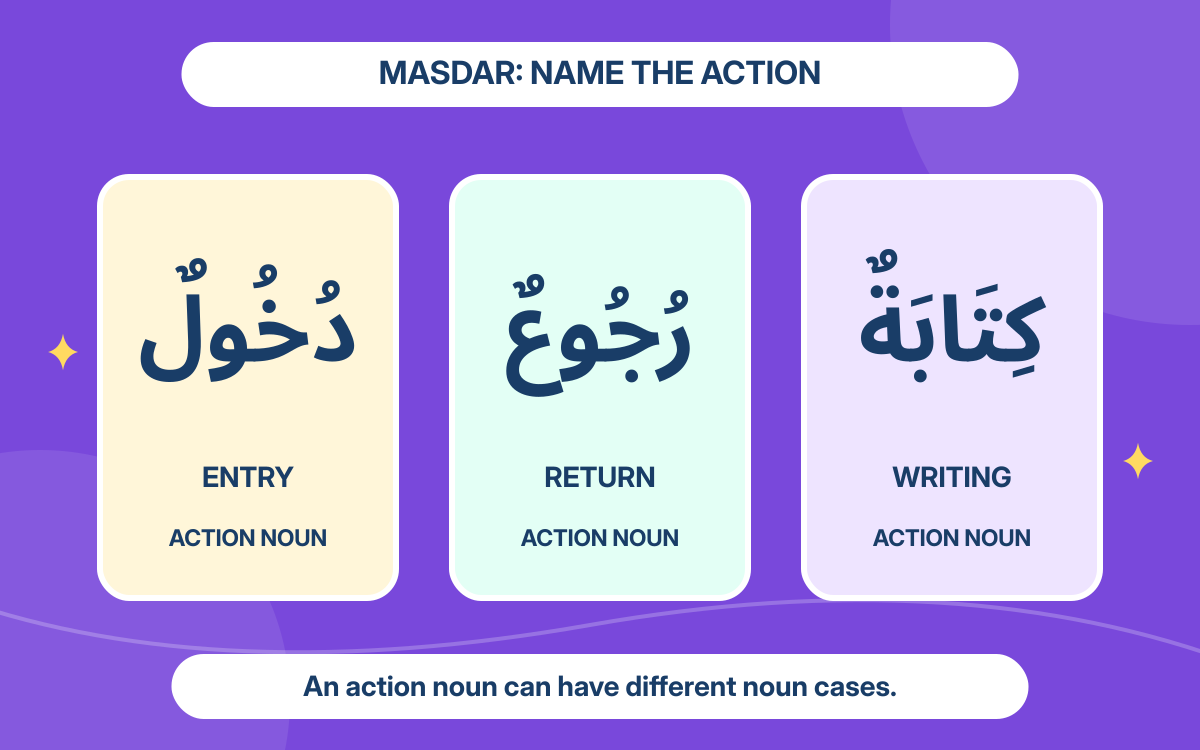
A haal describes the person. An absolute object names the action itself to emphasise it or describe its kind or number.
جَلَسَ الطَّالِبُ مُنْتَبِهًا
jalasa ttalibu muntabihan
The male student sat attentively.
جَلَسَ الطَّالِبُ جُلُوسًا
jalasa ttalibu julusan
The male student sat, with the sitting action emphasised.
Muntabihan describes the student’s attentive state, so it is a haal. Julusan names sitting, so it is an absolute object. Both end in an here; the ending alone cannot tell their roles. To build our attentive sentence, put the verb first, then the student, then the state.
What to remember
- A simple haal adds a person’s state during an action; its owner is usually definite.
- In this basic pattern, the haal is indefinite and accusative and agrees with the person’s gender.
- An adjective follows its noun’s case and definiteness; an absolute object names the action rather than the person’s state.
Your reference shelf
Open a guide whenever you need it.
Compare state, adjective and action nounCheck meaning together with the endings
| Role | Arabic model | What it describes |
|---|---|---|
| Haal | عَادَ الطَّالِبُ مَسْرُورًا | The student’s happy state during the return. |
| Adjective | عَادَ الطَّالِبُ الْمَسْرُورُ | The happy student as a noun phrase. |
| Absolute object | جَلَسَ الطَّالِبُ جُلُوسًا | The sitting action, emphasised. |
This guide introduces a simple description of one person. Haal can also take other forms, including a clause; those forms need additional rules. The basic indefinite description and usually definite owner are a starting pattern, not a claim that every possible haal has the same surface form.
Do not identify a haal just because a word is accusative or its English translation is an adverb. Ask what it describes: the person’s state, the thing receiving the action, or the action itself.
Sources & further learning
References for the language explanations and learning guidance.