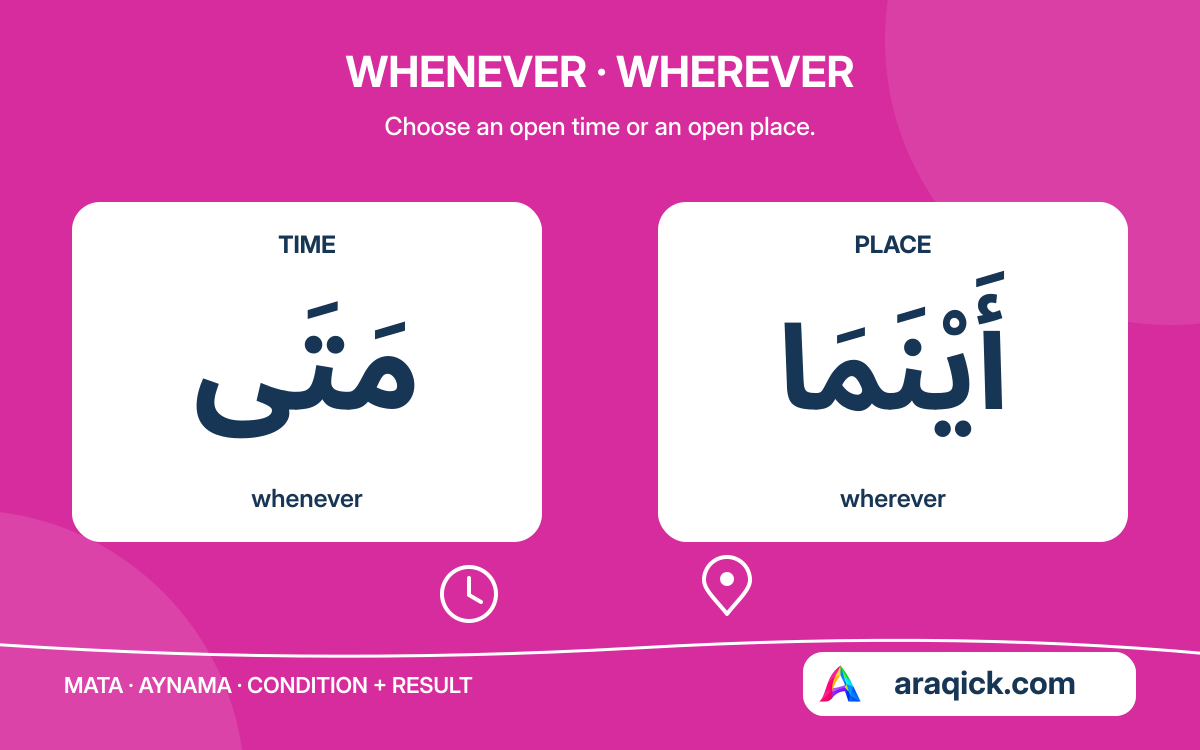
Conditional mata leaves a time open: whenever. Conditional aynama leaves a place open: wherever. Each connects that open circumstance to a result. These words are useful for arrangements, repeated situations and general promises, but you need to distinguish a condition from a question about time or place.
01Use mata for an open time
مَتَى تَطْرُقْ بَابِي أَفْتَحْ لَكَ
mata tatruq babi aftah laka
Whenever you knock on my door, I will open it for you.
Mata introduces the time at which the condition is fulfilled. The sentence does not name a particular hour. Tatruq is the condition and aftah gives the response. Laka means for you, addressed here to one man.
02Use aynama for an open place
أَيْنَمَا تَجْلِسْ أَجْلِسْ بِجَانِبِكَ
aynama tajlis ajlis bijanibika
Wherever you sit, I will sit beside you.
Aynama makes the location unrestricted. It could be the garden, the waiting room or another place. In this sentence, the first verb addresses you and the second begins with the I prefix. Bijanibika identifies the relationship between our seats.
Conditional ayna without the added ma also occurs. Aynama is a useful starting form because it is easy to recognise as wherever.
03Make the simple present pair jussive
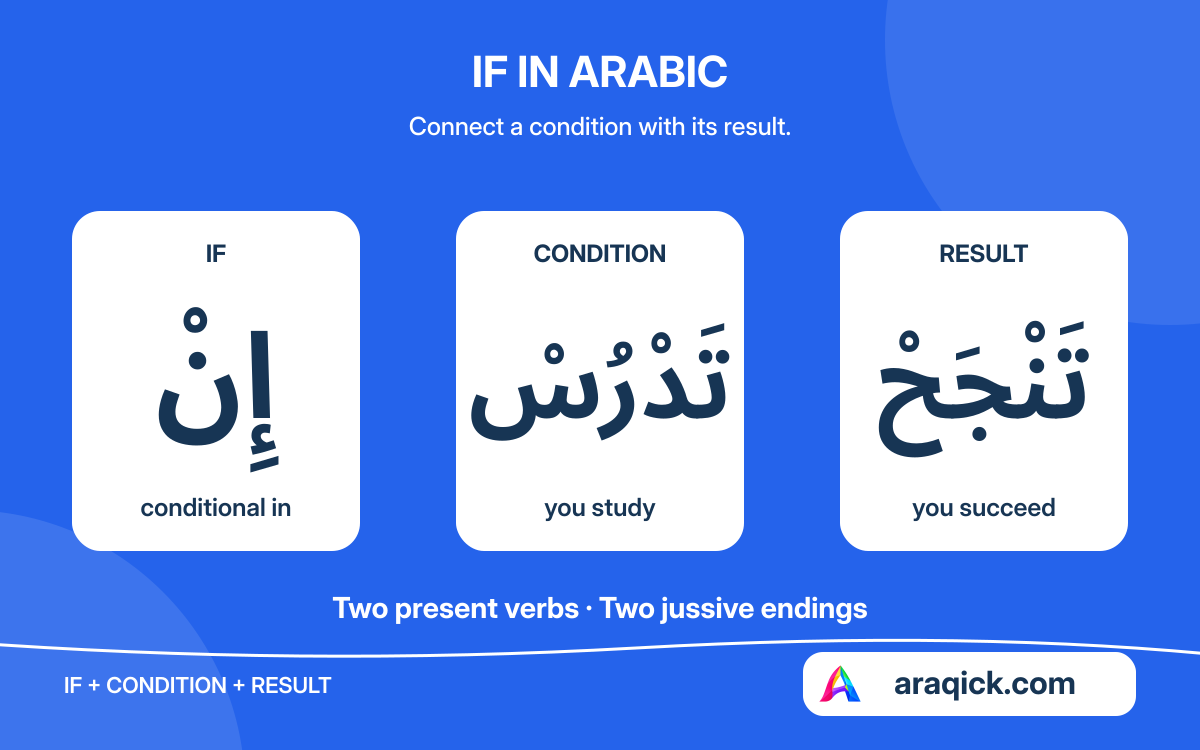
Conditional mata and aynama govern two verbs in the basic structure, like conditional in. Compare تَجْلِسُ أَجْلِسُ with تَجْلِسْ أَجْلِسْ. Both regular present verbs lose final damma and take sukun.
مَتَى تَحْضُرْ نَبْدَأْ
mata tahdur nabda
Whenever you arrive, we will begin.
The result has we as its subject. Do not copy the condition’s person prefix into the result unless the meaning requires the same subject.
04Ask a question without creating a condition
مَتَى تَحْضُرُ؟
mata tahduru
When will you arrive?
أَيْنَ تَجْلِسُ؟
ayna tajlisu
Where do you sit?
These questions ask for a time or place. They do not provide a dependent result, and the verbs keep their ordinary present endings. A question mark can help in writing, but the clause relationship is the stronger grammatical clue.
05Build a complete arrangement
مَتَى تَحْضُرْ فَأَنَا جَاهِزٌ
mata tahdur fa ana jahizun
Whenever you arrive, I am ready. — male speaker
A nominal result needs linking fa. Jahizun remains a nominative predicate inside that result. Compare the direct verbal result nabda in the earlier example.
Use the fa guide for other result types. For an expected event introduced by when, compare idha. Keep time and place words separate from the person word man.
What to remember
- Conditional mata means whenever; aynama means wherever.
- The two simple present verbs are jussive even when their subjects differ.
- When and where questions have a different structure; nominal results need fa.
Your reference shelf
Open a guide whenever you need it.
Time, place and questionsCompare the same vocabulary in different jobs
| Job | Arabic | Meaning |
|---|---|---|
| Time condition | مَتَى تَحْضُرْ نَبْدَأْ | Whenever you arrive, we begin. |
| Time question | مَتَى تَحْضُرُ؟ | When will you arrive? |
| Place condition | أَيْنَمَا تَجْلِسْ أَجْلِسْ | Wherever you sit, I will sit. |
| Place question | أَيْنَ تَجْلِسُ؟ | Where do you sit? |
Jussive verb pairsLook at both endings and both subjects
| Condition | Result | Subjects |
|---|---|---|
| تَطْرُقْ | أَفْتَحْ | You knock; I open |
| تَجْلِسْ | أَجْلِسْ | You sit; I sit |
| تَحْضُرْ | نَبْدَأْ | You arrive; we begin |
These examples address one man. Other persons require their own prefixes and endings; retain the conditional structure while changing the person.
Sources & further learning
References for the language explanations and learning guidance.