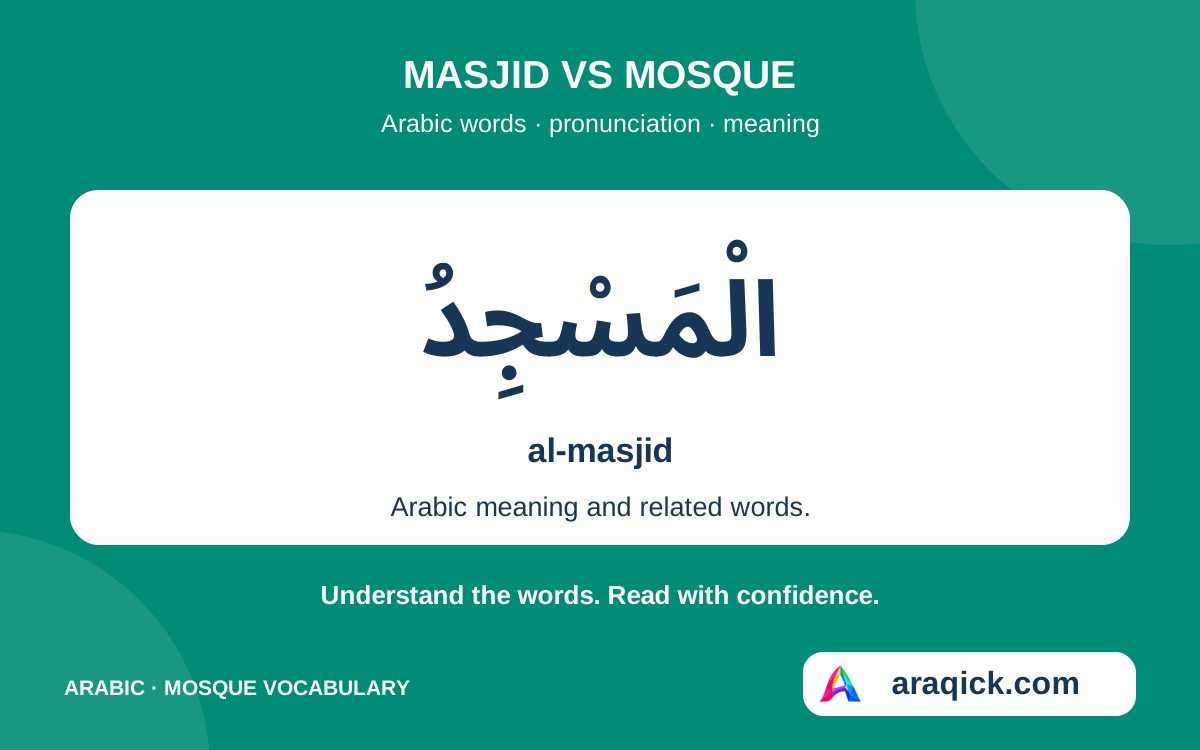
Masjid, مَسْجِدٌ, is the Arabic word for a mosque; mosque is its usual English equivalent. Its word family relates to prostration, and the Arabic plural is مَسَاجِدُ, masaajid. The two names do not by themselves identify different kinds of building.
01Masjid and mosque usually name the same place
Masjid is the Arabic word commonly translated as mosque in English. The comparison is mainly between languages, rather than between two required types of building. An English notice saying “mosque entrance” and an Arabic notice referring to a masjid can concern the same place.
In English, a community may keep masjid in a proper name while using mosque in an explanation. That choice alone does not make the place a different category. Learn which language a sentence is using, then identify the intended place. Avoid treating an ordinary English translation as a claim about a building’s religious status.
02Masjid belongs to the prostration word family
The Arabic spelling is مَسْجِدٌ. Its root letters are س ج د, s-j-d, associated with prostration. The noun is a place word: “place of prostration” helps explain its formation, while “mosque” is the normal English equivalent in many everyday contexts.
Related vocabulary includes سَجَدَ, sajada, “he prostrated,” and سُجُودٌ, sujuud at a pause, “prostration.” A building and an action can share root letters without being interchangeable. Our Arabic roots guide shows how patterns help turn a root connection into a usable word distinction.
03Say masjid without an extra vowel
Read masjid approximately as mas-jid. The first vowel is short a and the second is short i. The sukun on sin in مَسْجِدٌ indicates that no vowel follows that consonant. Keep the s and j adjacent rather than inserting a new syllable such as “masa-jid” into the singular.
The full standalone form masjidun includes the grammatical ending; a pause reading is masjid. When the definite article is added, الْمَسْجِدُ is almasjid at a pause. Mim is a moon letter, so the l in al remains audible. Compare our sun and moon letters guide for this article pattern.
04Masaajid is the Arabic plural
The plural of masjid is مَسَاجِدُ, masaajid when paused. Its vowels change inside the word: this is a broken plural, not a form made by simply adding an English s. The middle aa is long, unlike the short a in the singular masjid.
An English sentence can use “mosques”; an Arabic sentence uses the appropriate Arabic plural form. In Quran 2:114 the plural occurs with an accusative ending. That ending reflects the sentence, while the singular–plural relationship stays the same. See Arabic plurals to recognise this pattern without assuming every noun uses it.
05Context can bring out the broader place meaning
In Sahih al-Bukhari 335, masjid is used in a statement about the earth being made a place for prayer. That wording helps illustrate the noun’s broader place meaning. It does not turn every occurrence into the name of a specially constructed building.
In an address, a community announcement or a sentence about entering a building, “mosque” will often be the natural translation. In a broader passage, “place of prayer” may fit better. Translation should follow the context. A short root definition is useful, but it cannot settle every sentence or the separate practical questions associated with prayer spaces.
06Keep the place, features and roles separate
An original learning sentence is هَذَا مَسْجِدٌ, “This is a mosque.” Compare أَيْنَ بَابُ الْمَسْجِدِ؟, “Where is the mosque door?” The second example adds a building feature rather than changing the meaning of masjid. Neither sentence is a quoted devotional formula.
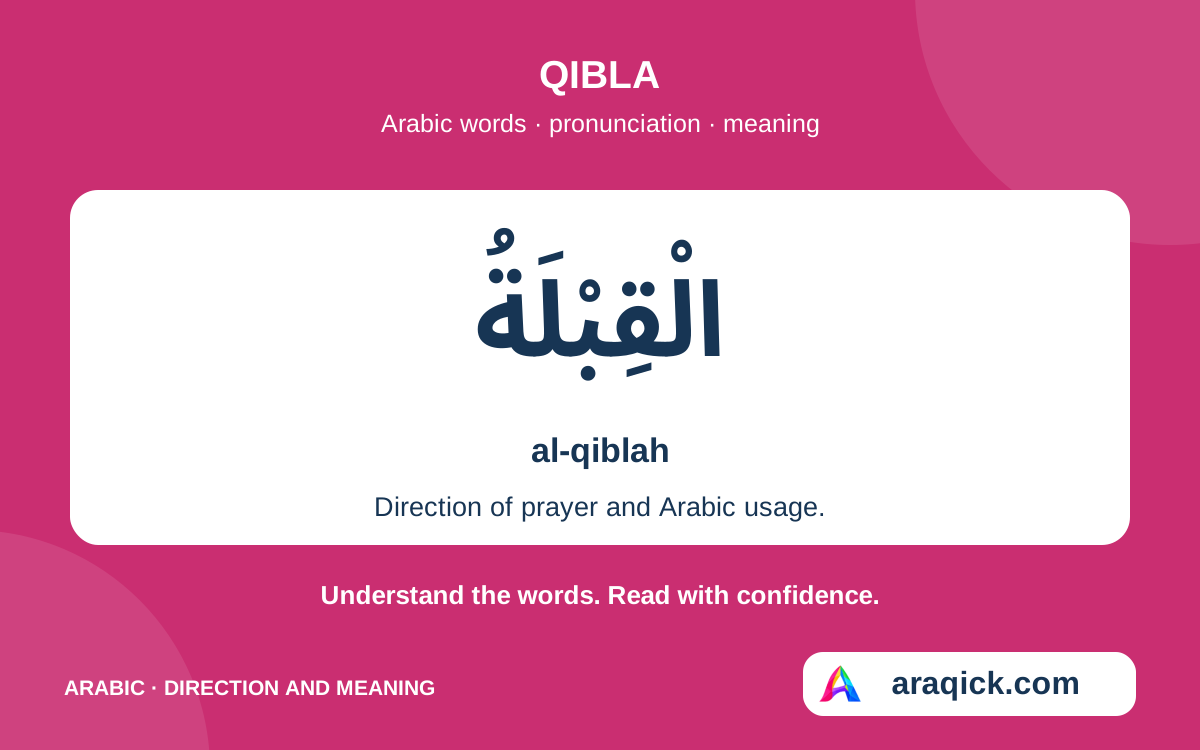
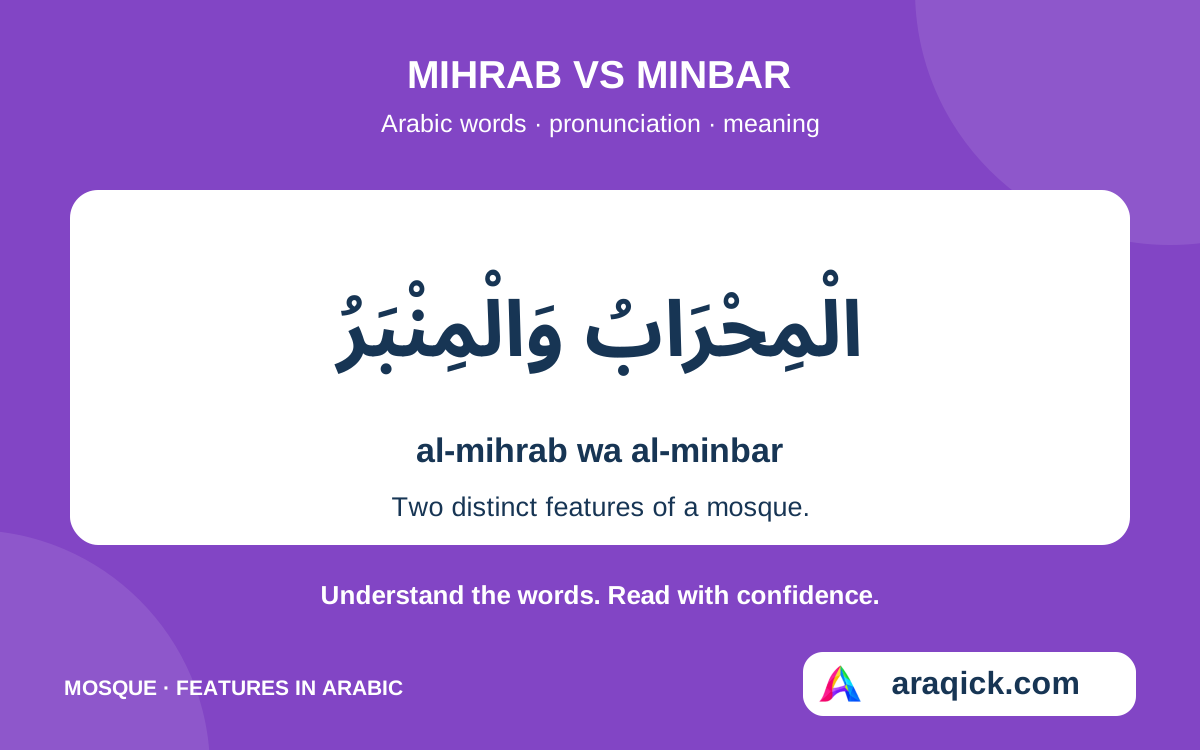
Inside mosque vocabulary, qibla names direction, mihrab commonly marks that direction, and minbar names a pulpit. People’s roles have their own terms too. Continue with qibla, mihrab and minbar and imam, muadhdhin and khatib to keep the place and its associated vocabulary clear.
What to remember
- Masjid is Arabic and mosque is its usual English equivalent.
- Masjid belongs to the s-j-d family, alongside words for prostration.
- Masaajid is the Arabic broken plural; the middle aa is long.
Your reference shelf
Open a guide whenever you need it.
Masjid and its related formsCompare the place noun, its plural and the action words. Noun readings use the pause form.
| Arabic | Plain-letter reading | Meaning or use |
|---|---|---|
| مَسْجِدٌ | masjid | A mosque; place of prostration |
| الْمَسْجِدُ | almasjid | The mosque |
| مَسَاجِدُ | masaajid | Mosques; broken plural of masjid |
| سَجَدَ | sajada | He prostrated |
| سُجُودٌ | sujuud | Prostration |
| سَجْدَةٌ | sajdah | A single prostration |
Useful mosque phrases and distinctionsUse a whole phrase to identify the place, a feature or a direction. Complete phrases below pause at the end.
| Arabic | Plain-letter reading | Meaning or use |
|---|---|---|
| هَذَا مَسْجِدٌ | haadhaa masjid | This is a mosque |
| أَيْنَ بَابُ الْمَسْجِدِ؟ | ayna baabu-lmasjid | Where is the mosque door? |
| بَابُ الْمَسْجِدِ | baabu-lmasjid | The mosque door |
| قِبْلَةٌ | qiblah | Prayer direction |
| مِحْرَابٌ | mihraab | A feature commonly marking the qibla in a mosque |
| مِنْبَرٌ | minbar | Pulpit |
Sources & further learning
References for the language explanations and learning guidance.