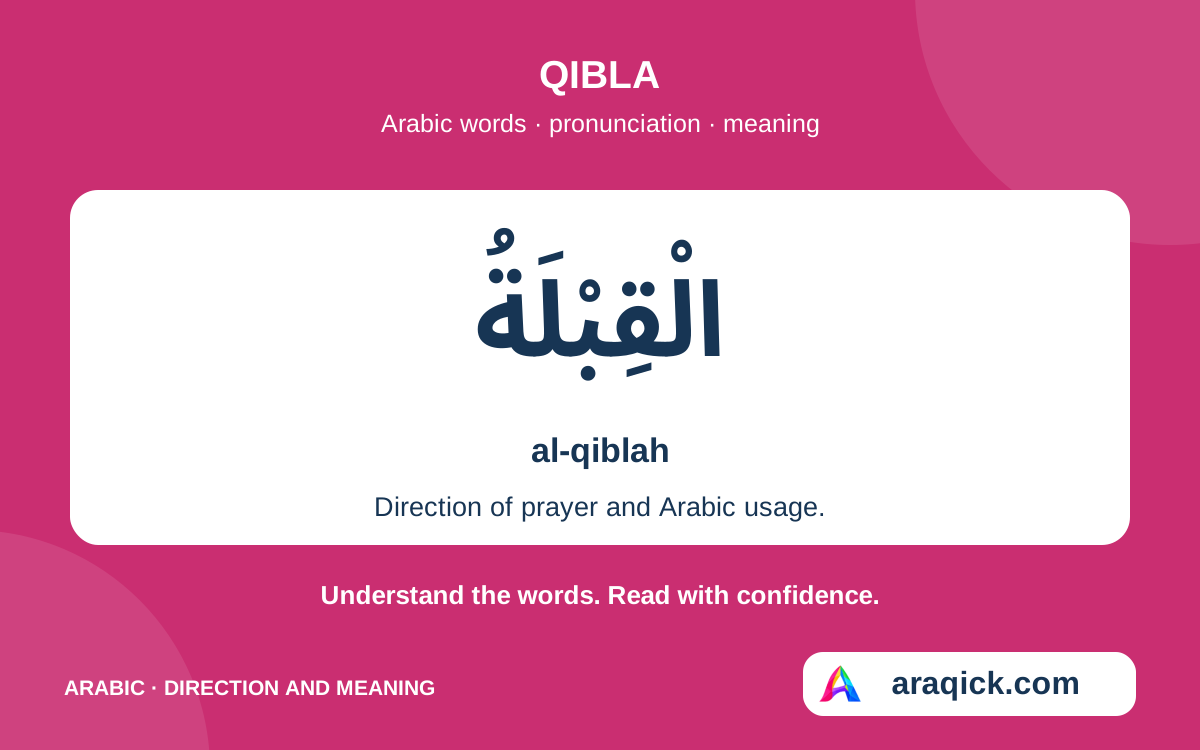
Qibla, قِبْلَةٌ, means the direction faced in prayer, specifically towards the Kaaba in Islamic usage. Qibla and qiblah are English spellings of the same Arabic word. It names a direction, while the Kaaba is the focal building and a mihrab can mark the direction inside a mosque.
01Qibla names the direction faced in prayer
The Arabic noun قِبْلَةٌ means the direction faced, particularly the direction of Muslim prayer towards the Kaaba in Makkah. It is a direction term. The Kaaba is the focal building; qibla describes the orientation towards it. Keeping those two roles separate makes signs and explanations easier to understand.
Qibla does not mean “east” or “west” by itself. The geographical bearing depends on where a person is. An English instruction such as “check the qibla direction” asks about orientation from the current location, rather than naming one compass point for the entire world.
02Read the spelling qaf, ba, lam and ta marbutah
The fully marked spelling is قِبْلَةٌ. Qaf carries a short i vowel, ba has sukun, and lam carries a short a. The final letter is ta marbutah. A simple pause reading is qib-lah, with no extra vowel between b and l. Qaf is produced farther back in the mouth than English k.
Qibla and qiblah are alternative English spellings of the same noun. The added h commonly signals the pause pronunciation of ta marbutah. It does not create a second Arabic word. Our Arabic word families guide helps explain why Arabic spelling is more reliable than varying roman spellings.
03The final t appears in connected forms
A fully inflected standalone form can be read qiblatun. The t belongs to ta marbutah when the ending is pronounced. At a pause the usual reading becomes qiblah, so the form can sound different without its basic meaning changing.
For example, جِهَةُ الْقِبْلَةِ means “the direction of the qibla.” Read the connected phrase approximately as jihatu-lqiblah when pausing at its end. The first noun’s ta marbutah is heard as t because the words are connected; the second noun is the paused word. Learn the whole phrase instead of giving every final letter one fixed pronunciation.
04Distinguish qibla, Kaaba and mihrab
These words are connected by prayer context, but they identify different things. الْكَعْبَةُ names the Kaaba. الْقِبْلَةُ names the prayer direction. A mosque’s مِحْرَابٌ, mihrab, commonly marks that direction architecturally. An indicator and the direction it indicates are not identical.
A prayer space can indicate its qibla without an elaborate niche. A direction arrow is also a marker rather than a separate direction named “arrow.” See mihrab and minbar vocabulary for the building features, and masjid and mosque for the place itself.
05Recognise qibla in its Quranic context
Quran 2:144 contains the noun in a passage about turning towards al-Masjid al-Haram. The Quranic Arabic Corpus identifies its root as ق ب ل and the occurrence there as an indefinite feminine noun in the accusative case. Its ending in that sentence differs from the standalone nominative form shown above.
This is a useful reading lesson: a changed case ending does not create a different dictionary word. The same root has other words with different meanings, so recognising q-b-l is a starting point, not permission to substitute “prayer direction” for every word in that family.
06Ask about direction with a complete phrase
A useful original question is أَيْنَ اِتِّجَاهُ الْقِبْلَةِ؟, “Where is the qibla direction?” A simpler label is اِتِّجَاهُ الْقِبْلَةِ, “qibla direction.” اِتِّجَاهٌ, ittijaah at a pause, means direction. These are practical language examples rather than fixed devotional formulas.
Practise identifying what each word names: qibla is orientation, masjid is a mosque, and mihrab is an architectural feature. Then compare the broader vocabulary in the salah terms guide. This page explains the language; a local direction marker or trusted local guidance supplies the actual bearing for a particular place.
What to remember
- Qibla names the prayer direction towards the Kaaba, not the building itself.
- Qibla and qiblah represent the same Arabic noun; ta marbutah changes sound with connection and pause.
- A mihrab can indicate the qibla, while the actual geographical bearing depends on location.
Your reference shelf
Open a guide whenever you need it.
Spelling and connected formsNoun pause readings and complete phrase readings are labelled separately.
| Arabic | Plain-letter reading | Meaning or use |
|---|---|---|
| قِبْلَةٌ | qiblah at a pause; qiblatun with its full ending | Prayer direction; indefinite standalone form |
| الْقِبْلَةُ | alqiblah at a pause | The prayer direction |
| جِهَةُ الْقِبْلَةِ | jihatu-lqiblah, pausing at the phrase end | The direction of the qibla |
| اِتِّجَاهُ الْقِبْلَةِ | ittijaahu-lqiblah, pausing at the phrase end | Qibla direction |
| أَيْنَ اِتِّجَاهُ الْقِبْلَةِ؟ | ayna-ttijaahu-lqiblah | Where is the qibla direction? |
Direction, place and indicatorThese nouns share a context but have different referents; noun readings use the pause form.
| Arabic | Plain-letter reading | Meaning or use |
|---|---|---|
| قِبْلَةٌ | qiblah | The direction faced in prayer |
| الْكَعْبَةُ | al-ka'bah | The Kaaba; the focal building in this context |
| مَسْجِدٌ | masjid | A mosque |
| مِحْرَابٌ | mihraab | A mosque feature commonly marking the prayer direction |
| اِتِّجَاهٌ | ittijaah | Direction |
Sources & further learning
References for the language explanations and learning guidance.